TikTok Shop Affiliate Tracking Playbook for Brands in 2026
Author :
Luke Bae
Published :
TL;DR: Brands should track TikTok Shop affiliate performance with four layers in 2026: Ads Manager for attribution logic, Seller Center for commerce metrics, Affiliate Center for payout truth, and an internal reporting layer that reconciles orders, revenue, commissions, and creator influence. If teams only look at last-touch GMV, they will misread creator impact and over-credit the wrong assets.
Most TikTok Shop affiliate reporting breaks at the reconciliation step. The numbers are not wrong. They are answering different questions. Ads Manager is trying to tell you what TikTok can attribute. Seller Center is trying to tell you what the shop sold. Affiliate tools are trying to tell you what a creator earned. Those are not the same dataset, and they should not be forced into one metric without context.
That is why brands need a playbook, not just a dashboard. TikTok's own documentation repeatedly warns that reporting changes based on attribution windows, measurement surfaces, and campaign types (Sources: TikTok Business Help Center, 2025, TikTok Ads Manager Help, 2025). If your team treats GMV as truth without understanding that logic, creator performance decisions will drift fast.
How does TikTok Shop affiliate attribution actually work?
TikTok Shop affiliate attribution works at the shop level first, not the product level first. That single detail explains much of the confusion brands see later in reporting.
TikTok Shop affiliate tracking: the process of measuring creator-driven commerce on TikTok Shop across attribution, revenue, and commission layers instead of relying on a single GMV number. Good tracking separates ad credit, shop sales, and creator payout logic.
TikTok says Shop Ads attribution is based on a shop's unique Shop ID rather than a product ID. Orders can be attributed back to the shop from affiliate creative videos, search, livestreams, product cards, and non-affiliate links (Source: TikTok Business Help Center, 2025). The default attribution windows are 7-day click and 1-day view, with the most recent interaction receiving credit and clicks taking precedence over views (Source: TikTok Business Help Center, 2025).
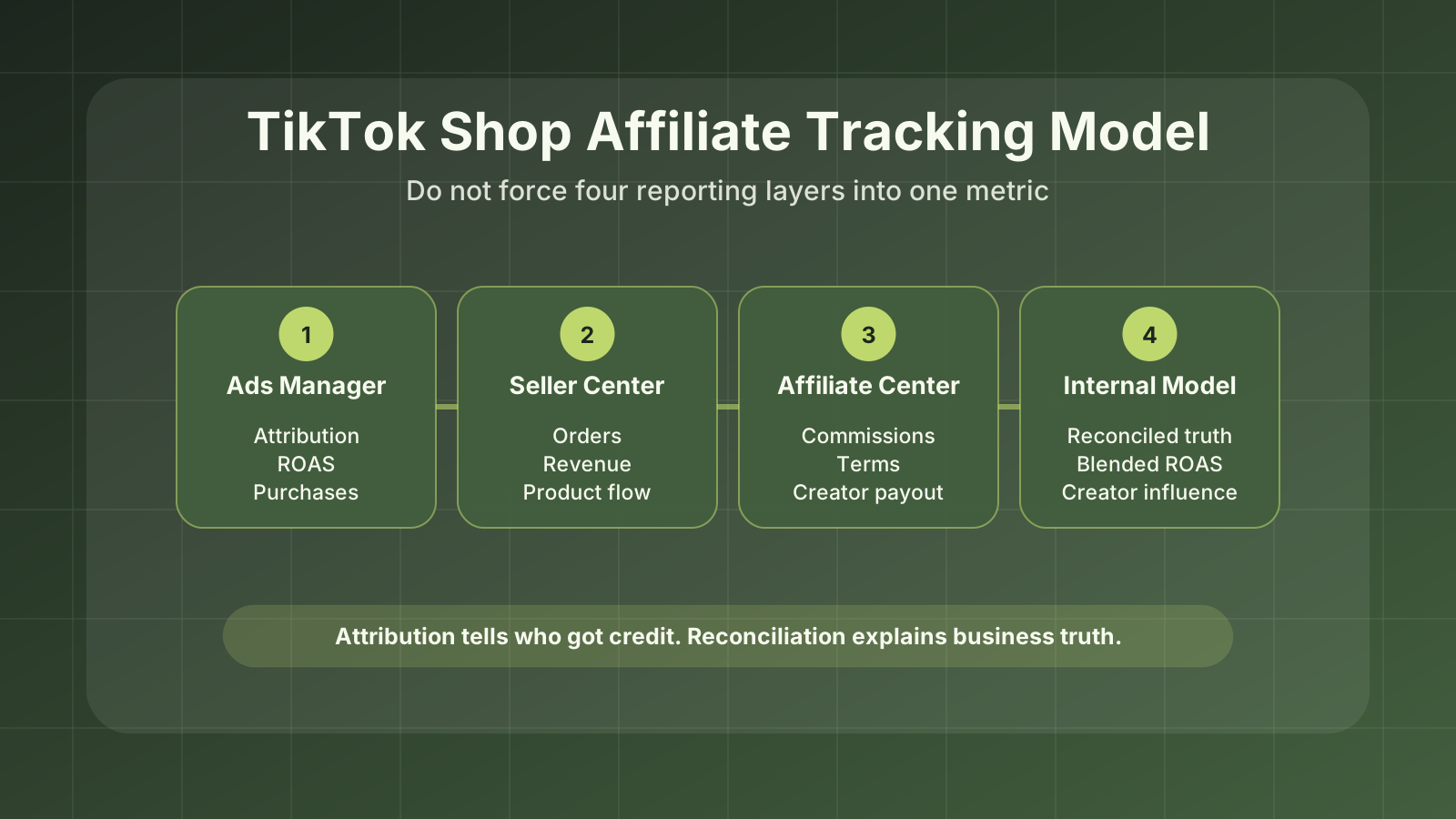
That creates an important split:
Layer | Core question | Default logic |
|---|---|---|
Ads Manager | What can TikTok attribute to ads? | 7-day click / 1-day view by default |
Seller Center | What commerce activity happened in the shop? | Time-based shop reporting, often same default window |
Affiliate Center | What commission is owed to creators? | Creator payout and terms logic |
Internal model | What is the business truth? | Reconciled across systems |
TikTok also says Seller Center reports sales based on when they happened, while Ads Manager reports sales that fall within the attribution window (Source: TikTok Business Help Center, 2025). That is the core reason attributed purchases and real-time purchases diverge. The numbers are not duplicates. They are different reporting views.
If your team is still setting up the broader commerce motion, the strategic background in TikTok affiliate marketing helps frame where this measurement layer fits.
Which TikTok Shop affiliate tracking metrics should brands review every week?
Brands should track attribution metrics, commerce metrics, payout metrics, and assisted influence metrics every week. GMV alone is not enough because it hides the difference between ad credit, shop performance, and creator value.
TikTok's Shop Ads reporting page highlights ROAS (Shop), adds to cart (Shop), real-time purchases (Shop), real-time gross revenue (Shop), and estimated affiliate commission (Shop) as core shop-linked ad metrics (Source: TikTok Business Help Center, 2026). Seller Center's video report adds product show rate, CTR, CTOR, orders, and gross revenue, which makes it useful for creator-level operational review (Source: TikTok Seller Center Help, 2025).
Use this weekly stack:
Layer | What it measures | Metrics to review weekly | Common mistake |
|---|---|---|---|
Ads Manager | Ad-attributed conversion | ROAS, attributed purchases, click-through and view-through conversions | Treating it as payout truth |
Seller Center | Commerce performance | Orders, gross revenue, product show rate, CTR, CTOR | Ignoring attribution settings |
Affiliate Center | Creator payout truth | Commission owed, creator terms, approved orders | Assuming it matches Ads Manager exactly |
Internal dashboard | Business truth | Reconciled revenue, blended ROAS, creator efficiency, assisted influence | Failing to reconcile systems |
TikTok's brand-ads metric guide also introduces last-touch attribution and assisted conversion concepts for Shop-linked brand ads (Source: TikTok Business Help Center, 2026). That matters because creators often influence the sale before the final conversion event. If your brand only scores creators on last-touch GMV, upper-funnel creators will look weaker than they really are.
The better weekly question is not "Who drove the most GMV?" It is "Which creators drove the most efficient combination of attributed orders, assisted influence, and profitable payout after reconciliation?" That is a harder metric, but it is closer to reality.
For teams already analyzing category behavior around TikTok, TikTok competitor analysis helps connect creator performance to the wider market context.
How should teams reconcile Ads Manager, Seller Center, and Affiliate Center?
Teams should reconcile these systems on a fixed weekly cadence with explicit metric definitions. If you wait until month-end, every disagreement turns into a root-cause hunt instead of a manageable reporting routine.
Start with a simple weekly operating model:
Pull attributed conversions and ROAS from Ads Manager.
Pull orders, revenue, CTR, CTOR, and product-show metrics from Seller Center.
Pull creator commissions and approved payout logic from Affiliate Center.
Compare the three-in-one internal sheet or BI view with locked metric definitions.
Flag variance drivers before the next creator budget decision.
TikTok's help documentation adds two reasons this reconciliation matters:
Ads Manager attribution windows can be changed at the ad-group level, and those settings affect TikTok reporting but not MMP reporting (Source: TikTok Ads Manager Help, 2025).
Affiliate creative commissions can vary based on commission setup and creative authorization method, so one creator can generate different payout outcomes depending on how the ad was run (Sources: TikTok Business Help Center, 2026, TikTok Business Help Center, 2026).
That means "estimated affiliate commission" is useful, but not final truth. Treat it as an optimization signal, not a finance-grade payout ledger.
A practical reporting cadence looks like this:
Cadence | What to review | Why |
|---|---|---|
Daily | Spend, attributed purchases, major anomalies | Catch budget or setup issues early |
Weekly | Reconciled orders, revenue, commissions, creator efficiency | Make optimization decisions |
Monthly | Creator portfolio quality, commission model, attribution-window fit | Reset strategy and budget allocation |
GMV Max deserves its own line item, not a merged one. TikTok says Product GMV Max can attribute both paid and organic orders for selected products while the campaign is running, including some cases where the user did not engage with an ad directly (Source: TikTok Seller Center Help, 2026). That makes it powerful, but it also means GMV Max performance should not be blended blindly into standard affiliate reporting.
Where does TikTok Shop affiliate tracking need a listening layer?
Buying-signal tracking needs a listening layer when the brand wants to understand creator influence before it converts, not only after it shows up in shop metrics. Native TikTok Shop reporting is strong on transaction logic. It is weaker on conversation context.
This gap shows up in three places:
when creators influence demand before a measured conversion
when product discussion spreads through organic video without direct affiliate clicks
when brands need to understand which themes, objections, or hooks are moving buyers
That is why the best 2026 setup pairs native TikTok reporting with a broader social listening workflow. A listening layer can surface creator mentions, audience reactions, and category discussion that never become a clean affiliate click path. For brands trying to identify which creators are shaping the conversation before they are added to the program, content-first creator discovery is the complementary layer. For fast query-based investigation, Ask Syncly can help a team interrogate what buyers are actually saying around a product or offer.
The sibling guide to TikTok social listening goes deeper on how conversation analysis complements commerce reporting. The short version is simple: platform attribution tells you who got credit. Listening helps explain why the sale path formed in the first place.
Key Takeaways
TikTok Shop affiliate tracking requires four layers: Ads Manager, Seller Center, Affiliate Center, and an internal reconciliation layer.
Shop attribution is based on Shop ID, and default windows are 7-day click and 1-day view.
Attributed purchases, real-time purchases, and creator commissions answer different questions and will not match perfectly.
Teams should reconcile weekly, not only at month-end, and keep GMV Max separate from standard affiliate reporting.
A listening layer helps brands track creator influence and buying signals that native commerce metrics do not fully explain.
Conclusion
The brands that manage TikTok Shop affiliate programs best in 2026 are not the ones with the prettiest dashboard. They are the ones that know exactly which number answers which question.
Ads Manager explains attribution. Seller Center explains commerce activity. Affiliate Center explains payout truth. Your internal reporting layer explains the business reality that matters for budget decisions. Once those roles are clear, the reporting noise gets a lot easier to manage.
See which creators and product conversations are driving demand before the attribution window closes. Start your free trial with Syncly Social →