TikTok Social Listening: A Complete Guide 2026
Author :
Craig Kim
Published :
Last Updated :
TikTok isn’t just a place for viral dances anymore—it’s now one of the biggest social platforms in the world, with over 1 billion monthly active users and a potential ad reach of 1.9 billion globally. For brands of all sizes, TikTok has become a must-watch channel to really understand how customers see your products and what they care about.
But with so much happening on TikTok every day, it can feel impossible to keep up. There are millions of videos, comments, and hashtags, making it tough to find the insights that are actually relevant to your brand.
That’s where TikTok social listening comes into play. Listening helps you spot what audiences are saying about your brand, your competitors, and the latest trends—so you can make smarter decisions and build stronger strategies.
In this guide, we’ll cover what TikTok social listening is, why it matters, how you can get started, and which tools work best. Our goal is to help you unlock the potential of the platform to find valuable customer insights and stay ahead in 2025.
What is TikTok Social Listening
Social listening on TikTok means tracking and analyzing what people are saying about your brand, products, and industry on TikTok. This includes looking at videos, comments, conversations, and even the trends that pop up around your brand or category.
Brands can discover how customers feel about their products, see how their brand is being talked about, spot new industry trends, and keep an eye on what competitors are doing. It’s a way to get a clear picture of what matters most to your audience.
However, listening is more than just tracking content with direct mentions. In the vast sea of TikTok, you need to filter out which content and data are truly useful for your brand and turn them into actionable insights. If you’re just getting started, read on—the sections below will help you every step of the way.
Why TikTok Social Listening Matters in 2026
TikTok social listening is quickly becoming a go-to source of market research for brands. It offers real, actionable insights that help you understand your audience and make smarter business decisions.
See What People Really Say About Your Brand
With social listening, you can discover what people are actually saying about your brand, even if they don’t tag you directly. This helps you track both positive buzz and spot early signs of negative sentiment, so you can shape brand perception and address issues before they grow.
Understand Customer Needs and Pain Points
Listening in on TikTok conversations lets you discover what customers love about your products, what features they wish for, and where they’re running into problems. These insights help you better understand their needs and pain points, guiding improvements in product development, marketing, and even sales strategies.
Find the Right Influencers and Audiences
Social listening helps you spot influencers who genuinely resonate with your target audience. By understanding their followers’ demographics and interests, you can launch new products or campaigns that reach the right people in the right way.
Spot Trends Before Everyone Else
TikTok trends move fast, but social listening lets you cut through the noise and notice what’s starting to get popular in your space. By jumping on trends early, you can come up with fresh product ideas or create timely marketing campaigns that really stand out.
Stay Ahead of Competitors
Finally, TikTok social listening gives you a window into what your competitors are doing and how their products are resonating with potential customers. This competitor analysis helps you spot opportunities and stay one step ahead in a crowded market.

(2026 Updated) From Buzz to Buys: A Playbook for TikTok Shop Listening
In 2026, the conversation around TikTok has fundamentally shifted from entertainment to commerce. With TikTok Shop projected to generate over $23 billion in US sales this year, the platform has evolved into a powerful marketplace where trends are born and purchase decisions are finalized. For brands, this means social listening must also evolve. It's no longer enough to monitor brand buzz; you must listen for buying signals.
Effective TikTok Shop listening allows you to create a direct feedback loop from your customers to your product development, marketing, and customer service teams. Instead of just tracking brand perception, you can now analyze conversations that directly impact revenue and customer satisfaction.
Key commerce-related signals to monitor include:
Video Product Reviews: Go beyond official reviews and listen to authentic, unfiltered feedback in users' video content, where they showcase your product's real-world performance.
Unboxing Experiences: Track the immediate, visceral reactions users have when they first receive and open your product. Are they delighted by the packaging or frustrated?
Livestream Commerce Questions: Monitor the questions asked during TikTok Live shopping sessions. These are direct indicators of purchase barriers, feature confusion, or pricing concerns.
Affiliate Network Conversations: Keep a pulse on the vast network of TikTok Shop Affiliates. What are they saying about your product? How are they positioning it to their audiences? Tracking this decentralized network is key to managing your brand narrative at scale.
By tuning into these commerce-driven conversations, you can move from passively monitoring brand health to actively gathering intelligence that informs inventory, improves product features, and ultimately drives sales.
How to Conduct Social Listening on TikTok
Implementing social listening on TikTok from scratch can be challenging, but breaking it down into clear steps makes it manageable. Here’s a step-by-step outline to help you get your strategy off the ground.
Define and Prioritize Your Goals
The first step is defining exactly what your brand wants to achieve through listening to TikTok. For example, some brands want to understand unmet needs or pinpoint pain points. While other brands might prioritize discovering their true target audience. Setting clear goals helps you know which influencers, keywords, and topics to focus on and prevents you from drowning in irrelevant data.
Choose the Right Tool for TikTok
After you understand what you’re listening for, it’s time to select the best social listening tool that aligns with your goals. Make sure the tool you choose offers all the essential features for social listening, and also provides TikTok-relevant capabilities. When evaluating your options, consider the following criteria:
Depth of Data Coverage: The tool needs to support analysis of all data types. As TikTok becomes increasingly important, it’s essential that coverage includes not just comments, audio, hashtags, and engagement metrics, but also video content.
Ability to Surface Untagged Mentions: Analyzing only content directly posted or tagged isn’t enough. The real voices of your audience often emerge in indirect or untagged mentions elsewhere on the platform.
AI Capabilities for Noise Filtering and Sentiment Analysis: With the sheer volume of data, the ability to filter out irrelevant noise and focus on content truly relevant to your brand is crucial for reducing bias. After that, accurate sentiment analysis with AI is a must-have feature.
Usability of Dashboards and Reporting Features: It should be easy for your team to build seamless dashboards that highlight the insights you care about. Most importantly, the tool’s AI should be able to suggest brand-specific, actionable insights that drive real impact.
Beyond Text: AI-Powered Video, Audio, and Visual Analysis
The most significant leap in social listening technology for 2026 is the move from text-based analysis to multimodal AI. The most valuable insights on TikTok are often not in the captions or comments, but locked within the video and audio itself. Modern listening tools must go beyond text to analyze what is being said, shown, and implied.
Key capabilities to look for include:
Audio Transcription: The ability to automatically transcribe spoken words in a video. This is critical for capturing brand mentions or product reviews where the user talks about your brand but doesn't tag it in the text.
Visual Listening: AI-powered recognition of logos, products, and even specific scenes within a video. This allows you to find every instance your product appears, even in the background of a video.
Creator Demographics: Advanced AI can now estimate a creator's age and gender from their video content, providing invaluable data for auditing the diversity of your brand's audience and ensuring your influencer campaigns are reaching the right people.
Furthermore, with the rise of AI-generated content through tools like TikTok Symphony, the ability for a listening platform to distinguish between authentic user-generated content and AI-generated promotional material is becoming increasingly crucial for accurate analysis.
Refine and Evolve Your Approach
Social listening is about understanding the changing needs of customers, exploring trends, and industry chatter. You have to keep track of what matters most and why it matters to your audiences. So, it cannot be a one-and-done task. Especially since TikTok moves faster than any other platform, you should not just monitor what’s happening in your dashboard but proactively adapt and evolve your approach to stay ahead of the competition.
(2026 Updated) Listen to Intent: Leverage TikTok's Search Ecosystem
In 2026, a fundamental user behavior has changed: for Gen Z and Alpha, TikTok is the new Google. They turn to the platform not just for entertainment, but for product recommendations, how-to guides, and authentic reviews. This shift requires brands to adopt 'Search Listening'—the practice of analyzing what users are actively searching for, not just what they are passively saying.
Unlike traditional search engines where users look for a specific answer, TikTok search is about discovery. Users often start with one query and, through what TikTok calls "Curiosity Detours," end up discovering new products, brands, and trends. The insights lie in this journey.
To start with Search Listening, begin by exploring the official TikTok Creative Center. This free tool allows you to see which keywords, hashtags, and sounds are trending in your region and category, providing a powerful starting point. Pay close attention to the comment sections of top videos; on TikTok, the comments are often where the real, unfiltered answers and peer reviews reside. By monitoring search behavior and comment threads, you can uncover unmet needs and unexpected use cases that traditional market research would miss.
Best Practices to Get Actionable Insights
To make your TikTok social listening truly effective, try these best practices for actionable results:
1. Identify What Words to Listen To as a Starting Point
Using your existing brand and industry knowledge to decide which keywords, hashtags, and topics to track first would be a helpful initiative. For instance, try your brand name, product names, slogans, related influencers, competitor keywords, and relevant industry hashtags. If you’re unsure, tools like Syncly Social can help uncover the words people use when mentioning your brand or industry.
2. Set Up Monitoring Routines and Real-Time Alerts
Establish a regular monitoring schedule, whether daily, weekly, or monthly, so that social listening becomes a seamless part of your workflow. Or setting up alerts for spikes in important keywords or sentiment can be a useful method. These proactive approaches help you catch emerging issues or opportunities early, which is critical for brands with large audiences and fast-moving TikTok conversations.
3. Leverage AI-Driven Features for Deeper Insights
Take advantage of AI-powered tools to extract meaningful insights and generate reports tailored to the specific needs of each team. With so many tasks on a marketer’s plate, it’s not always possible to manually build dashboards, interpret data, and create shareable reports for marketing, CX, or other departments. Using AI embedded in your social listening tool not only saves time but also helps you continuously refine your approach and deliver the most relevant, deeper insights.
Choosing the Right TikTok Social Listening Tool
Once you’ve learned how to conduct effective social listening, the next step is choosing the tool that best fits your needs on TikTok. Here, we review three options: Sprinklr, Hootsuite, and Syncly Social, summarizing each platform’s core strengths and who they’re best suited for.
Sprinklr
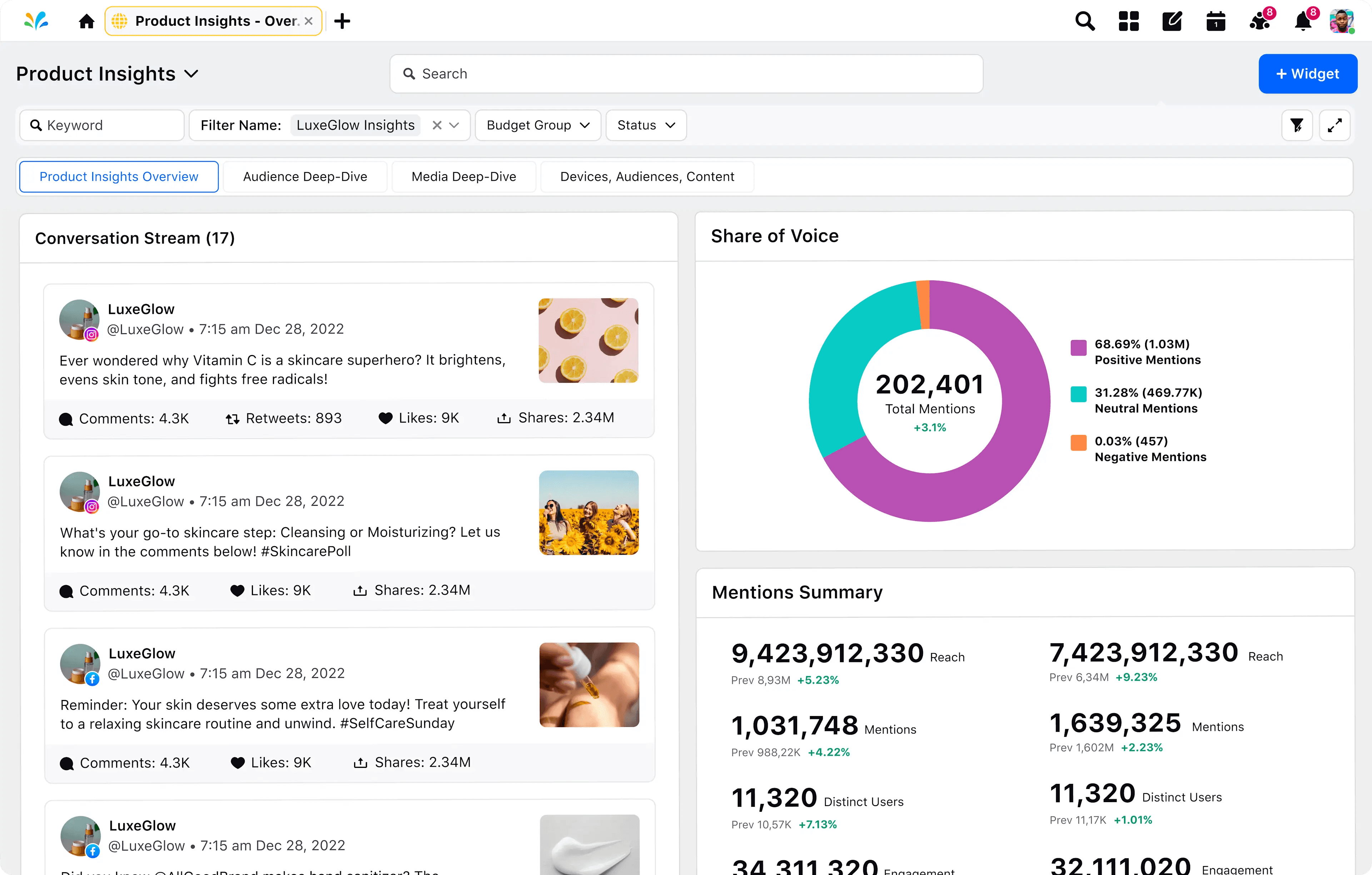
Sprinklr is an all-in-one customer experience platform designed for brands that need comprehensive social listening and management across 30+ social and digital channels. Its features include broad data coverage, customizable dashboards, real-time trend and crisis monitoring, and advanced sentiment analysis.
Sprinklr’s strengths are its scalability, a wide range of analytics, and ability to manage complex, global brand needs. It’s best suited for large enterprises that require cross-channel monitoring, detailed reporting, and proactive crisis management. However, its complexity and high cost may not be ideal for smaller or fast-moving teams.
Hootsuite
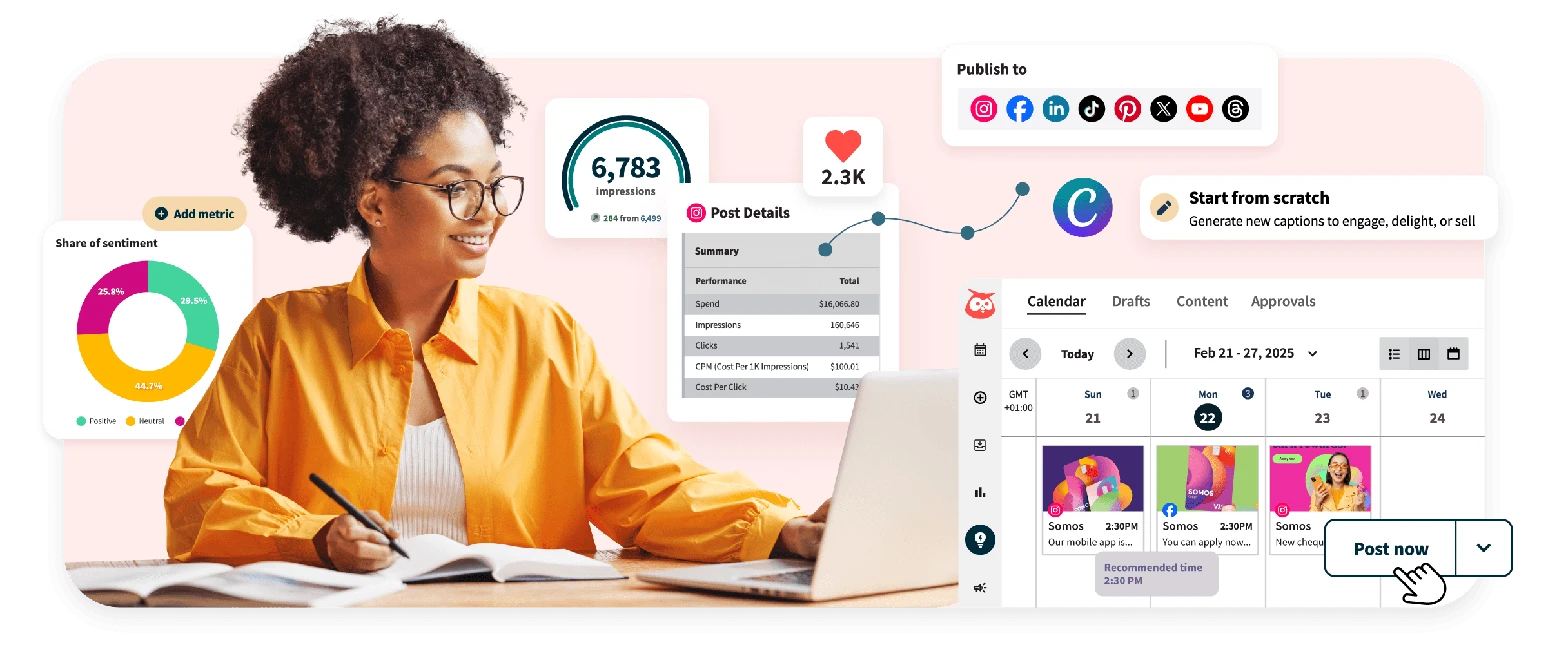
Hootsuite is a widely used social media management platform that integrates social listening powered by its acquisition of Talkwalker. Key features include real-time monitoring of brand mentions, trending topics, and sentiment in TikTok, but it also covers other social networks, news, blogs, and forums.
Hootsuite’s main advantages are its affordability and seamless integration of content management and social listening. It is especially practical for small to mid-sized brands that want to manage all their social media workflows on a single platform. Yet, it may not be the best fit for growing brands that want to gain deep context-rich insights through social listening across platforms like TikTok.
Syncly Social
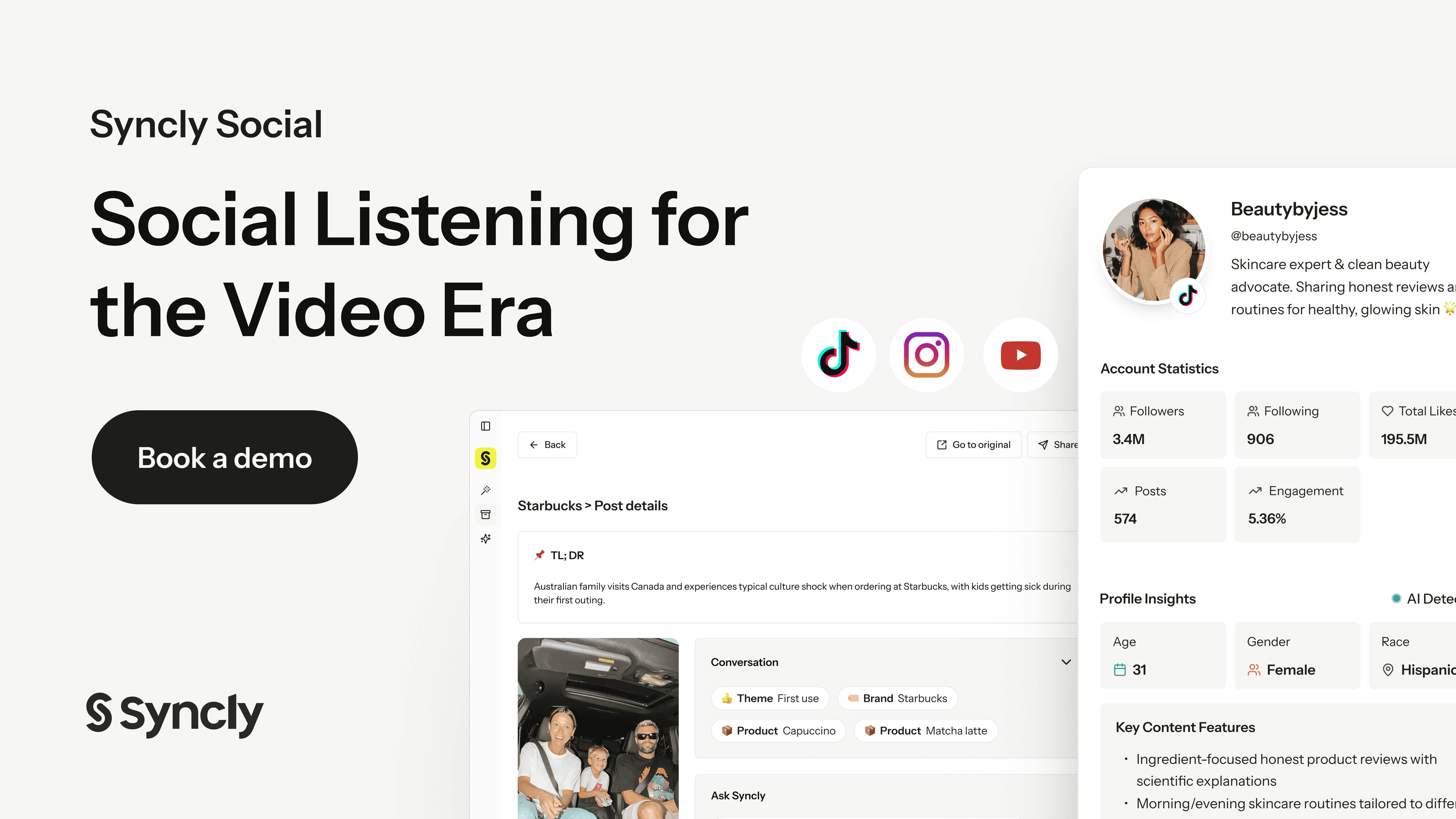
Syncly Social is the TikTok-native social listening engine, purpose-built for brands that see TikTok’s video content as their primary source for audience insights. Its standout features include advanced customer sentiment analysis, early trend detection, influencer discovery, and competitor analysis.
Syncly Social’s strengths lie in its ability to surface actionable insights from the vast sea of TikTok contents, going beyond conversations and hashtags to capture what audiences truly care about. It excels at finding demographics of potential customers, the right influencers, tracking every brand mentions in real-time, and providing context-rich insights with AI. Syncly Social is the ideal choice for fast-growing brands that need to move strategically with consumer insights.
Sprinklr | Hootsuite | Syncly Social | |
|---|---|---|---|
Overview | All-in-One customer experience platform | Social Media management platform | TikTok-native Social Listening platform |
Strengths | - Highly scalable - A wide range of analysis | - Affordable - Easy to integrate with action | - Advanced video analysis - AI-driven actionable insights |
For Whom | Large global enterprises | Small to mid-sized brands | Fast-growing mid-sized brands |
Examples of TikTok Social Listening
Exploring real-world cases of successful TikTok social listening can help you understand how to move from scratch to impact. Here are three standout examples where brands put social listening into action:
Stanley: Elevating Brand Perception Through Real-Time Listening

Stanley is a drinkware brand known for its durable tumblers. By actively monitoring TikTok, Stanley was able to identify and respond to a viral moment that significantly boosted its brand perception.
In November 2023, a TikTok video showing a Stanley tumbler surviving a car fire, with ice still inside, generated millions of views and active discussion about the product’s quality. Stanley’s CEO quickly seized the moment by posting a heartfelt video offering to replace the user’s car, turning an unexpected incident into a showcase of brand empathy and reliability. As a result, this genuine and timely response generated widespread praise and support.
Vita Coco: Spotting Trends for Viral Marketing

Vita Coco, a leading coconut water brand, has made social listening a core part of its marketing strategy, especially on TikTok. The brand excels at detecting emerging recipe trends and quickly engaging with relevant conversations.
When the “nature’s cereal” recipe, which mixes berries, pomegranate seeds, ice, and coconut water, started trending, Vita Coco’s team identified the opportunity through social listening and launched a campaign within 36 hours. By leveraging pre-shot content and promoting it on TikTok, they seamlessly integrated the brand into the trend’s narrative, resulting in a doubling of their TikTok followers and increased product sales.
SooSlick: Driving Direct Sales Through TikTok Shop Listening
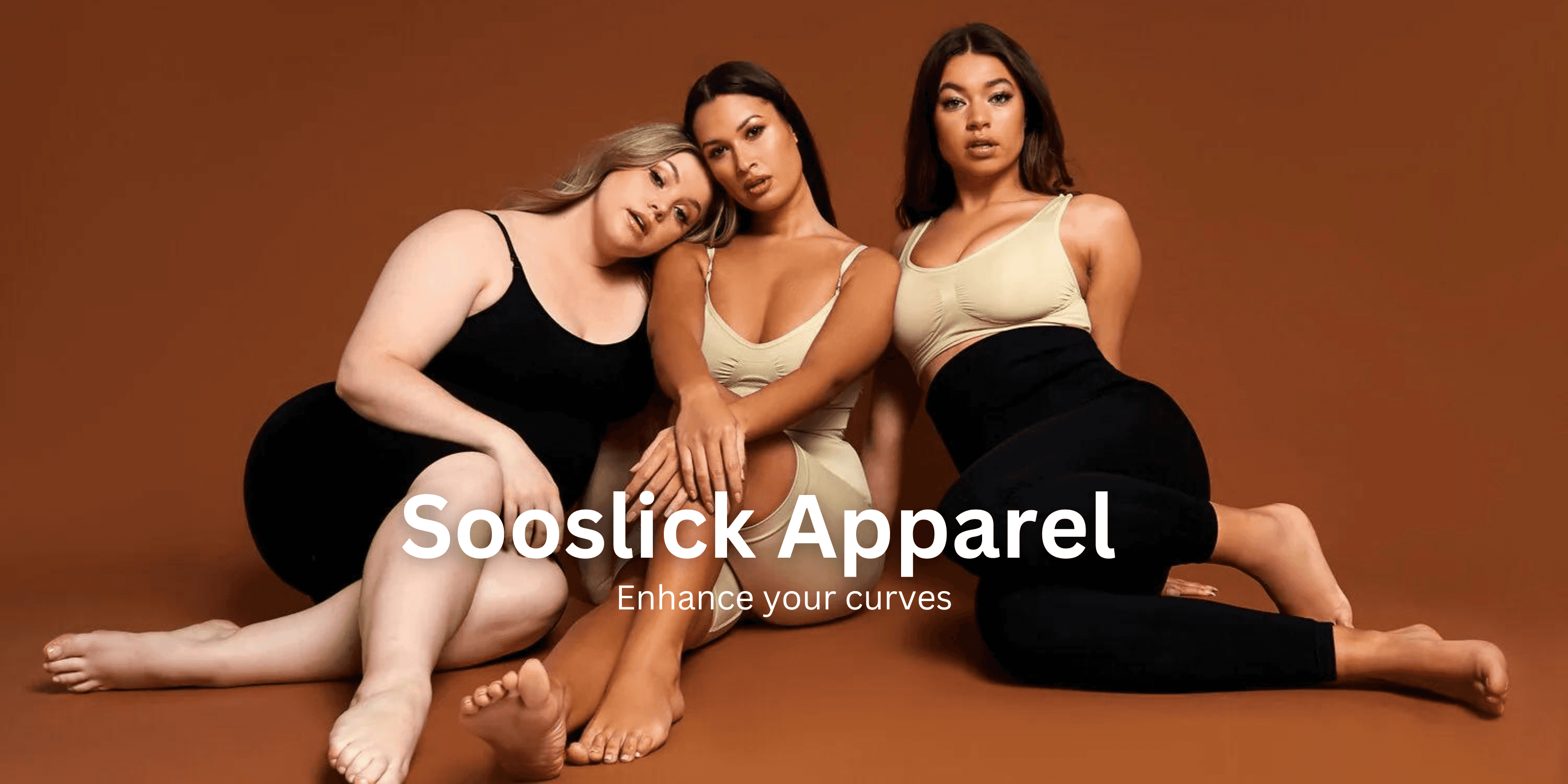
SooSlick, a minority women-owned shapewear brand, has demonstrated how social listening can translate directly into massive sales through TikTok Shop. By closely monitoring which creator videos were gaining traction, they tapped into a powerful, authentic marketing engine.
In late 2023, SooSlick activated TikTok's Shop Affiliate Program, and through listening, identified the specific creators and video styles that resonated most with audiences. This led to an explosion of organic content, generating over 200 million video views. The direct result was over $1 million in incremental sales within the first 30 days on the platform. By listening to which content was converting, SooSlick was able to double down on winning strategies, proving that modern social listening is no longer just about brand awareness, but about tracking and optimizing the entire path to purchase.
Poppi: Creating a Category Through Cultural Trend Listening
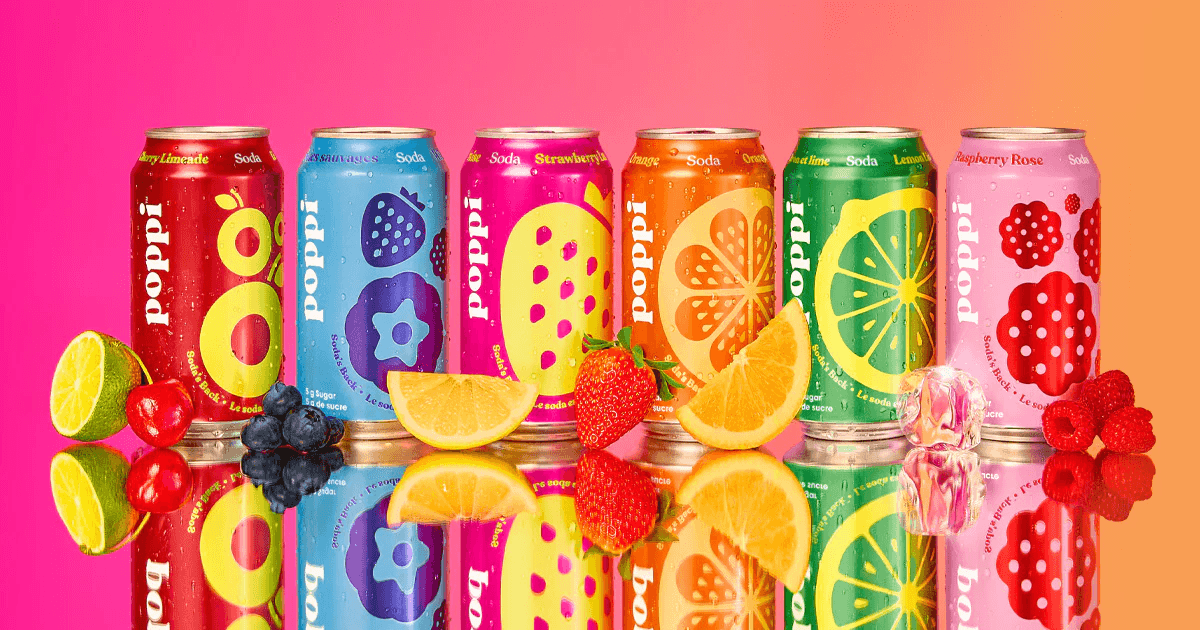
Poppi, the prebiotic soda brand valued at over $500 million, exemplifies how to win by listening to broader cultural shifts. Instead of just monitoring brand mentions, Poppi tapped into the growing wellness and "gut health" conversations on TikTok to build a new beverage category.
By listening to the cultural zeitgeist, Poppi understood that consumers were looking for healthier alternatives to traditional sodas but didn't want to sacrifice flavor or fun. Their strategy involved creating visually appealing, colorful cans perfect for "what I eat in a day" videos and collaborating with influencers in the wellness space. This approach allowed them to ride the wave of the existing "gut health" trend, positioning themselves as the go-to drink for a new generation of health-conscious consumers and achieving viral success that felt both organic and timely.
Duolingo: Building a Community by Listening to How Fans Play
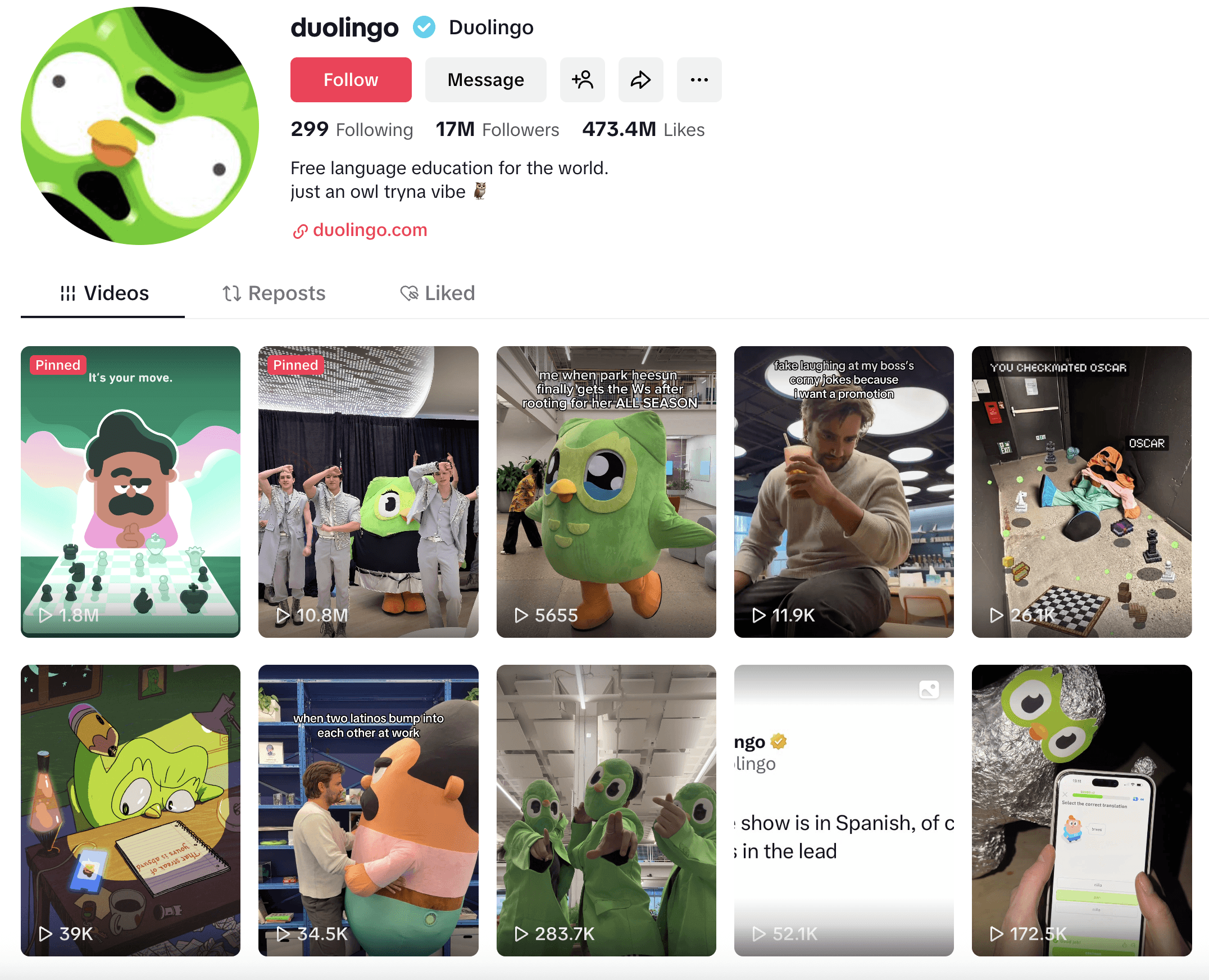
Duolingo, the language-learning app, has become a masterclass in community listening by paying attention to how users interact with its brand mascot, Duo the Owl. Instead of focusing purely on product feedback, Duolingo's social team listens to the memes, jokes, and fan-created narratives surrounding their brand.
By observing how fans playfully characterized the Duo mascot as "unhinged" and persistent, the brand leaned into this persona, creating content that felt like an inside joke with its community. They listen to how fans are "playing" with their brand and join the conversation, responding to comments and creating skits that align with the fan-made lore. This strategy of listening to and participating in community-driven entertainment has fostered a cult-like following and an engagement rate that far exceeds typical brand accounts, turning customers into a true fan community.
Duracell: Uncovering Hidden Audiences Through Search Listening
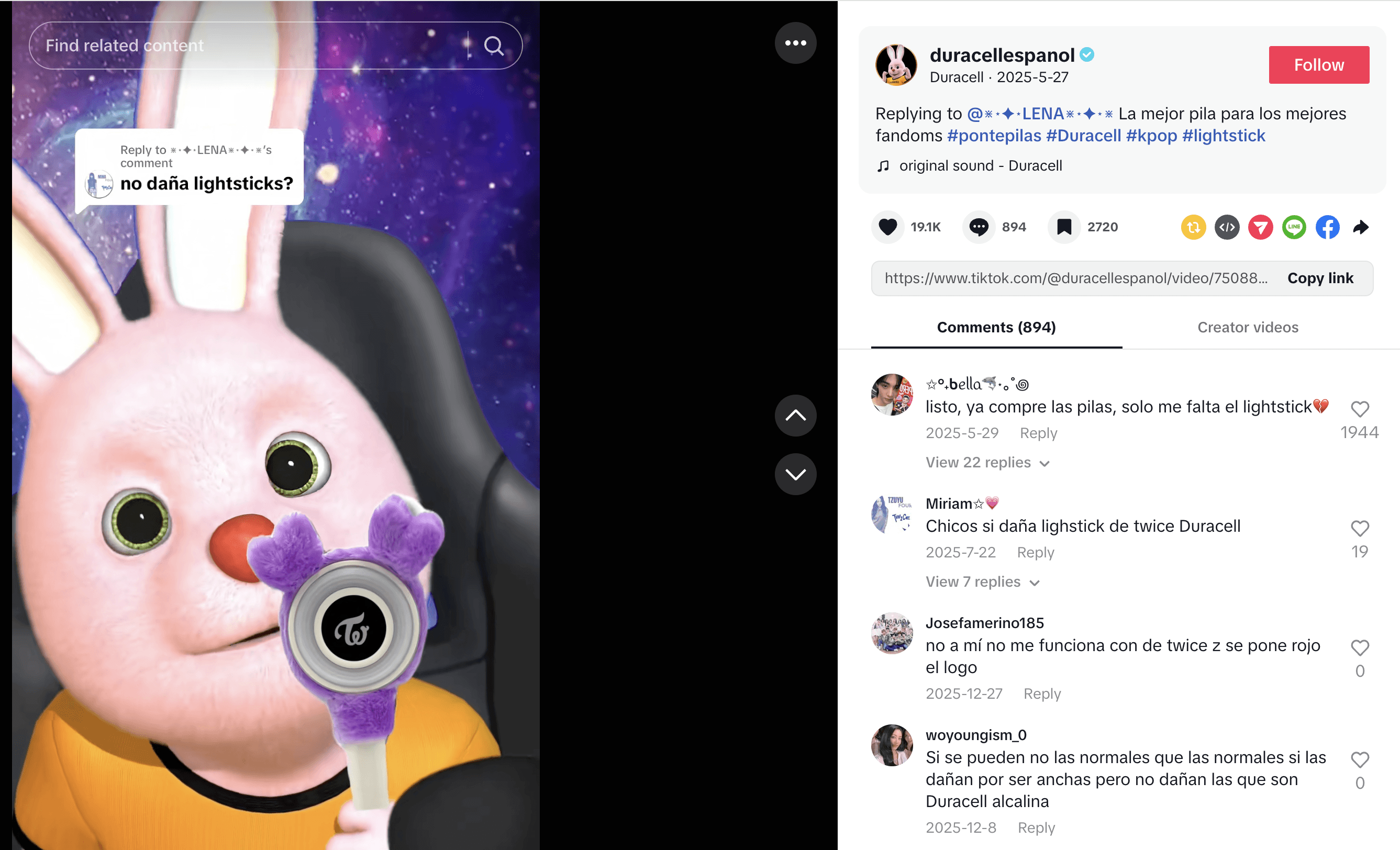
For a legacy brand like Duracell, finding new growth avenues can be a major challenge. However, by leveraging TikTok social listening, particularly focusing on search behavior and comment sections, they uncovered a passionate and entirely unexpected customer segment: K-Pop fans.
Through deep listening, Duracell discovered that fans were frequently discussing the best batteries for their light sticks—an essential part of the concert experience. These conversations weren't happening in traditional marketing channels but were thriving in niche TikTok communities. By analyzing search queries like "best batteries for lightstick" and monitoring comments on fan videos, Duracell quantified this demand and realized the K-Pop fandom was a significant, untapped market.
This insight allowed Duracell to move beyond its traditional use cases and connect with a vibrant, global community. It’s a powerful example of how listening for "unintended" product uses and analyzing search behavior can reveal lucrative new audiences that would otherwise remain invisible to conventional market research.
Conclusion
Leveraging social listening gives brands a real edge, helping you understand brand perception, gain consumer insights, and stay ahead of competitors.
Moreover, as we move into 2026, social listening on TikTok is becoming essential for every brand. With more users and posts than ever, there’s still a wealth of data to explore, and advanced video analysis with TikTok-native social listening engine now enables an even deeper, more contextual understanding of your audience.
Ready to unlock the full potential of TikTok buzz for your brand?
Start TikTok Social Listening Today!
TikTok isn’t just a place for viral dances anymore—it’s now one of the biggest social platforms in the world, with over 1 billion monthly active users and a potential ad reach of 1.9 billion globally. For brands of all sizes, TikTok has become a must-watch channel to really understand how customers see your products and what they care about.
But with so much happening on TikTok every day, it can feel impossible to keep up. There are millions of videos, comments, and hashtags, making it tough to find the insights that are actually relevant to your brand.
That’s where TikTok social listening comes into play. Listening helps you spot what audiences are saying about your brand, your competitors, and the latest trends—so you can make smarter decisions and build stronger strategies.
In this guide, we’ll cover what TikTok social listening is, why it matters, how you can get started, and which tools work best. Our goal is to help you unlock the potential of the platform to find valuable customer insights and stay ahead in 2025.
What is TikTok Social Listening
Social listening on TikTok means tracking and analyzing what people are saying about your brand, products, and industry on TikTok. This includes looking at videos, comments, conversations, and even the trends that pop up around your brand or category.
Brands can discover how customers feel about their products, see how their brand is being talked about, spot new industry trends, and keep an eye on what competitors are doing. It’s a way to get a clear picture of what matters most to your audience.
However, listening is more than just tracking content with direct mentions. In the vast sea of TikTok, you need to filter out which content and data are truly useful for your brand and turn them into actionable insights. If you’re just getting started, read on—the sections below will help you every step of the way.
Why TikTok Social Listening Matters in 2026
TikTok social listening is quickly becoming a go-to source of market research for brands. It offers real, actionable insights that help you understand your audience and make smarter business decisions.
See What People Really Say About Your Brand
With social listening, you can discover what people are actually saying about your brand, even if they don’t tag you directly. This helps you track both positive buzz and spot early signs of negative sentiment, so you can shape brand perception and address issues before they grow.
Understand Customer Needs and Pain Points
Listening in on TikTok conversations lets you discover what customers love about your products, what features they wish for, and where they’re running into problems. These insights help you better understand their needs and pain points, guiding improvements in product development, marketing, and even sales strategies.
Find the Right Influencers and Audiences
Social listening helps you spot influencers who genuinely resonate with your target audience. By understanding their followers’ demographics and interests, you can launch new products or campaigns that reach the right people in the right way.
Spot Trends Before Everyone Else
TikTok trends move fast, but social listening lets you cut through the noise and notice what’s starting to get popular in your space. By jumping on trends early, you can come up with fresh product ideas or create timely marketing campaigns that really stand out.
Stay Ahead of Competitors
Finally, TikTok social listening gives you a window into what your competitors are doing and how their products are resonating with potential customers. This competitor analysis helps you spot opportunities and stay one step ahead in a crowded market.
(2026 Updated) From Buzz to Buys: A Playbook for TikTok Shop Listening
In 2026, the conversation around TikTok has fundamentally shifted from entertainment to commerce. With TikTok Shop projected to generate over $23 billion in US sales this year, the platform has evolved into a powerful marketplace where trends are born and purchase decisions are finalized. For brands, this means social listening must also evolve. It's no longer enough to monitor brand buzz; you must listen for buying signals.
Effective TikTok Shop listening allows you to create a direct feedback loop from your customers to your product development, marketing, and customer service teams. Instead of just tracking brand perception, you can now analyze conversations that directly impact revenue and customer satisfaction.
Key commerce-related signals to monitor include:
Video Product Reviews: Go beyond official reviews and listen to authentic, unfiltered feedback in users' video content, where they showcase your product's real-world performance.
Unboxing Experiences: Track the immediate, visceral reactions users have when they first receive and open your product. Are they delighted by the packaging or frustrated?
Livestream Commerce Questions: Monitor the questions asked during TikTok Live shopping sessions. These are direct indicators of purchase barriers, feature confusion, or pricing concerns.
Affiliate Network Conversations: Keep a pulse on the vast network of TikTok Shop Affiliates. What are they saying about your product? How are they positioning it to their audiences? Tracking this decentralized network is key to managing your brand narrative at scale.
By tuning into these commerce-driven conversations, you can move from passively monitoring brand health to actively gathering intelligence that informs inventory, improves product features, and ultimately drives sales.
How to Conduct Social Listening on TikTok
Implementing social listening on TikTok from scratch can be challenging, but breaking it down into clear steps makes it manageable. Here’s a step-by-step outline to help you get your strategy off the ground.
Define and Prioritize Your Goals
The first step is defining exactly what your brand wants to achieve through listening to TikTok. For example, some brands want to understand unmet needs or pinpoint pain points. While other brands might prioritize discovering their true target audience. Setting clear goals helps you know which influencers, keywords, and topics to focus on and prevents you from drowning in irrelevant data.
Choose the Right Tool for TikTok
After you understand what you’re listening for, it’s time to select the best social listening tool that aligns with your goals. Make sure the tool you choose offers all the essential features for social listening, and also provides TikTok-relevant capabilities. When evaluating your options, consider the following criteria:
Depth of Data Coverage: The tool needs to support analysis of all data types. As TikTok becomes increasingly important, it’s essential that coverage includes not just comments, audio, hashtags, and engagement metrics, but also video content.
Ability to Surface Untagged Mentions: Analyzing only content directly posted or tagged isn’t enough. The real voices of your audience often emerge in indirect or untagged mentions elsewhere on the platform.
AI Capabilities for Noise Filtering and Sentiment Analysis: With the sheer volume of data, the ability to filter out irrelevant noise and focus on content truly relevant to your brand is crucial for reducing bias. After that, accurate sentiment analysis with AI is a must-have feature.
Usability of Dashboards and Reporting Features: It should be easy for your team to build seamless dashboards that highlight the insights you care about. Most importantly, the tool’s AI should be able to suggest brand-specific, actionable insights that drive real impact.
Beyond Text: AI-Powered Video, Audio, and Visual Analysis
The most significant leap in social listening technology for 2026 is the move from text-based analysis to multimodal AI. The most valuable insights on TikTok are often not in the captions or comments, but locked within the video and audio itself. Modern listening tools must go beyond text to analyze what is being said, shown, and implied.
Key capabilities to look for include:
Audio Transcription: The ability to automatically transcribe spoken words in a video. This is critical for capturing brand mentions or product reviews where the user talks about your brand but doesn't tag it in the text.
Visual Listening: AI-powered recognition of logos, products, and even specific scenes within a video. This allows you to find every instance your product appears, even in the background of a video.
Creator Demographics: Advanced AI can now estimate a creator's age and gender from their video content, providing invaluable data for auditing the diversity of your brand's audience and ensuring your influencer campaigns are reaching the right people.
Furthermore, with the rise of AI-generated content through tools like TikTok Symphony, the ability for a listening platform to distinguish between authentic user-generated content and AI-generated promotional material is becoming increasingly crucial for accurate analysis.
Refine and Evolve Your Approach
Social listening is about understanding the changing needs of customers, exploring trends, and industry chatter. You have to keep track of what matters most and why it matters to your audiences. So, it cannot be a one-and-done task. Especially since TikTok moves faster than any other platform, you should not just monitor what’s happening in your dashboard but proactively adapt and evolve your approach to stay ahead of the competition.
(2026 Updated) Listen to Intent: Leverage TikTok's Search Ecosystem
In 2026, a fundamental user behavior has changed: for Gen Z and Alpha, TikTok is the new Google. They turn to the platform not just for entertainment, but for product recommendations, how-to guides, and authentic reviews. This shift requires brands to adopt 'Search Listening'—the practice of analyzing what users are actively searching for, not just what they are passively saying.
Unlike traditional search engines where users look for a specific answer, TikTok search is about discovery. Users often start with one query and, through what TikTok calls "Curiosity Detours," end up discovering new products, brands, and trends. The insights lie in this journey.
To start with Search Listening, begin by exploring the official TikTok Creative Center. This free tool allows you to see which keywords, hashtags, and sounds are trending in your region and category, providing a powerful starting point. Pay close attention to the comment sections of top videos; on TikTok, the comments are often where the real, unfiltered answers and peer reviews reside. By monitoring search behavior and comment threads, you can uncover unmet needs and unexpected use cases that traditional market research would miss.
Best Practices to Get Actionable Insights
To make your TikTok social listening truly effective, try these best practices for actionable results:
1. Identify What Words to Listen To as a Starting Point
Using your existing brand and industry knowledge to decide which keywords, hashtags, and topics to track first would be a helpful initiative. For instance, try your brand name, product names, slogans, related influencers, competitor keywords, and relevant industry hashtags. If you’re unsure, tools like Syncly Social can help uncover the words people use when mentioning your brand or industry.
2. Set Up Monitoring Routines and Real-Time Alerts
Establish a regular monitoring schedule, whether daily, weekly, or monthly, so that social listening becomes a seamless part of your workflow. Or setting up alerts for spikes in important keywords or sentiment can be a useful method. These proactive approaches help you catch emerging issues or opportunities early, which is critical for brands with large audiences and fast-moving TikTok conversations.
3. Leverage AI-Driven Features for Deeper Insights
Take advantage of AI-powered tools to extract meaningful insights and generate reports tailored to the specific needs of each team. With so many tasks on a marketer’s plate, it’s not always possible to manually build dashboards, interpret data, and create shareable reports for marketing, CX, or other departments. Using AI embedded in your social listening tool not only saves time but also helps you continuously refine your approach and deliver the most relevant, deeper insights.
Choosing the Right TikTok Social Listening Tool
Once you’ve learned how to conduct effective social listening, the next step is choosing the tool that best fits your needs on TikTok. Here, we review three options: Sprinklr, Hootsuite, and Syncly Social, summarizing each platform’s core strengths and who they’re best suited for.
Sprinklr
Sprinklr is an all-in-one customer experience platform designed for brands that need comprehensive social listening and management across 30+ social and digital channels. Its features include broad data coverage, customizable dashboards, real-time trend and crisis monitoring, and advanced sentiment analysis.
Sprinklr’s strengths are its scalability, a wide range of analytics, and ability to manage complex, global brand needs. It’s best suited for large enterprises that require cross-channel monitoring, detailed reporting, and proactive crisis management. However, its complexity and high cost may not be ideal for smaller or fast-moving teams.
Hootsuite
Hootsuite is a widely used social media management platform that integrates social listening powered by its acquisition of Talkwalker. Key features include real-time monitoring of brand mentions, trending topics, and sentiment in TikTok, but it also covers other social networks, news, blogs, and forums.
Hootsuite’s main advantages are its affordability and seamless integration of content management and social listening. It is especially practical for small to mid-sized brands that want to manage all their social media workflows on a single platform. Yet, it may not be the best fit for growing brands that want to gain deep context-rich insights through social listening across platforms like TikTok.
Syncly Social
Syncly Social is the TikTok-native social listening engine, purpose-built for brands that see TikTok’s video content as their primary source for audience insights. Its standout features include advanced customer sentiment analysis, early trend detection, influencer discovery, and competitor analysis.
Syncly Social’s strengths lie in its ability to surface actionable insights from the vast sea of TikTok contents, going beyond conversations and hashtags to capture what audiences truly care about. It excels at finding demographics of potential customers, the right influencers, tracking every brand mentions in real-time, and providing context-rich insights with AI. Syncly Social is the ideal choice for fast-growing brands that need to move strategically with consumer insights.
Sprinklr | Hootsuite | Syncly Social | |
|---|---|---|---|
Overview | All-in-One customer experience platform | Social Media management platform | TikTok-native Social Listening platform |
Strengths | - Highly scalable - A wide range of analysis | - Affordable - Easy to integrate with action | - Advanced video analysis - AI-driven actionable insights |
For Whom | Large global enterprises | Small to mid-sized brands | Fast-growing mid-sized brands |
Examples of TikTok Social Listening
Exploring real-world cases of successful TikTok social listening can help you understand how to move from scratch to impact. Here are three standout examples where brands put social listening into action:
Stanley: Elevating Brand Perception Through Real-Time Listening
Stanley is a drinkware brand known for its durable tumblers. By actively monitoring TikTok, Stanley was able to identify and respond to a viral moment that significantly boosted its brand perception.
In November 2023, a TikTok video showing a Stanley tumbler surviving a car fire, with ice still inside, generated millions of views and active discussion about the product’s quality. Stanley’s CEO quickly seized the moment by posting a heartfelt video offering to replace the user’s car, turning an unexpected incident into a showcase of brand empathy and reliability. As a result, this genuine and timely response generated widespread praise and support.
Vita Coco: Spotting Trends for Viral Marketing
Vita Coco, a leading coconut water brand, has made social listening a core part of its marketing strategy, especially on TikTok. The brand excels at detecting emerging recipe trends and quickly engaging with relevant conversations.
When the “nature’s cereal” recipe, which mixes berries, pomegranate seeds, ice, and coconut water, started trending, Vita Coco’s team identified the opportunity through social listening and launched a campaign within 36 hours. By leveraging pre-shot content and promoting it on TikTok, they seamlessly integrated the brand into the trend’s narrative, resulting in a doubling of their TikTok followers and increased product sales.
SooSlick: Driving Direct Sales Through TikTok Shop Listening
SooSlick, a minority women-owned shapewear brand, has demonstrated how social listening can translate directly into massive sales through TikTok Shop. By closely monitoring which creator videos were gaining traction, they tapped into a powerful, authentic marketing engine.
In late 2023, SooSlick activated TikTok's Shop Affiliate Program, and through listening, identified the specific creators and video styles that resonated most with audiences. This led to an explosion of organic content, generating over 200 million video views. The direct result was over $1 million in incremental sales within the first 30 days on the platform. By listening to which content was converting, SooSlick was able to double down on winning strategies, proving that modern social listening is no longer just about brand awareness, but about tracking and optimizing the entire path to purchase.
Poppi: Creating a Category Through Cultural Trend Listening
Poppi, the prebiotic soda brand valued at over $500 million, exemplifies how to win by listening to broader cultural shifts. Instead of just monitoring brand mentions, Poppi tapped into the growing wellness and "gut health" conversations on TikTok to build a new beverage category.
By listening to the cultural zeitgeist, Poppi understood that consumers were looking for healthier alternatives to traditional sodas but didn't want to sacrifice flavor or fun. Their strategy involved creating visually appealing, colorful cans perfect for "what I eat in a day" videos and collaborating with influencers in the wellness space. This approach allowed them to ride the wave of the existing "gut health" trend, positioning themselves as the go-to drink for a new generation of health-conscious consumers and achieving viral success that felt both organic and timely.
Duolingo: Building a Community by Listening to How Fans Play
Duolingo, the language-learning app, has become a masterclass in community listening by paying attention to how users interact with its brand mascot, Duo the Owl. Instead of focusing purely on product feedback, Duolingo's social team listens to the memes, jokes, and fan-created narratives surrounding their brand.
By observing how fans playfully characterized the Duo mascot as "unhinged" and persistent, the brand leaned into this persona, creating content that felt like an inside joke with its community. They listen to how fans are "playing" with their brand and join the conversation, responding to comments and creating skits that align with the fan-made lore. This strategy of listening to and participating in community-driven entertainment has fostered a cult-like following and an engagement rate that far exceeds typical brand accounts, turning customers into a true fan community.
Duracell: Uncovering Hidden Audiences Through Search Listening
For a legacy brand like Duracell, finding new growth avenues can be a major challenge. However, by leveraging TikTok social listening, particularly focusing on search behavior and comment sections, they uncovered a passionate and entirely unexpected customer segment: K-Pop fans.
Through deep listening, Duracell discovered that fans were frequently discussing the best batteries for their light sticks—an essential part of the concert experience. These conversations weren't happening in traditional marketing channels but were thriving in niche TikTok communities. By analyzing search queries like "best batteries for lightstick" and monitoring comments on fan videos, Duracell quantified this demand and realized the K-Pop fandom was a significant, untapped market.
This insight allowed Duracell to move beyond its traditional use cases and connect with a vibrant, global community. It’s a powerful example of how listening for "unintended" product uses and analyzing search behavior can reveal lucrative new audiences that would otherwise remain invisible to conventional market research.
Conclusion
Leveraging social listening gives brands a real edge, helping you understand brand perception, gain consumer insights, and stay ahead of competitors.
Moreover, as we move into 2026, social listening on TikTok is becoming essential for every brand. With more users and posts than ever, there’s still a wealth of data to explore, and advanced video analysis with TikTok-native social listening engine now enables an even deeper, more contextual understanding of your audience.
Ready to unlock the full potential of TikTok buzz for your brand?
Start TikTok Social Listening Today!