How to Detect Fake Followers Before You Pay an Influencer
Author :
Luke Bae
Published :
TL;DR: Brands can detect fake followers before an influencer partnership by checking five things in order: engagement quality, a sample of follower profiles, comment authenticity, growth integrity, and audience-quality signals from a verification tool when the budget justifies it. The goal is not to prove fraud with absolute certainty. It is to catch obvious risk before spend, reputation, or client trust is on the line.
Most teams do this backwards. They shortlist creators first, get excited about a concept, then try to validate the audience after the creative pitch is already socially approved inside the company. At that point, the process becomes political. People defend the creator because they like the campaign, not because the audience is clean.
That is why fake-follower detection needs to be procedural. HypeAuditor, Modash, Upfluence, and GRIN all describe the same pattern from different angles: suspicious creators reveal themselves through low-quality audience samples, repetitive comments, unhealthy ratios, and unexplained growth behavior long before you need a paid tool (Sources: HypeAuditor, 2026, Modash Help Center, 2026, Upfluence, 2026, GRIN, 2026).
What do fake followers actually cost brands?
Fake followers cost brands in three ways: wasted media spend, distorted forecasting, and internal trust erosion. A bad creator does not only underperform. They also contaminate the benchmark your team uses for the next creator decision.
Fake followers: bot, purchased, or otherwise inauthentic accounts that inflate a creator's audience size without creating real reach, consideration, or sales potential for a brand partner.
Not every weak audience is fake. This is the nuance many teams miss. Some followers are real but low-value. HypeAuditor calls out "mass followers" as real users who follow 1,500 or more accounts, making them less reachable even if they are not fraudulent (Source: HypeAuditor, 2026). That distinction matters because brands should not turn low-quality reach into a fraud accusation.
There is also directional evidence that the risk is still material. SociaVault Labs' 2026 study of 100,000 influencer accounts estimated that 37.2% showed suspicious or fake-follower signals. It is not a universal industry standard, so it should be treated as directional rather than definitive, but it is enough to justify pre-screening (Source: SociaVault Labs, 2026).
The practical takeaway is simple: your goal is not courtroom proof. Your goal is to stop risky creators from advancing into contracting and content development. If your team already needs a larger sourcing engine, start with influencer discovery from scratch and make fake-follower screening a non-optional stage inside that workflow.
The five-step fake-follower detection checklist
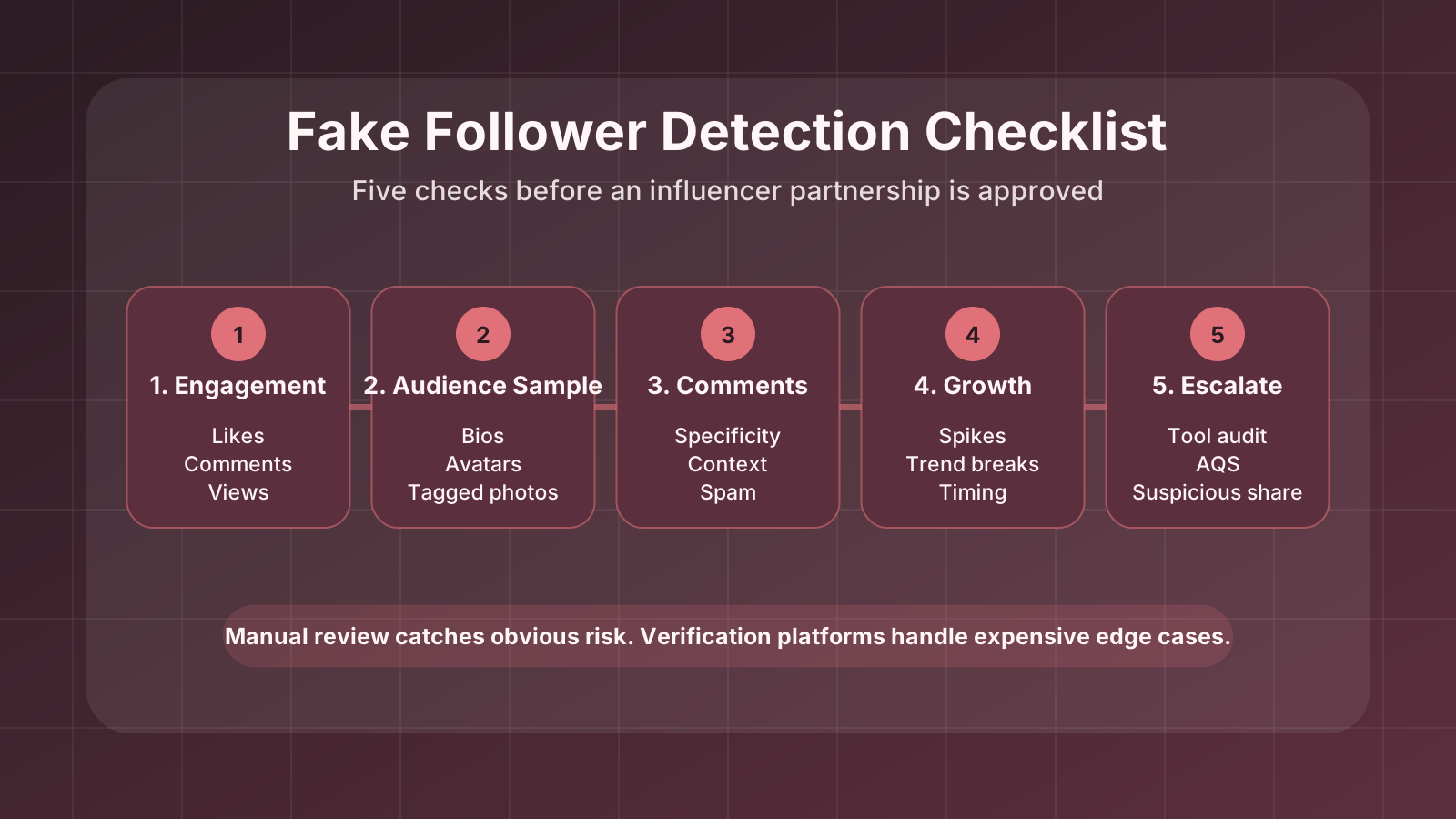
The fastest manual checks are engagement, audience sample, comment quality, growth integrity, and escalation. If a creator fails two of those five checks, stop the process until the issue is explained.
Check | What to review | Immediate red flag |
|---|---|---|
Engagement | Likes, comments, views, saves | Extremely low or unusually high ratios |
Audience sample | Bios, posts, avatars, tagged photos | Empty or bot-like profiles |
Comments | Relevance and specificity | Emoji spam or generic praise |
Growth | Follower trend over time | Sharp unexplained spikes |
Tool audit | Audience quality score, suspicious share | Low score or high suspicious segment |
1. Check headline engagement
Upfluence recommends looking for very low or very high engagement, especially when it feels disconnected from content quality or follower size (Source: Upfluence, 2026). You are not looking for a magic benchmark. You are looking for ratios that do not make sense for the platform, format, and creator tier.
2. Sample the audience itself
Modash recommends reviewing follower profiles for missing details, low post volume, generic imagery, and strange follow-to-follower behavior (Source: Modash Help Center, 2026). A simple method works: open 20 recent followers and score how many look like real humans with believable posting histories.
3. Audit the comments
Spammy comments are still one of the fastest catches. Upfluence points to repetitive emoji comments and context-free praise, while GRIN emphasizes checking whether commenters show any sign of real activity or tagged photos of their own (Sources: Upfluence, 2026, GRIN, 2026).
4. Check growth integrity
HypeAuditor's fraud-detection framework flags abnormal growth curves and suspicious audience behavior as core risk signals (Source: HypeAuditor, 2025). Sudden jumps are not always fraud, but they do require an explanation such as media coverage, a creator collaboration, or a breakout post.
5. Escalate when the spend is real
Manual review should be the default. Paid verification should be the escalation layer. Once the creator is expensive, client-facing, or strategically important, use a verification platform rather than relying on screenshots and intuition.
If your team needs broader context after the manual screen, the guide to social listening for influencer marketing shows how category signals can sit alongside specialist verification software.
Which audience quality signals matter most before outreach?
Before outreach, the most useful signals are audience quality, reachability, comment authenticity, and growth consistency. Demographic fit matters too, but it should come after the audience passes credibility checks.
HypeAuditor's Audience Quality Score is useful because it combines engagement rate, audience authenticity, growth, and engagement authenticity rather than pretending one metric can do the job alone (Source: HypeAuditor, 2026). That makes it a good escalation metric after the manual screen.
Use this order of operations:
Can the audience be trusted?
Can the audience be reached?
Is the audience relevant to the category?
Does the creator fit the campaign brief?
Most teams jump to step four first. That is how bad audiences slide through because the creative idea feels right. The better move is to separate authenticity from strategic fit.
This is also where brands should distinguish suspicious followers from irrelevant but real followers. A creator can have a real audience and still be a bad investment because the audience follows too many accounts, rarely interacts, or has weak category overlap. That is why pure fraud detection is not enough. A content-first creator discovery workflow adds another screen: what the creator actually says, shows, and influences in the category.
For teams building a repeatable sourcing operation, how to scale influencer discovery explains how to codify these checks instead of leaving them to individual managers. And when you need to see category conversation beyond a creator's profile, Syncly Social and Ask Syncly can surface whether the creator is genuinely present in the broader video conversation around the product.
When should teams trust manual review vs use a verification tool?
Teams should trust manual review for small tests and early shortlist screening. They should use a verification tool when the cost of being wrong becomes material.
Manual review is usually enough when:
the creator is micro or mid-tier
the spend is limited
the team is still narrowing a wide pool
the partnership is one-off and easy to reverse
Escalate to verification software when:
the creator is macro, celebrity, or strategically important
the budget is material enough to require a paper trail
the creator will be presented to a client or leadership team
the partnership is long-term or multi-market
The main reason to pay for verification is defensibility. Tools like HypeAuditor and Modash help a marketer explain the "why" behind a no-go decision in a way that legal, procurement, finance, or an agency client can accept. That matters more than a flashy dashboard.
Still, verification is only one layer of due diligence. It tells you whether a creator's audience is credible. It does not fully tell you whether the creator is strategically right for your brand, which creators are already moving the category, or how your product shows up organically across TikTok and Reels. That is where a listening and discovery layer becomes useful. The agency workflow in best influencer discovery tools for agencies makes that broader stack clearer.
Key Takeaways
The strongest fake-follower process is a checklist, not a gut call.
Start with manual checks: engagement, follower samples, comments, and growth integrity before paying for software.
Separate fake followers from mass followers and low-value real audiences. They create different types of risk.
Use verification tools when creator spend, client visibility, or partnership duration makes a mistake expensive.
Pair authenticity screening with category-relevance analysis so you do not approve a clean but strategically weak creator.
Conclusion
The best fake-follower detection workflow is boring on purpose. It is a repeatable checklist that catches obvious audience problems before the creative pitch gets emotionally attached to the creator.
Manual review should do most of the work. Verification platforms should handle the expensive edge cases. And the strongest brands add one more question after both: not just "is this creator clean?" but "is this creator actually shaping the conversation we want to win?"
Find the creators who are driving your category before follower counts distort the picture. Start your free trial with Syncly Social →