Creator-Led Competitive Analysis: Why Competitors Win on TikTok
Author :
Luke Bae
Published :
TL;DR: Creator-led competitive analysis helps brands understand why competitors win on TikTok by studying creator videos, not just competitor accounts. Brands compare spoken claims, product demos, objections, recommendations, and visual proof across competitors to find messaging gaps, product opportunities, and creator partnership targets.
Most competitive analysis tells you who posted, how often they posted, and how many people engaged. That is useful, but it does not explain why a consumer believes one product over another. On TikTok, that answer often lives in creator videos, not in the competitor's owned account.
A beauty creator saying "this one does not pill under makeup" can matter more than a competitor's entire hashtag strategy. A food creator showing texture, crunch, or melt can explain a sales spike better than a share-of-voice chart. TikTok's 2026 trend forecast says 2 in 3 users who search on TikTok discover something useful beyond their original query, and 81% say TikTok provides product information that leads to real-life usage (Source: TikTok Newsroom, 2025). That makes creator content a competitive research surface, not only a media channel.
What is creator-led competitive analysis?
Creator-led competitive analysis is a video social listening workflow that studies creator content about competitors to identify the claims, demos, objections, comparisons, and recommendations that shape buyer perception. It moves competitive intelligence from account-level metrics to creator-level persuasion.
Creator-led competitive analysis: a video social listening workflow that studies creator content about competitors to identify the claims, demos, objections, comparisons, and recommendations that shape buyer perception.
Traditional TikTok competitor analysis usually starts with visible account performance. Sprout Social recommends auditing competitor content themes, creators and influencers, engagement patterns, posting cadence, hashtags, and audience comments (Source: Sprout Social, 2025). Hootsuite similarly recommends comparing engagement, growth, post frequency, hashtags, and top-performing content (Source: Hootsuite, 2025).
Those are valid inputs. They are just incomplete. Creator-led analysis asks a different question: what are independent creators saying, showing, comparing, and recommending that makes buyers believe the competitor?
Traditional TikTok competitor analysis | Creator-led competitive analysis |
|---|---|
Competitor account performance | Independent creator narratives |
Views, likes, comments | Claims, demos, objections |
Hashtags and posting cadence | Spoken and visual product context |
Share of voice | Share of persuasive reasons |
What performed | Why buyers might switch |
The distinction matters most in categories where creator proof drives demand: beauty routines, taste tests, fashion hauls, GRWM videos, dupe comparisons, product demos, and review formats. In those categories, the creator is often the person explaining the competitor's value proposition better than the competitor does.
Why competitor mentions are not enough in the video era
Competitor mentions are not enough because they measure visibility, not persuasion. A brand can dominate mention volume and still lose the creator narratives that shape purchase intent.
Brandwatch's social listening glossary separates monitoring from listening: monitoring tells you what people are saying, while listening helps explain why patterns are changing (Source: Brandwatch, 2026). Creator-led competitive analysis is a "why" workflow. It asks why a competitor's product is being chosen, recommended, criticized, or copied.
Share-of-voice reporting misses four things:
The reason for the mention. Was the product praised, mocked, compared, returned, or recommended?
The proof shown on camera. Did the creator demonstrate texture, fit, taste, packaging, or result?
The buyer objection. Did viewers question price, shade range, ingredient quality, sizing, or trust?
The competitive frame. Was the competitor positioned as a dupe, upgrade, budget option, premium option, or category default?
TikTok's "Creative Bravery" trend report argues that brands need curiosity, vulnerability, and narrative depth because audiences respond to participatory storytelling rather than static brand messaging (Source: TikTok Newsroom, 2023). For competitive analysis, the implication is direct: the creator's narrative is part of the product's competitive moat.
This is why a competitor analysis workflow needs to include creator videos, not just owned posts. A competitor may be winning because creators repeat one claim better, show one proof point more clearly, or frame the product as a smarter alternative in language your brand has not adopted yet.
The five creator signals brands should compare
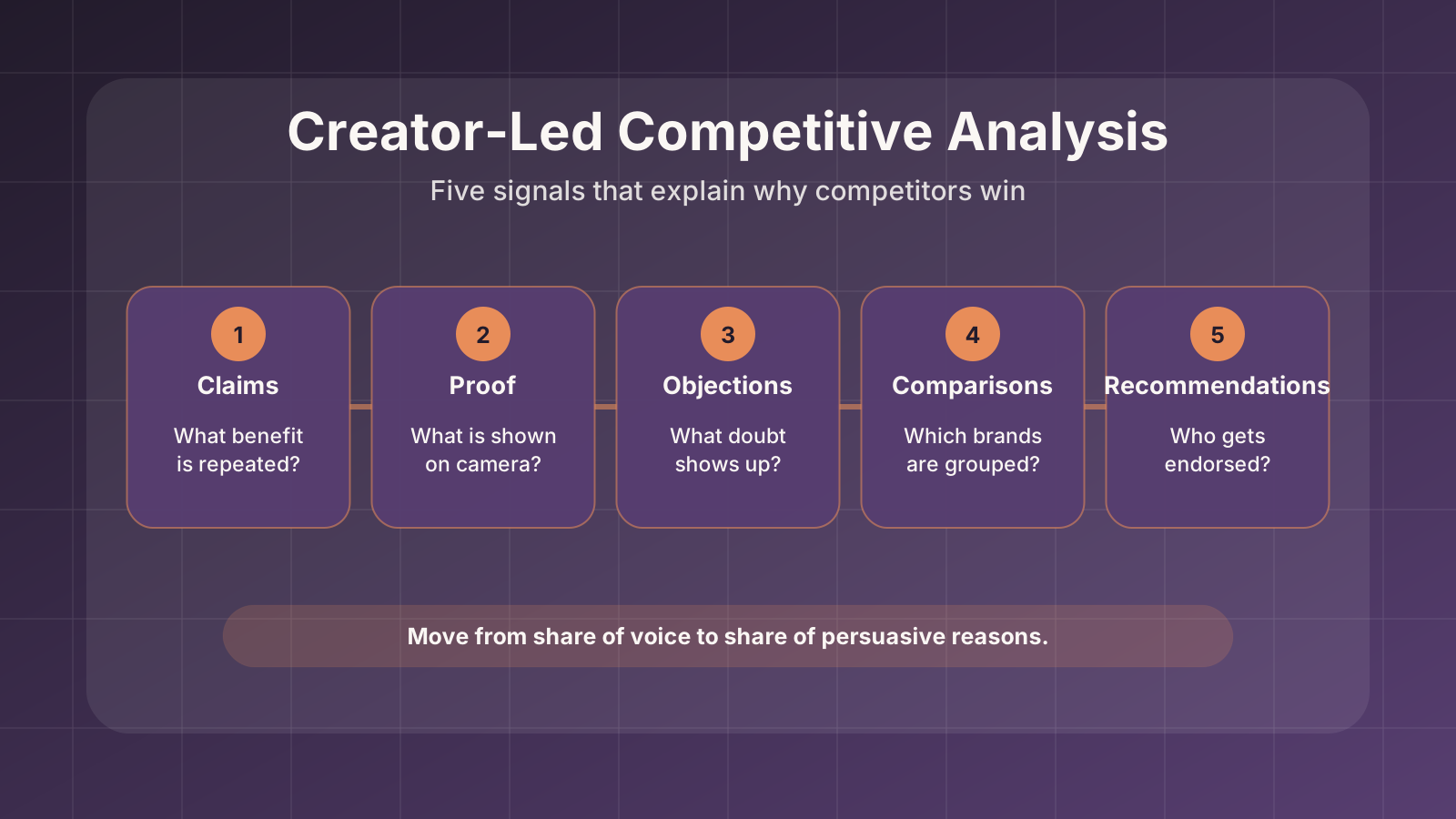
Brands should compare five creator signals across competitors: claims, proof, objections, comparisons, and recommendations. Together, these signals explain not only who is being discussed, but why the market is moving.
1. Claims
Claims are the benefits creators repeat in their own words. They might say a moisturizer "does not pill," a snack "actually tastes homemade," or a dress "looks expensive but fits like loungewear." These claims reveal the language consumers may trust more than brand copy.
2. Proof
Proof is what creators show on camera. In beauty, this can be texture, finish, before-and-after, wear time, or shade match. In food and beverage, it can be crunch, pour, melt, packaging, or taste reaction. In fashion, it can be fit, movement, styling, and durability. Proof is where video outperforms text.
3. Objections
Objections reveal why buyers hesitate. Price, shade range, shipping, ingredient concerns, sizing, taste, packaging, and trust all show up in creator videos and comments. Objections are useful because they show where your brand can differentiate without guessing.
4. Comparisons
Comparisons show which brands buyers mentally group together. Dupe videos, "this vs that" reviews, category rankings, and side-by-side demos reveal the real competitive set. It may not match the competitive set in your internal deck.
5. Recommendations
Recommendations show strength of advocacy. A creator saying "buy this," "skip this," "this replaced my old favorite," or "this is a dupe for X" is giving you a stronger signal than a neutral mention.
This is where content-first creator discovery becomes strategic. Instead of finding creators only by audience size, brands can find creators who already explain the category, compare alternatives, and influence product perception. The best influencer discovery tools for agencies guide covers the broader tool landscape, but creator-led competitive analysis gives discovery a sharper input: which creators are already shaping competitor preference?
How does creator-led competitive analysis turn insights into product, messaging, and influencer strategy?
Creator insights become useful when they are routed into decisions: product roadmap, messaging, creator outreach, campaign briefs, and competitor response. A report that stops at "Competitor X had more mentions" does not change strategy.
Use the output this way:
Product: Turn recurring complaints and desired attributes into product feedback. If creators praise a competitor's packaging, texture, or fit, that is product insight.
Messaging: Translate repeated creator claims into language your brand can test. If creators use a simpler phrase than your landing page, the creator language probably wins.
Creator outreach: Prioritize creators already explaining the category or comparing competitors. They understand the buying frame before the brief arrives.
Campaign briefs: Build briefs around the proof buyers need to see, not only the claims you want creators to repeat.
Competitive response: Identify where competitors win by narrative rather than by feature, then decide whether to counter, ignore, or reframe.
The workflow is strongest when it includes spoken and visual signals. A creator may never type the competitor name in the caption, but they may say it in the video, show the package, or compare the product visually. That is why a video-native layer like Syncly Social matters. It can pair Audio Intelligence with AI Vision so teams can search the content itself, not only hashtags and captions. For teams already doing broader TikTok category work, the existing TikTok competitor analysis guide is the natural pillar to link this spoke into.
The final goal is not prettier competitor reporting. It is better decisions: which claims to test, which creators to recruit, which product gaps to prioritize, and which competitor narratives to stop ignoring.
Key Takeaways
Creator-led competitive analysis studies independent creator videos to understand why competitors win, not just how often they are mentioned.
Traditional TikTok competitor analysis is useful, but it overweights account metrics, hashtags, engagement, and share of voice.
The five creator signals to compare are claims, proof, objections, comparisons, and recommendations.
Creator insights should feed product, messaging, creator outreach, campaign briefs, and competitive response.
Video-native listening matters because many competitive signals appear in spoken audio or visual proof, not captions.
Conclusion
Competitor analysis in the video era has to move closer to the buyer's actual evidence. That evidence is not always in your competitor's owned posts. It is in the creator explaining why the product worked, showing the texture, naming the dupe, or telling viewers what to skip.
The brands that win will study those creator narratives before they show up as lost market share. They will not only ask who got more mentions. They will ask which reasons, demos, and recommendations made the competitor easier to believe.
See which creator narratives are helping competitors win your category. Start your free trial with Syncly Social →