Ultimate Guide to the Best TikTok Creator Discovery Tools in 2026
Author :
Luke Bae
Published :
In the traditional world of influencer marketing, the rule was simple: "More Followers = More Reach." Brands paid a premium for Macro-influencers, assuming their message would be broadcast to millions. But the game has changed. We have entered the era of the Interest Graph, where a creator with 1 million followers can post a video that flops, while a complete unknown can generate 5 million views overnight. This unpredictability creates a massive opportunity for brands, but only if they know how to look for the right signals.
Finding the right partner is no longer about sorting through a database for the one with the most followers. It is about finding Relevance, Velocity, and Context. This guide outlines the exact framework, tools, and vetting strategies you need to build a high-performing creator portfolio in 2026.
The 2026 Data Reality: Why No Single Tool Wins
Before you compare vendors, understand the structural reality of TikTok discovery in 2026:
TikTok One (Creator Marketplace) is the source of truth for first-party metrics (retention, completion, and sales signals for Shop-driven programs). It is also where TikTok has been consolidating creator workflows and new brand projects since 2025.
Third-party platforms unlock the long tail: creators who have not opted into TikTok’s native marketplace, or who are still too small or too new to show up in official databases. These tools excel at scraping public signals, analyzing content at scale, and operationalizing outreach.
The winning setup is almost always a stack: use TikTok One to validate first-party performance and eligibility, then use third-party tools to discover faster, go deeper on context, and run workflows.
The Core Platforms: Enterprise and Growth Engines
These platforms represent the primary solutions for brands and agencies serious about scaling their creator marketing efforts. They offer a mix of discovery, workflow automation, and analytics.
1. Syncly Social
Best for: Conversational Intelligence, demographic analysis, and discovering authentic, untagged creators
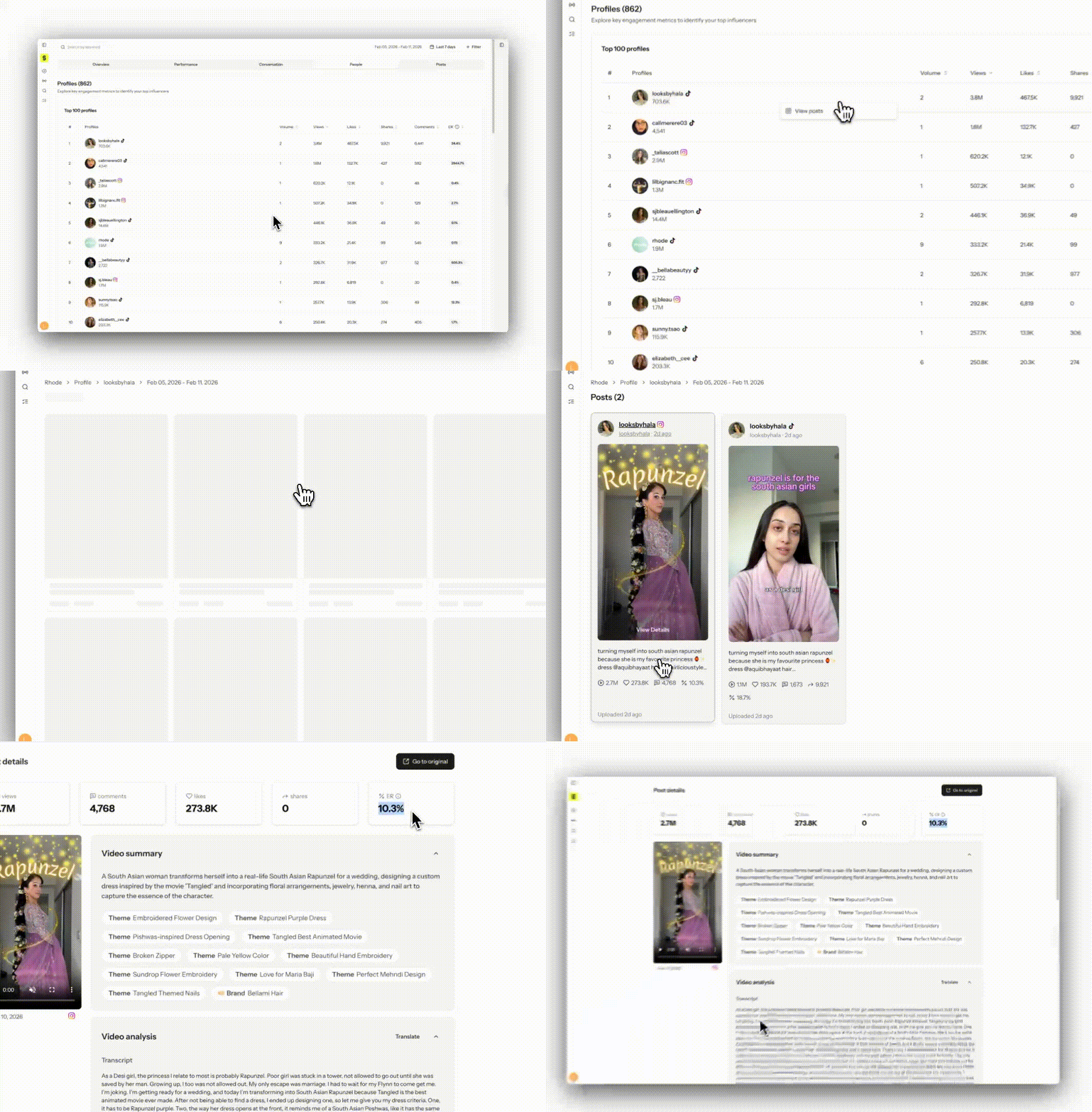
Syncly Social solves a critical modern discovery problem: untagged mentions. While traditional tools rely on captions and hashtags, Syncly Social analyzes video and audio directly to capture mentions of a brand or product that are not explicitly tagged. This helps brands discover “hidden gem” creators who are already organic advocates but are invisible to keyword-based search engines.
Why Choose Syncly Social?
Conversational video intelligence: Transcribes and analyzes what is said inside videos, so you can search by spoken intent (not just text metadata). Examples: “my skin feels dry,” “this tastes too sweet,” “I switched because it’s cheaper.”
Untagged mentions = warm leads: Find creators who organically talk about your product without tagging you. These are typically higher-converting outreach targets than cold lists.
Visual context signals: Because Syncly analyzes video, it can capture context beyond captions (for example, what appears on screen alongside what’s said).
Creator demographics: Syncly uses visual signals to estimate creator demographics for representation auditing and inclusive planning. Treat these as directional estimates, and use responsibly (follow local privacy and anti-discrimination laws, and prefer self-reported data when available).
Affordable power: With a starting price of $259/month, it brings video intelligence within reach of a mid-market budget.
2. CreatorIQ
Best for: Enterprise-grade management, governance, and brand safety
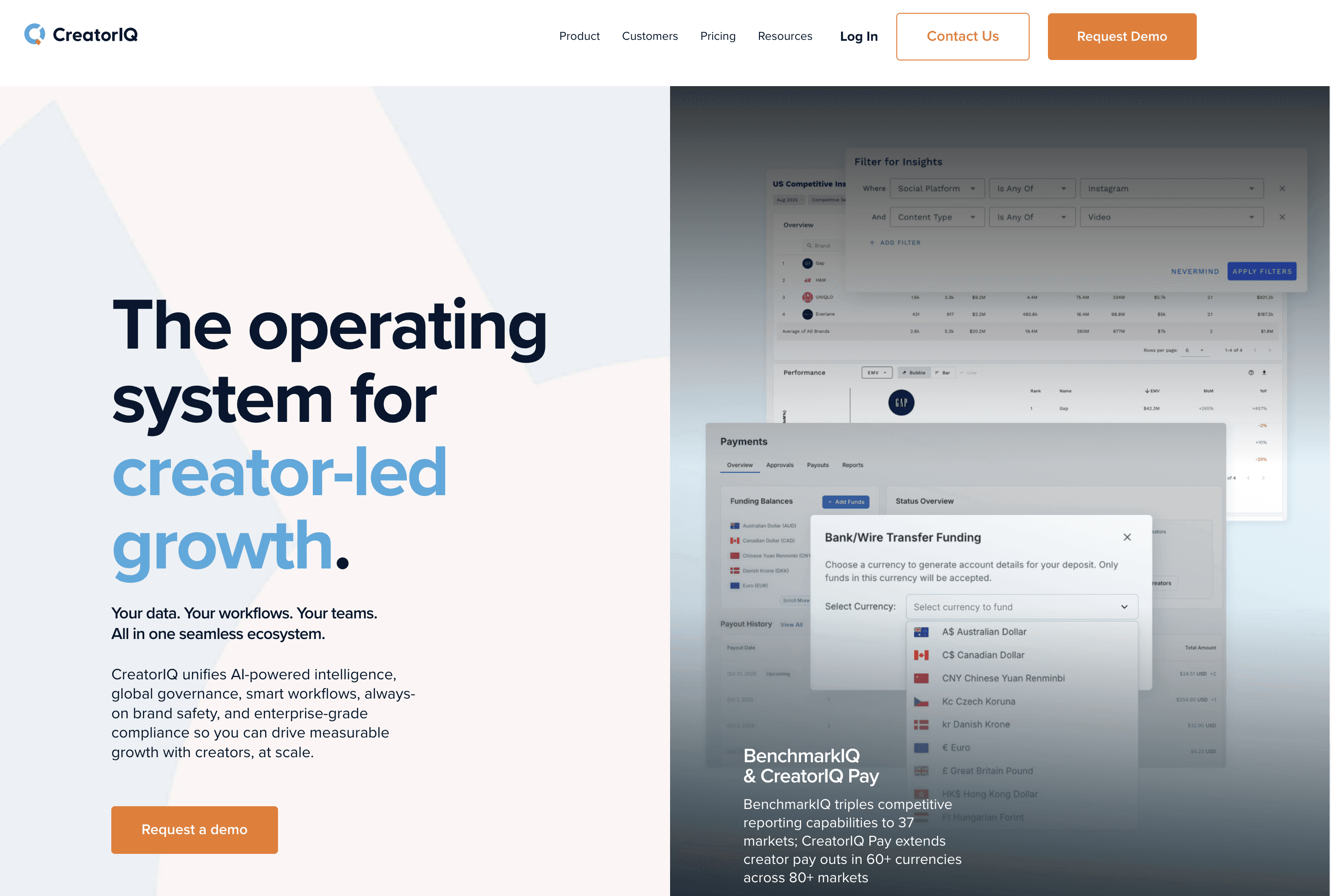
CreatorIQ is a comprehensive end-to-end platform designed for large organizations that require robust governance and brand safety controls. It emphasizes content-first discovery and is widely positioned as a “creator OS” for enterprises that need standardized workflows across markets.
Why Choose CreatorIQ?
AI-native brand safety: Multimodal scanning (text, audio, visual) to reduce suitability risk.
First-party integration posture: Strong positioning around direct platform integrations and compliant performance data pathways.
Full-funnel management: Discovery, outreach, contracting, payments, and reporting in one place.
3. TikTok Creator Marketplace (in TikTok One)
Best for: Verified first-party data, scaled activations, and trend analysis
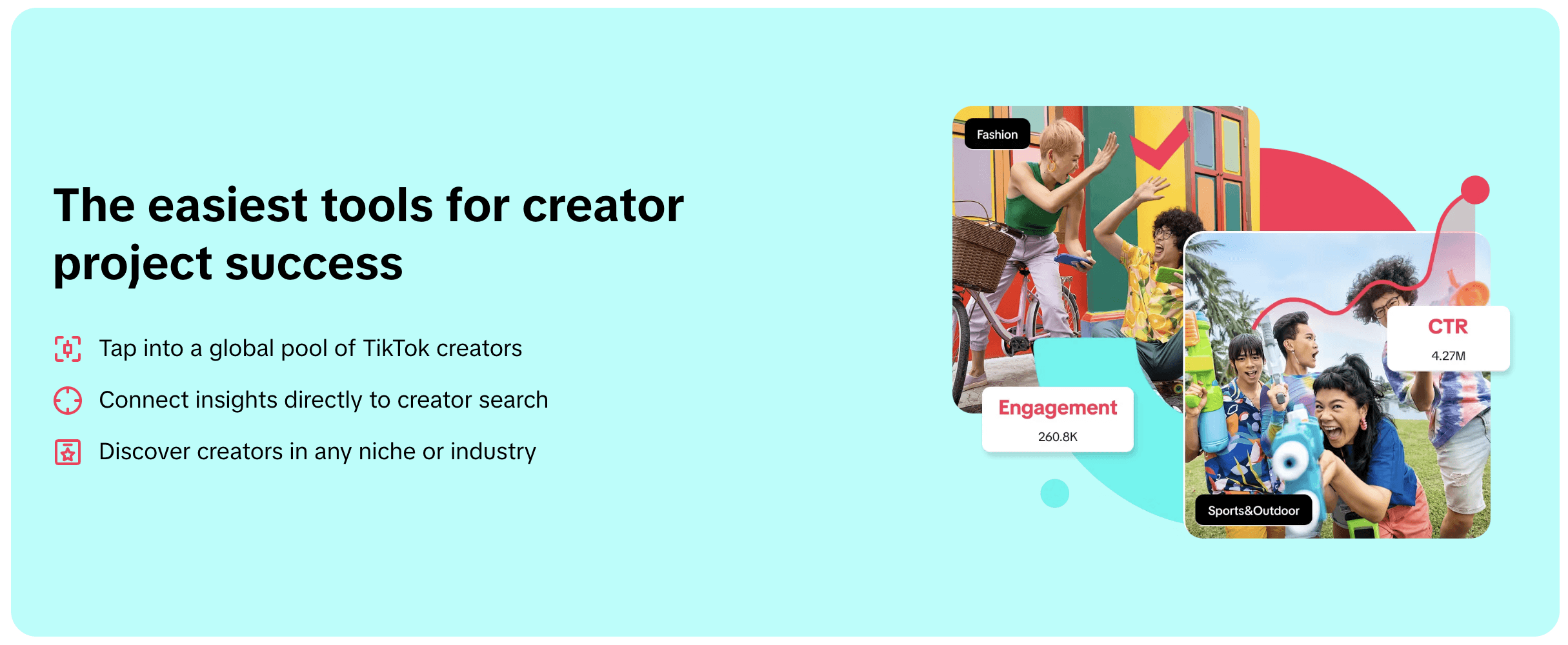
As TikTok’s native platform, Creator Marketplace inside TikTok One is the closest thing to a “single source of truth” for TikTok creator data. It is the only place to consistently access verified, first-party insights like audience retention graphs and video completion metrics.
Why Choose TikTok Creator Marketplace?
Unrivaled accuracy: Access to backend data that third-party tools cannot reliably reproduce.
Inbound discovery via applications: Features like Open Applications (and TikTok’s broader push toward brief-based creator matching) reduce cold outreach friction.
Sales performance data (TikTok Shop): For commerce-first teams, native discovery can surface creators based on sales outcomes (for example, products sold and revenue/GMV signals).
Trend intelligence: TikTok’s Creative Center helps you spot trending hashtags, songs, and breakout creators by region and category.
4. Captiv8
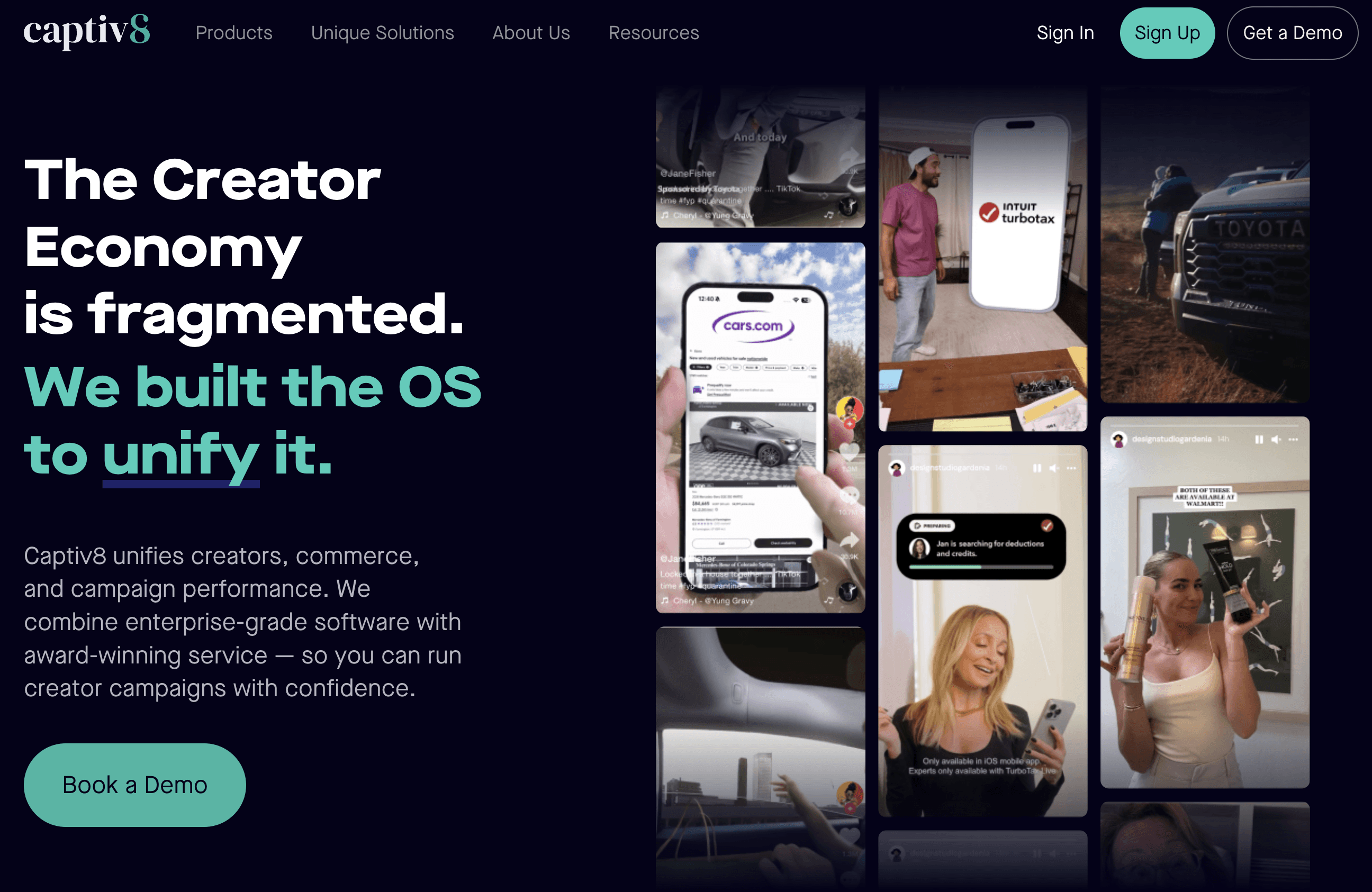
Best for: Performance amplification and paid media workflows
Captiv8 is an influencer marketing platform that excels at turning creator content into paid performance assets, with workflows designed for Spark Ads and boosted content.
Why Choose Captiv8?
Verified campaign analytics posture: Strong emphasis on API-based reporting over manual screenshots.
Paid media integration: Seamlessly transition from organic creator content to paid ad campaigns.
Safety tooling: Real-time scanning and risk monitoring options for enterprise teams.
5. GRIN
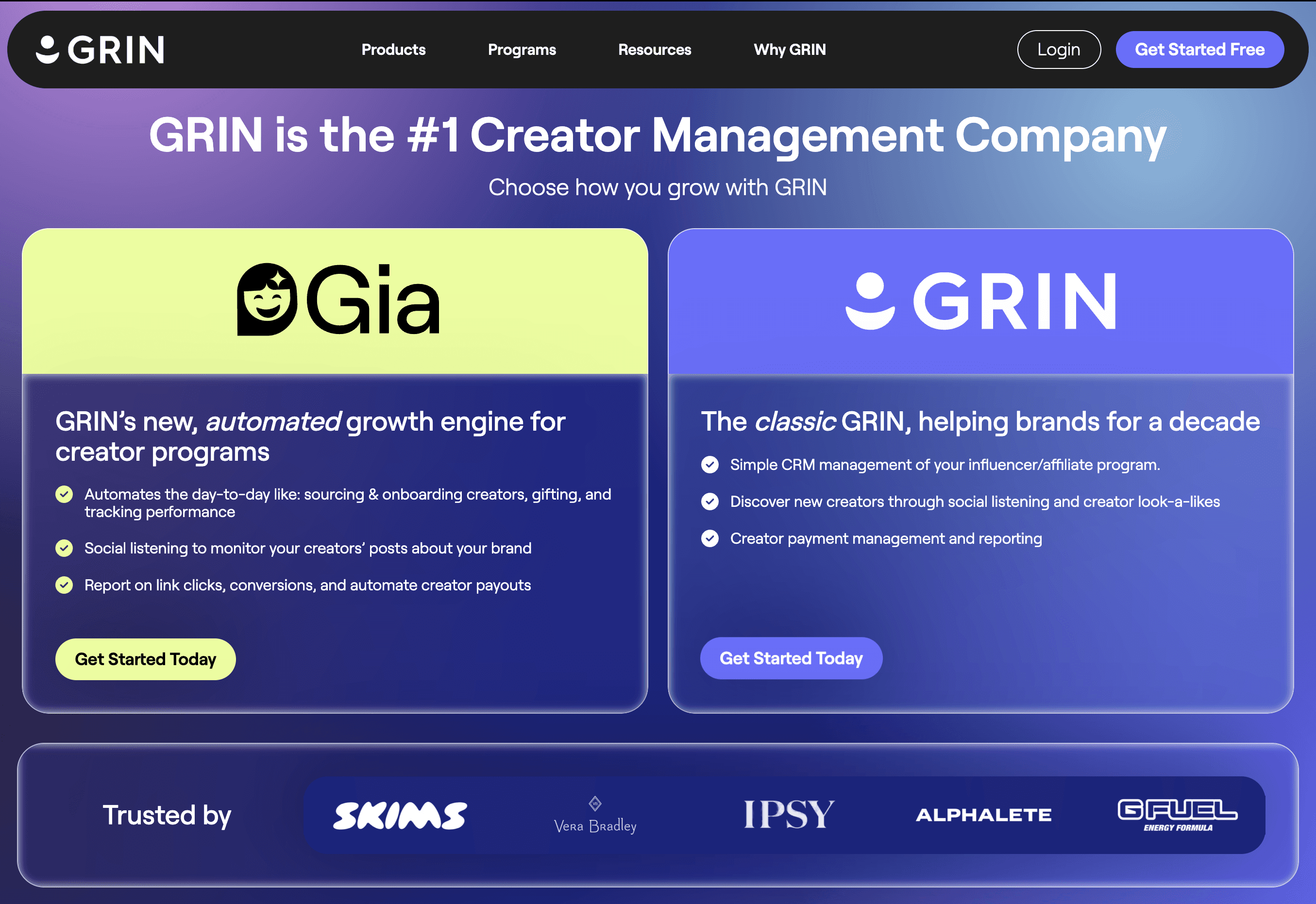
Best for: E-commerce integration and affiliate program management
GRIN is built for DTC and e-commerce brands. It stands out for deep integrations with platforms like Shopify, making it ideal for managing product seeding, gifting, and affiliate programs at scale.
Why Choose GRIN?
E-commerce centric workflows: Product seeding, affiliate links/codes, payouts, and creator CRM in one place.
Transparent pricing: Published tiers (starting from $399/month) and a free trial are rare in this category.
Social listening layer: Useful for spotting mentions and trends connected to product demand.
6. Modash
Best for: Scaling discovery across the long tail with self-serve pricing
Modash is often chosen by growth teams that need a large searchable creator database, fast vetting, and practical campaign ops without an enterprise procurement cycle.
Why Choose Modash?
Un-gated discovery: Built to find creators beyond opt-in marketplaces, including nano and micro creators.
Vetting signals: Audience quality, suspicious follower patterns, and quick credibility checks to reduce fraud risk.
Practical ops: CRM-style pipelines plus e-commerce and inbox integrations (depending on tier).
Pricing transparency: Public entry pricing is typically available (often starting around $199/month on annual plans).
7. Traackr
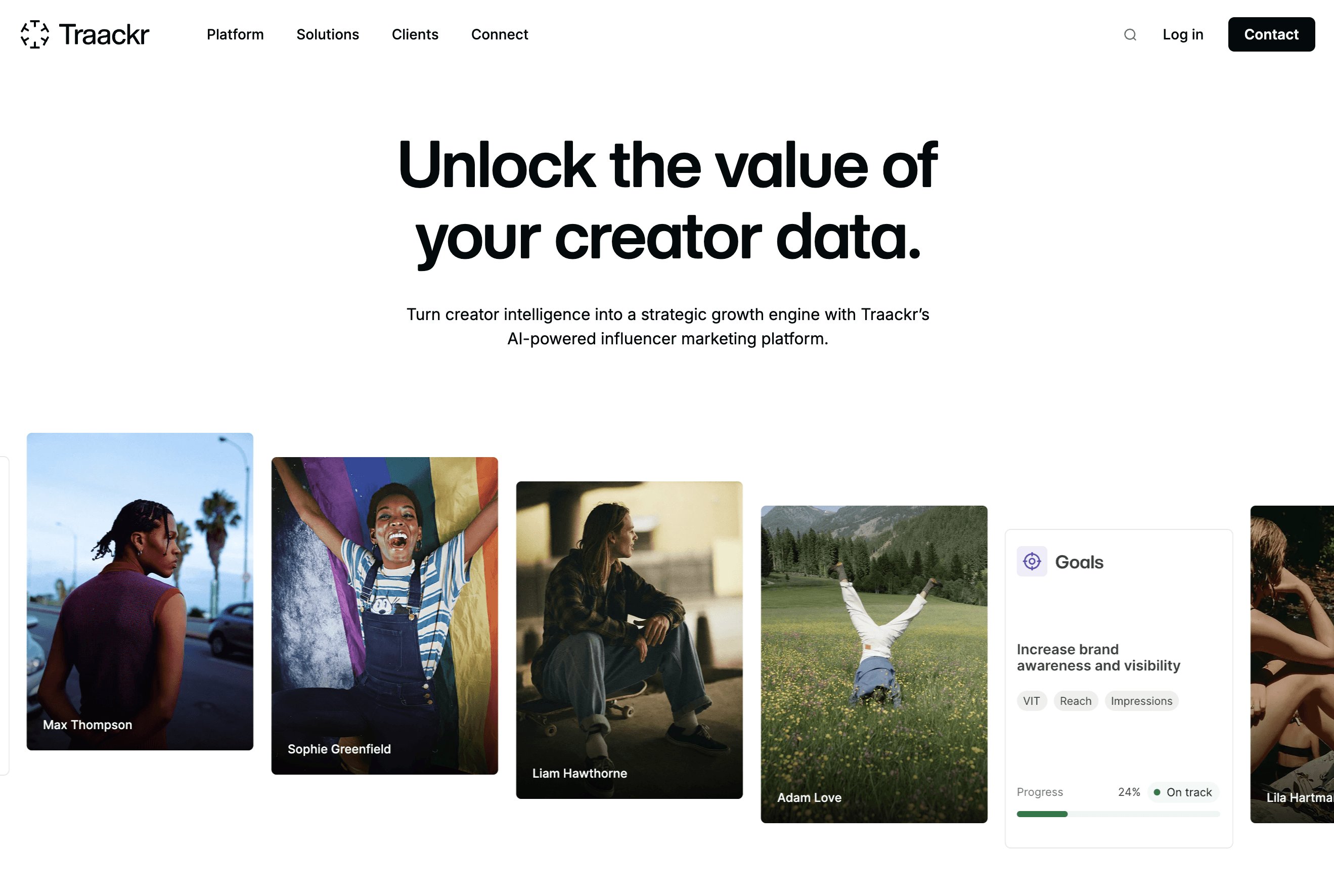
Best for: Benchmarking and measurement frameworks at enterprise scale
Traackr is widely used by enterprise teams that need consistent measurement and benchmarking across markets, categories, and creator tiers.
Why Choose Traackr?
Benchmarking: Helps answer “Is this creator good relative to peers?” not just “Is the engagement rate high?”
Discovery and listening: Combines creator discovery with social listening signals and program measurement.
8. Sprout Social Influencer Marketing (Tagger)
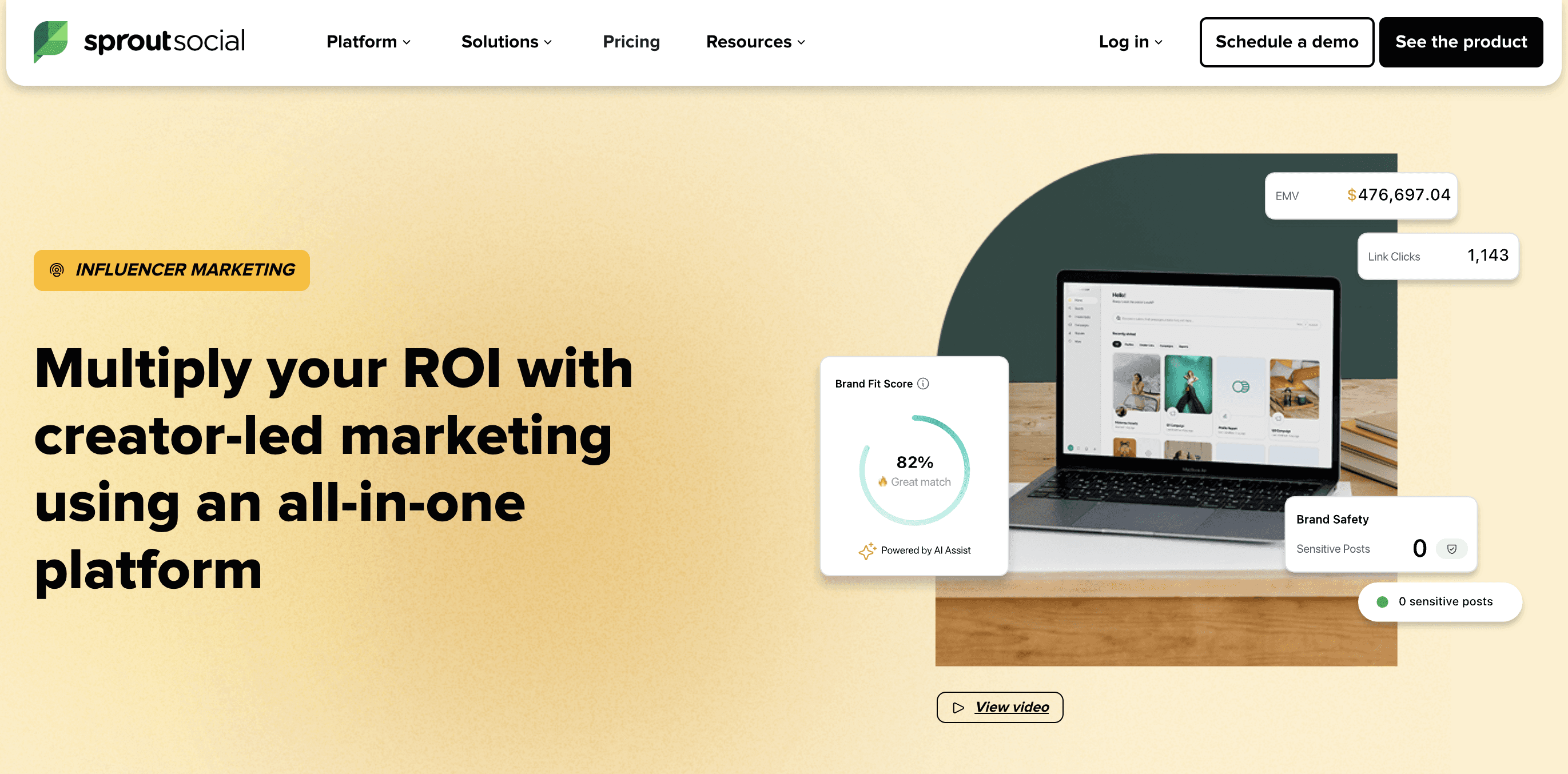
Best for: Topic-led creator discovery with brand safety inside a broader social suite
For teams already invested in Sprout Social, its Influencer Marketing product (from Tagger) can unify social management, listening, and influencer workflows.
Why Choose Sprout Social Influencer Marketing?
Topic-led discovery: Built for how people actually consume content (topics and interests, not just follower count).
Workflow and safety: Outreach, approvals, reporting, and brand safety options in one system (especially valuable for cross-functional teams).
9. Upfluence
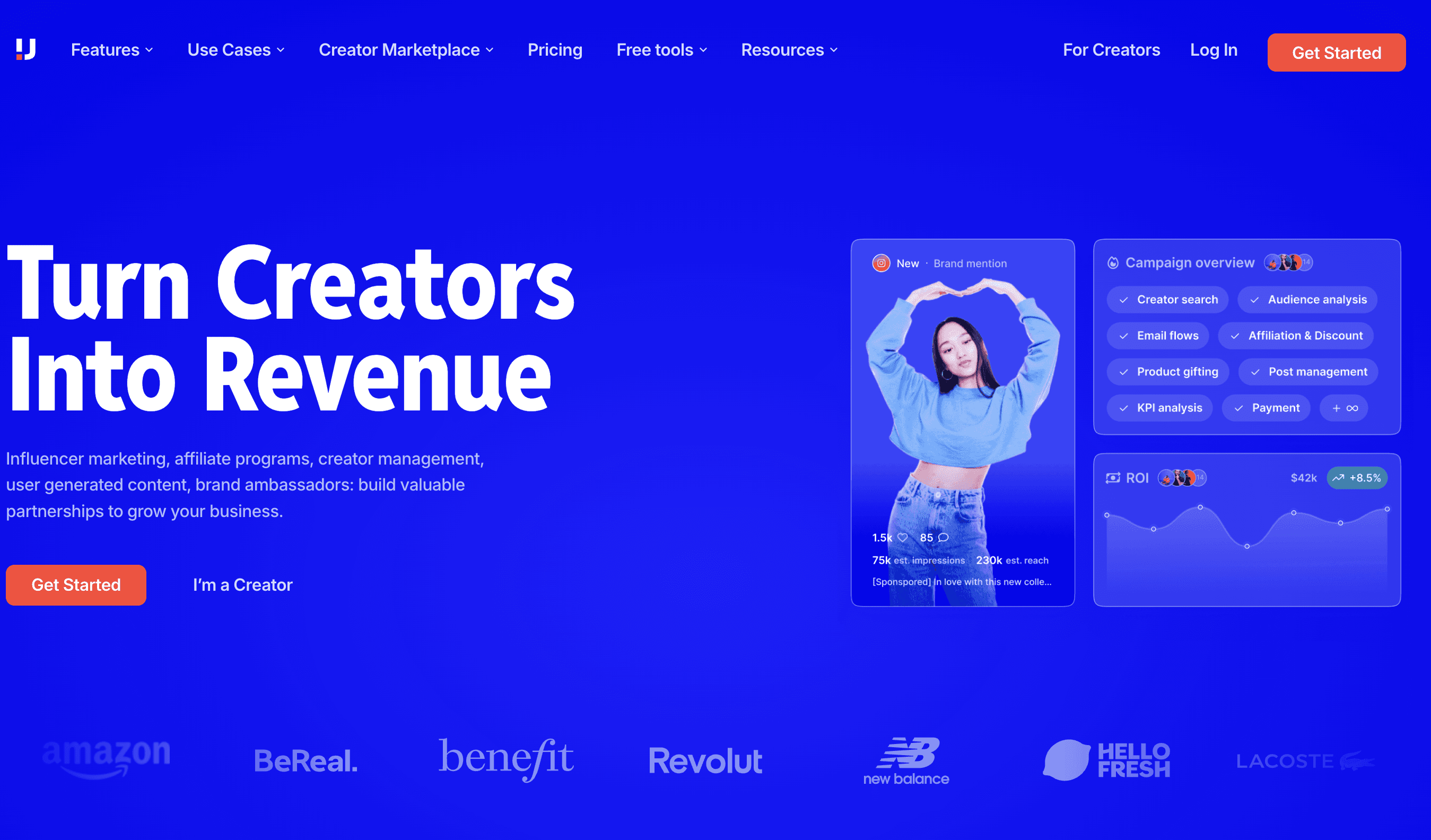
Best for: Affiliate scale and commerce-driven creator programs
Upfluence is commonly selected when the business model is affiliate-heavy and the program needs scale (hundreds to thousands of creators) with strong commerce integrations.
Why Choose Upfluence?
Automation: Outreach and creator pipeline automation to scale programs.
Commerce integrations: Strong positioning around Shopify and broader e-commerce connections.
10. HypeAuditor
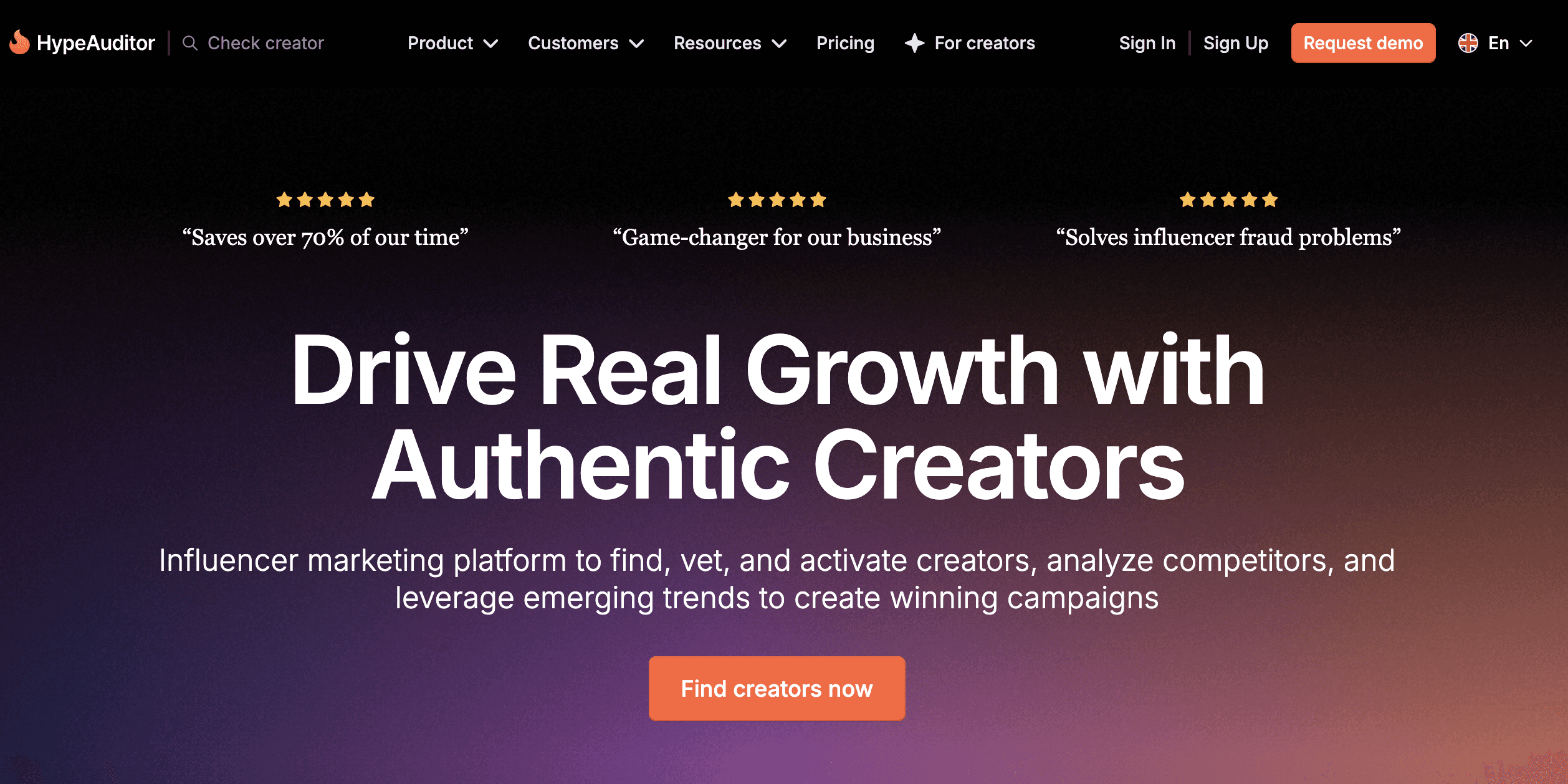
Best for: Authenticity and fraud detection as a gating step
HypeAuditor is best known for credibility scoring, audience quality analysis, and fraud detection, especially when you inherit creator lists you need to validate quickly.
Why Choose HypeAuditor?
Fraud-focused vetting: Audience quality scoring, growth anomalies, and authenticity checks.
Discovery and analytics: Useful both for list validation and net-new creator search.
Specialized and Niche Discovery Tools
Beyond the core platforms, a rich ecosystem of specialized tools solves specific discovery problems, from visual aesthetics to audio trends.
Visual and Aesthetic Discovery
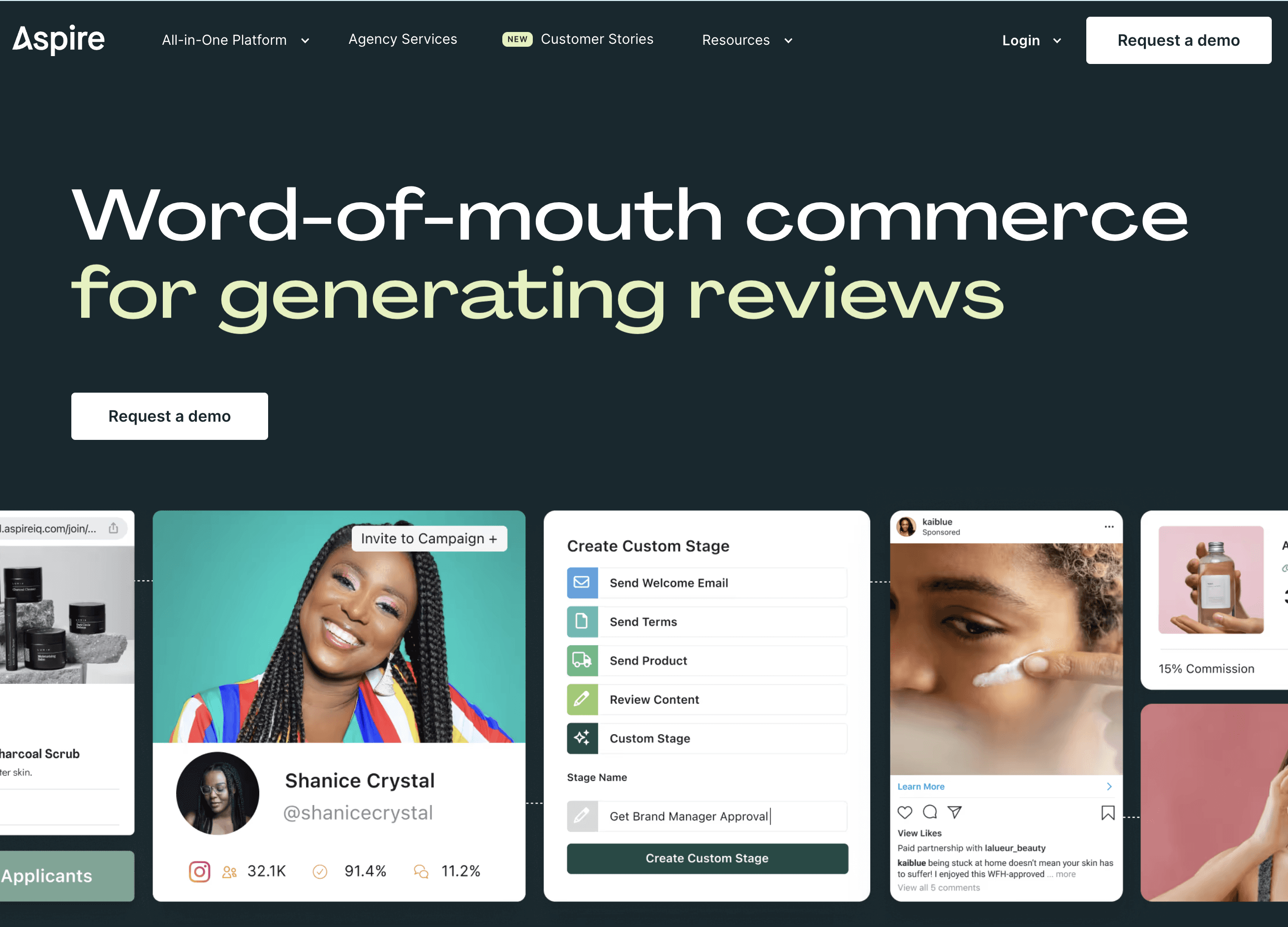
Aspire: A pioneer in visual discovery. Upload a reference image or mood board, and its computer vision engine finds creators whose content matches that aesthetic. This is especially valuable for fashion, home decor, and travel brands.
Trend and Audio Intelligence
Exolyt: Holistic trend tracking. Identify “early adopters” and monitor competitor creator activations.
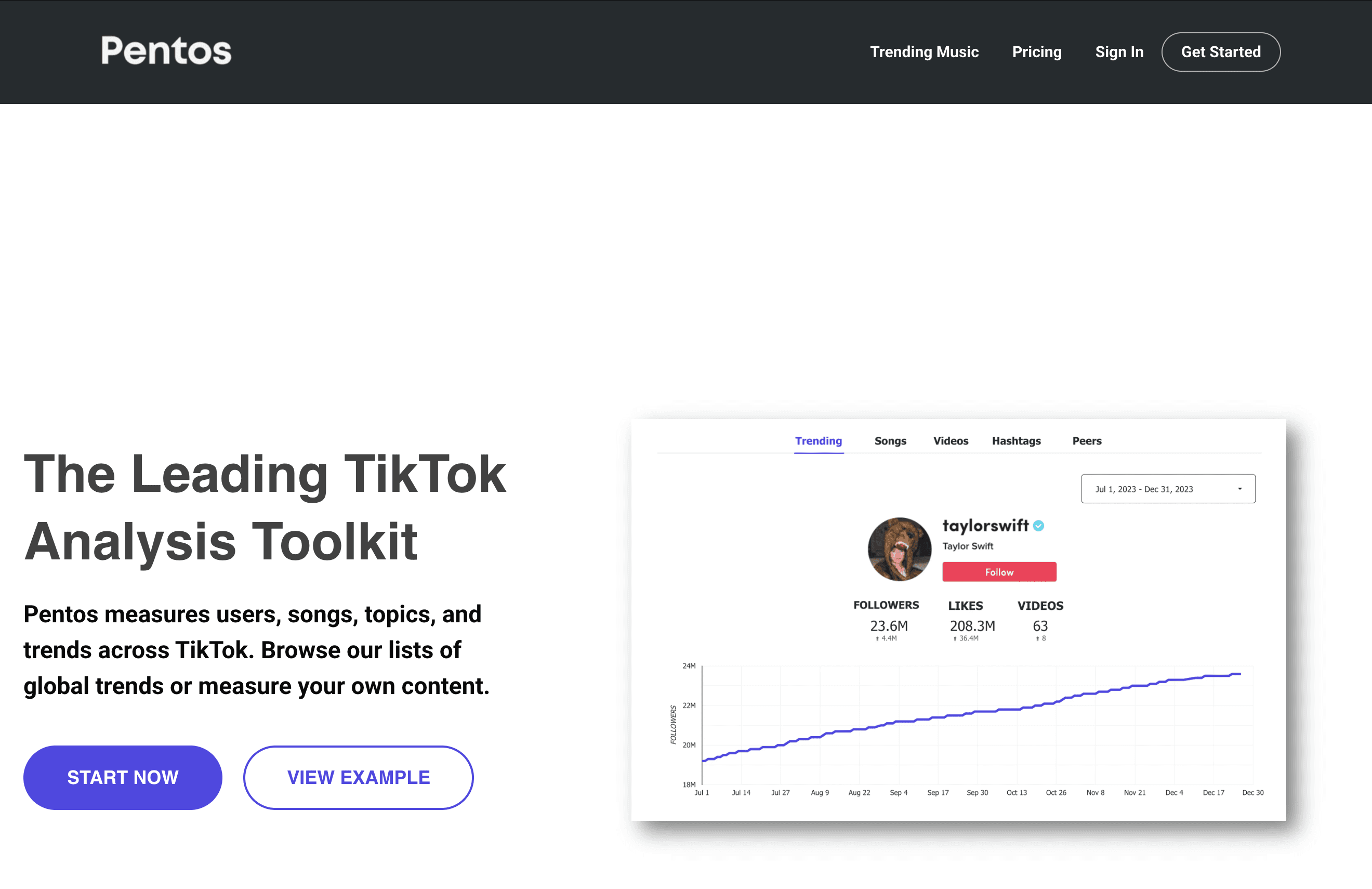
Pentos: Audio-first analytics for sounds and songs. Useful for finding every creator using a specific jingle, remix, or sound.
UGC and Transactional Marketplaces
Collabstr: Fixed pricing and escrow-style payments, ideal for fast sourcing of UGC at predictable costs.
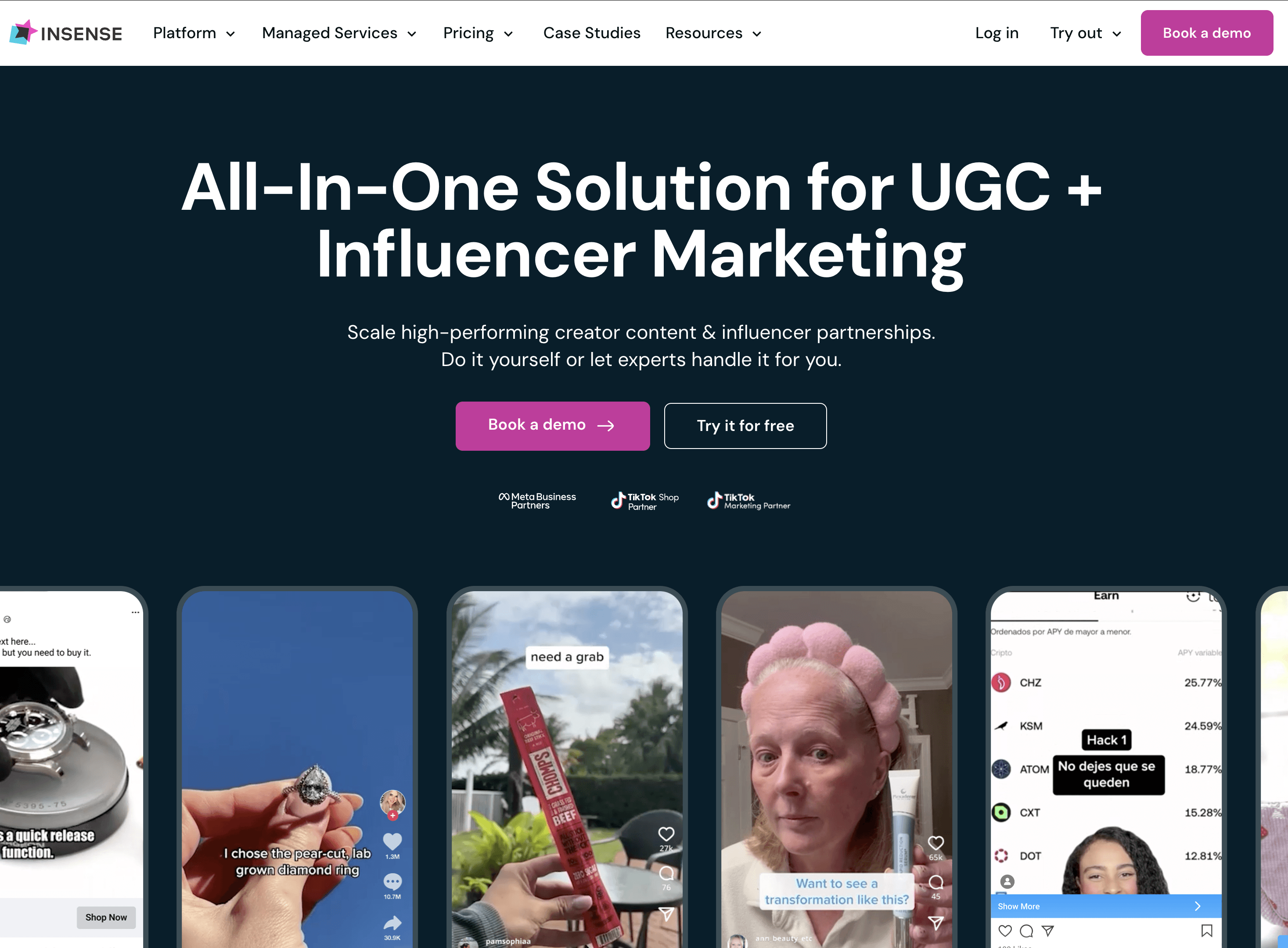
Insense and Billo: Brief-based creative factories designed for performance teams, including streamlined Spark Ad access (allowlisting) workflows.
The Freemium Disruptor
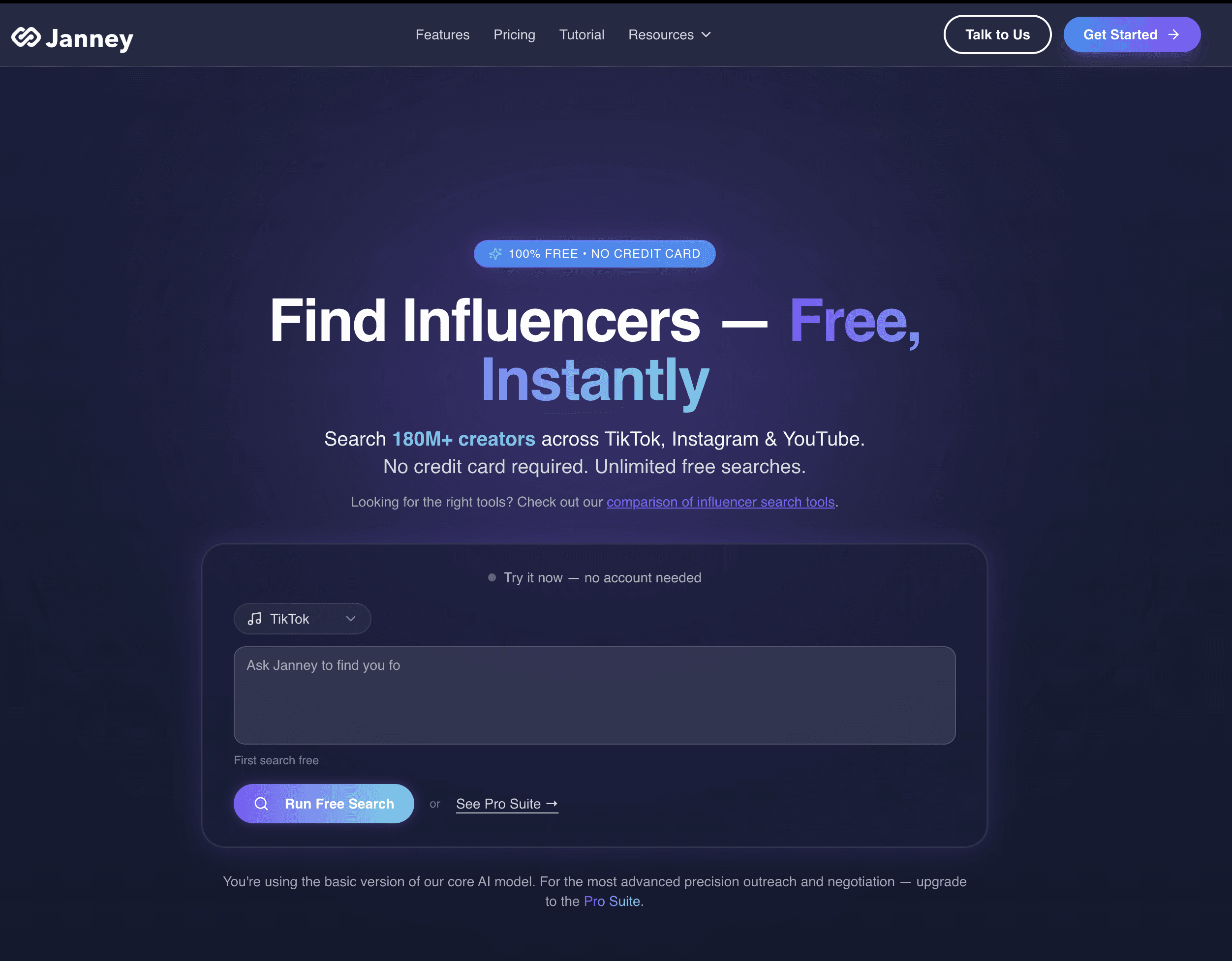
Janney AI: Commoditizes basic discovery with a free tier, then monetizes via automated outreach and negotiation features.
Tool Comparison Table: Pick the Right Fit Faster
Use this table to quickly compare the most common choices. Pricing and exact feature availability can vary by plan and region, so treat this as a directional cheat sheet.
Tool | Best for | Discovery superpower | Data reality | Pricing style |
|---|---|---|---|---|
TikTok Creator Marketplace (TikTok One) | First-party validation and scaled activations | Verified retention/completion plus native matching | First-party TikTok only; opt-in and eligibility constraints | Not always publicly listed |
Syncly Social | Untagged advocates and deep context | Conversational search inside videos plus demographic auditing | Video/audio-native analysis; strong for organic warm leads | From $259/month |
CreatorIQ | Enterprise governance | Global creator CRM plus brand safety and workflows | Enterprise integrations; best for compliance-heavy orgs | Quote-based |
Captiv8 | Paid amplification workflows | Creator content to Spark Ads plus measurement | Strong emphasis on API reporting and paid workflows | Quote-based |
GRIN | Shopify-first affiliate and seeding | Customer-to-creator and commerce ops | Best when commerce attribution matters | From $399/month |
Modash | Growth teams scaling discovery | Huge database plus lookalikes and quick vetting | Public-signal driven; great for long-tail creators | From ~$199/month |
Traackr | Benchmarking and program measurement | Peer benchmarks plus enterprise reporting | Strong for exec reporting and governance | Quote-based |
Sprout Social IM (Tagger) | Unified social and influencer stack | Topic-led discovery plus workflow and safety | Best when you already use Sprout | Add-on (pricing varies) |
Upfluence | Affiliate scale | High-volume outreach plus commerce integrations | Built for scale and payouts | Quote-based (often annual) |
HypeAuditor | Fraud detection | Audience quality scoring plus authenticity checks | Great as a vetting layer | Free entry options; paid plans vary |
Aspire | Aesthetic matching | Mood board / visual similarity search | Strong for visual brand fit | Quote-based |
What to Verify Before You Buy (Demo Checklist)
Most tools look similar in a sales deck. These are the questions that actually separate “nice UI” from a platform you can trust for outcomes:
Data provenance: Is the platform using TikTok first-party data (native), an approved integration, creator-authenticated data, public aggregation, or a mix?
Freshness: How often is creator data updated (or is it real-time only during campaigns)? What is the update cadence for discovery databases?
Discovery depth: Can you search by content, audience fit, and context (including what’s said in the video), or only by profile-level keywords?
Integrity controls: Fraud detection, audience quality scoring, and brand suitability. How are false positives handled?
Operational workflow: Outreach, briefs, contracts, usage rights, and payments. Can your legal and finance teams live inside it?
Paid amplification: Spark Ads / allowlisting workflows, permission duration, and what reporting you get once content is boosted.
Integrations and exports: TikTok Ads, Shopify, BI exports, API access, and whether your stack can reliably pull data into dashboards.
Platform dependency risk: What happens to your workflows if TikTok changes API access or permissions?
Strategic Frameworks: Choosing Your Stack
The best tool is subjective. It depends on your brand’s maturity, budget, and goals. Here is a practical way to build a stack.
Stack Type | Budget (Monthly) | Discovery Tools | Vetting and Outreach | Strategy |
|---|---|---|---|---|
The "Scrappy" Stack | $0 to $500 | Janney AI (Free), TikTok One | Manual checks, HypeAuditor (Free tools), DMs | High labor, low cost. Ideal for startups. |
The "Growth" Stack | $500 to $2,000 | Syncly Social, Modash, Insense | Modash (credibility checks), Syncly (warm leads), Upfluence or lightweight CRM | Scale from 10 to 100 creators with automation and better targeting. |
The "Enterprise" Stack | $5,000+ | CreatorIQ, Traackr, TikTok One | Safe workflows, brand safety reviews, BI exports | Global governance, brand safety, and omnichannel integration. |
The "Niche" Stack | Varies | Syncly Social (DEI), Aspire (Visual), Pentos (Audio) | Specialized vetting | Solve one specific constraint (representation, aesthetic, audio trends). |
A Practical Growth Stack (with Syncly Social)
If you are building a growth stack specifically for TikTok in 2026, a simple, high-leverage workflow looks like this:
Start with Syncly Social to find organic advocates via untagged mentions and conversational search.
Expand with Modash to build lookalike lists and scale outreach to the long tail.
Validate in TikTok One when you need first-party proof (retention, completion, and Shop performance).
Produce at scale with Insense/Billo when your bottleneck is UGC volume for ad testing.
Operationalize commerce with GRIN (or Upfluence) if affiliate payouts, gifting, and tracking are central to ROI.
Conclusion: The Future is Contextual
TikTok creator discovery in 2026 is defined by the transition from metrics to context. The old question was, "Find me a creator with 1 million followers." The new question is, "Find me a creator in Chicago who is already talking about dry skin and uses a minimalist visual aesthetic."
The tools that are winning, including Syncly Social with its conversational and demographic AI, Aspire with visual search, and TikTok One with verified retention data, are those that provide this deep context.
For brands, the mandate is clear: stop hunting for followers. Start hunting for signals. Whether those signals are sales data (GRIN), audio trends (Exolyt), or conversational nuance (Syncly Social), the future of discovery lies in decoding the rich, unstructured data of the TikTok Interest Graph.
FAQ
What is the biggest change in creator discovery in 2026?
The shift from the Social Graph (followers) to the Interest Graph (content relevance). Your job is no longer to find the biggest accounts, but to find creators whose content is currently resonating with the exact audience you need.
Should I start with TikTok One (Creator Marketplace) or a third-party tool?
Start with TikTok One if you need first-party validation, retention metrics, and native collaboration workflows. Add third-party tools when you need long-tail discovery, deeper context (what creators say and show), and faster scaling.
How do I find creators who talk about my product but never tag my brand?
Use a tool built for untagged mentions and audio/video analysis. Syncly Social is designed for this by analyzing what is said inside the video, not just captions and hashtags.
How do I reduce the risk of fake followers and inflated engagement?
Use a dedicated vetting layer (Modash, HypeAuditor, or enterprise safety suites) and always sanity-check: follower growth spikes, engagement consistency, comment quality, and audience geography.
When do I need an enterprise platform like CreatorIQ?
When you have multiple markets, multiple stakeholders, compliance constraints (legal and regulated categories), or you need audited workflows for contracts, payments, and approvals.
If I only have budget for one paid tool, what should it be?
If your biggest gap is finding authentic creators already talking about your product, start with Syncly Social. If your biggest gap is scaling net-new discovery across many niches, start with Modash. If your biggest risk is fraud, prioritize a vetting-first tool like HypeAuditor.
In the traditional world of influencer marketing, the rule was simple: "More Followers = More Reach." Brands paid a premium for Macro-influencers, assuming their message would be broadcast to millions. But the game has changed. We have entered the era of the Interest Graph, where a creator with 1 million followers can post a video that flops, while a complete unknown can generate 5 million views overnight. This unpredictability creates a massive opportunity for brands, but only if they know how to look for the right signals.
Finding the right partner is no longer about sorting through a database for the one with the most followers. It is about finding Relevance, Velocity, and Context. This guide outlines the exact framework, tools, and vetting strategies you need to build a high-performing creator portfolio in 2026.
The 2026 Data Reality: Why No Single Tool Wins
Before you compare vendors, understand the structural reality of TikTok discovery in 2026:
TikTok One (Creator Marketplace) is the source of truth for first-party metrics (retention, completion, and sales signals for Shop-driven programs). It is also where TikTok has been consolidating creator workflows and new brand projects since 2025.
Third-party platforms unlock the long tail: creators who have not opted into TikTok’s native marketplace, or who are still too small or too new to show up in official databases. These tools excel at scraping public signals, analyzing content at scale, and operationalizing outreach.
The winning setup is almost always a stack: use TikTok One to validate first-party performance and eligibility, then use third-party tools to discover faster, go deeper on context, and run workflows.
The Core Platforms: Enterprise and Growth Engines
These platforms represent the primary solutions for brands and agencies serious about scaling their creator marketing efforts. They offer a mix of discovery, workflow automation, and analytics.
1. Syncly Social
Best for: Conversational Intelligence, demographic analysis, and discovering authentic, untagged creators
Syncly Social solves a critical modern discovery problem: untagged mentions. While traditional tools rely on captions and hashtags, Syncly Social analyzes video and audio directly to capture mentions of a brand or product that are not explicitly tagged. This helps brands discover “hidden gem” creators who are already organic advocates but are invisible to keyword-based search engines.
Why Choose Syncly Social?
Conversational video intelligence: Transcribes and analyzes what is said inside videos, so you can search by spoken intent (not just text metadata). Examples: “my skin feels dry,” “this tastes too sweet,” “I switched because it’s cheaper.”
Untagged mentions = warm leads: Find creators who organically talk about your product without tagging you. These are typically higher-converting outreach targets than cold lists.
Visual context signals: Because Syncly analyzes video, it can capture context beyond captions (for example, what appears on screen alongside what’s said).
Creator demographics: Syncly uses visual signals to estimate creator demographics for representation auditing and inclusive planning. Treat these as directional estimates, and use responsibly (follow local privacy and anti-discrimination laws, and prefer self-reported data when available).
Affordable power: With a starting price of $259/month, it brings video intelligence within reach of a mid-market budget.
2. CreatorIQ
Best for: Enterprise-grade management, governance, and brand safety
CreatorIQ is a comprehensive end-to-end platform designed for large organizations that require robust governance and brand safety controls. It emphasizes content-first discovery and is widely positioned as a “creator OS” for enterprises that need standardized workflows across markets.
Why Choose CreatorIQ?
AI-native brand safety: Multimodal scanning (text, audio, visual) to reduce suitability risk.
First-party integration posture: Strong positioning around direct platform integrations and compliant performance data pathways.
Full-funnel management: Discovery, outreach, contracting, payments, and reporting in one place.
3. TikTok Creator Marketplace (in TikTok One)
Best for: Verified first-party data, scaled activations, and trend analysis
As TikTok’s native platform, Creator Marketplace inside TikTok One is the closest thing to a “single source of truth” for TikTok creator data. It is the only place to consistently access verified, first-party insights like audience retention graphs and video completion metrics.
Why Choose TikTok Creator Marketplace?
Unrivaled accuracy: Access to backend data that third-party tools cannot reliably reproduce.
Inbound discovery via applications: Features like Open Applications (and TikTok’s broader push toward brief-based creator matching) reduce cold outreach friction.
Sales performance data (TikTok Shop): For commerce-first teams, native discovery can surface creators based on sales outcomes (for example, products sold and revenue/GMV signals).
Trend intelligence: TikTok’s Creative Center helps you spot trending hashtags, songs, and breakout creators by region and category.
4. Captiv8
Best for: Performance amplification and paid media workflows
Captiv8 is an influencer marketing platform that excels at turning creator content into paid performance assets, with workflows designed for Spark Ads and boosted content.
Why Choose Captiv8?
Verified campaign analytics posture: Strong emphasis on API-based reporting over manual screenshots.
Paid media integration: Seamlessly transition from organic creator content to paid ad campaigns.
Safety tooling: Real-time scanning and risk monitoring options for enterprise teams.
5. GRIN
Best for: E-commerce integration and affiliate program management
GRIN is built for DTC and e-commerce brands. It stands out for deep integrations with platforms like Shopify, making it ideal for managing product seeding, gifting, and affiliate programs at scale.
Why Choose GRIN?
E-commerce centric workflows: Product seeding, affiliate links/codes, payouts, and creator CRM in one place.
Transparent pricing: Published tiers (starting from $399/month) and a free trial are rare in this category.
Social listening layer: Useful for spotting mentions and trends connected to product demand.
6. Modash
Best for: Scaling discovery across the long tail with self-serve pricing
Modash is often chosen by growth teams that need a large searchable creator database, fast vetting, and practical campaign ops without an enterprise procurement cycle.
Why Choose Modash?
Un-gated discovery: Built to find creators beyond opt-in marketplaces, including nano and micro creators.
Vetting signals: Audience quality, suspicious follower patterns, and quick credibility checks to reduce fraud risk.
Practical ops: CRM-style pipelines plus e-commerce and inbox integrations (depending on tier).
Pricing transparency: Public entry pricing is typically available (often starting around $199/month on annual plans).
7. Traackr
Best for: Benchmarking and measurement frameworks at enterprise scale
Traackr is widely used by enterprise teams that need consistent measurement and benchmarking across markets, categories, and creator tiers.
Why Choose Traackr?
Benchmarking: Helps answer “Is this creator good relative to peers?” not just “Is the engagement rate high?”
Discovery and listening: Combines creator discovery with social listening signals and program measurement.
8. Sprout Social Influencer Marketing (Tagger)
Best for: Topic-led creator discovery with brand safety inside a broader social suite
For teams already invested in Sprout Social, its Influencer Marketing product (from Tagger) can unify social management, listening, and influencer workflows.
Why Choose Sprout Social Influencer Marketing?
Topic-led discovery: Built for how people actually consume content (topics and interests, not just follower count).
Workflow and safety: Outreach, approvals, reporting, and brand safety options in one system (especially valuable for cross-functional teams).
9. Upfluence
Best for: Affiliate scale and commerce-driven creator programs
Upfluence is commonly selected when the business model is affiliate-heavy and the program needs scale (hundreds to thousands of creators) with strong commerce integrations.
Why Choose Upfluence?
Automation: Outreach and creator pipeline automation to scale programs.
Commerce integrations: Strong positioning around Shopify and broader e-commerce connections.
10. HypeAuditor
Best for: Authenticity and fraud detection as a gating step
HypeAuditor is best known for credibility scoring, audience quality analysis, and fraud detection, especially when you inherit creator lists you need to validate quickly.
Why Choose HypeAuditor?
Fraud-focused vetting: Audience quality scoring, growth anomalies, and authenticity checks.
Discovery and analytics: Useful both for list validation and net-new creator search.
Specialized and Niche Discovery Tools
Beyond the core platforms, a rich ecosystem of specialized tools solves specific discovery problems, from visual aesthetics to audio trends.
Visual and Aesthetic Discovery
Aspire: A pioneer in visual discovery. Upload a reference image or mood board, and its computer vision engine finds creators whose content matches that aesthetic. This is especially valuable for fashion, home decor, and travel brands.
Trend and Audio Intelligence
Exolyt: Holistic trend tracking. Identify “early adopters” and monitor competitor creator activations.
Pentos: Audio-first analytics for sounds and songs. Useful for finding every creator using a specific jingle, remix, or sound.
UGC and Transactional Marketplaces
Collabstr: Fixed pricing and escrow-style payments, ideal for fast sourcing of UGC at predictable costs.
Insense and Billo: Brief-based creative factories designed for performance teams, including streamlined Spark Ad access (allowlisting) workflows.
The Freemium Disruptor
Janney AI: Commoditizes basic discovery with a free tier, then monetizes via automated outreach and negotiation features.
Tool Comparison Table: Pick the Right Fit Faster
Use this table to quickly compare the most common choices. Pricing and exact feature availability can vary by plan and region, so treat this as a directional cheat sheet.
Tool | Best for | Discovery superpower | Data reality | Pricing style |
|---|---|---|---|---|
TikTok Creator Marketplace (TikTok One) | First-party validation and scaled activations | Verified retention/completion plus native matching | First-party TikTok only; opt-in and eligibility constraints | Not always publicly listed |
Syncly Social | Untagged advocates and deep context | Conversational search inside videos plus demographic auditing | Video/audio-native analysis; strong for organic warm leads | From $259/month |
CreatorIQ | Enterprise governance | Global creator CRM plus brand safety and workflows | Enterprise integrations; best for compliance-heavy orgs | Quote-based |
Captiv8 | Paid amplification workflows | Creator content to Spark Ads plus measurement | Strong emphasis on API reporting and paid workflows | Quote-based |
GRIN | Shopify-first affiliate and seeding | Customer-to-creator and commerce ops | Best when commerce attribution matters | From $399/month |
Modash | Growth teams scaling discovery | Huge database plus lookalikes and quick vetting | Public-signal driven; great for long-tail creators | From ~$199/month |
Traackr | Benchmarking and program measurement | Peer benchmarks plus enterprise reporting | Strong for exec reporting and governance | Quote-based |
Sprout Social IM (Tagger) | Unified social and influencer stack | Topic-led discovery plus workflow and safety | Best when you already use Sprout | Add-on (pricing varies) |
Upfluence | Affiliate scale | High-volume outreach plus commerce integrations | Built for scale and payouts | Quote-based (often annual) |
HypeAuditor | Fraud detection | Audience quality scoring plus authenticity checks | Great as a vetting layer | Free entry options; paid plans vary |
Aspire | Aesthetic matching | Mood board / visual similarity search | Strong for visual brand fit | Quote-based |
What to Verify Before You Buy (Demo Checklist)
Most tools look similar in a sales deck. These are the questions that actually separate “nice UI” from a platform you can trust for outcomes:
Data provenance: Is the platform using TikTok first-party data (native), an approved integration, creator-authenticated data, public aggregation, or a mix?
Freshness: How often is creator data updated (or is it real-time only during campaigns)? What is the update cadence for discovery databases?
Discovery depth: Can you search by content, audience fit, and context (including what’s said in the video), or only by profile-level keywords?
Integrity controls: Fraud detection, audience quality scoring, and brand suitability. How are false positives handled?
Operational workflow: Outreach, briefs, contracts, usage rights, and payments. Can your legal and finance teams live inside it?
Paid amplification: Spark Ads / allowlisting workflows, permission duration, and what reporting you get once content is boosted.
Integrations and exports: TikTok Ads, Shopify, BI exports, API access, and whether your stack can reliably pull data into dashboards.
Platform dependency risk: What happens to your workflows if TikTok changes API access or permissions?
Strategic Frameworks: Choosing Your Stack
The best tool is subjective. It depends on your brand’s maturity, budget, and goals. Here is a practical way to build a stack.
Stack Type | Budget (Monthly) | Discovery Tools | Vetting and Outreach | Strategy |
|---|---|---|---|---|
The "Scrappy" Stack | $0 to $500 | Janney AI (Free), TikTok One | Manual checks, HypeAuditor (Free tools), DMs | High labor, low cost. Ideal for startups. |
The "Growth" Stack | $500 to $2,000 | Syncly Social, Modash, Insense | Modash (credibility checks), Syncly (warm leads), Upfluence or lightweight CRM | Scale from 10 to 100 creators with automation and better targeting. |
The "Enterprise" Stack | $5,000+ | CreatorIQ, Traackr, TikTok One | Safe workflows, brand safety reviews, BI exports | Global governance, brand safety, and omnichannel integration. |
The "Niche" Stack | Varies | Syncly Social (DEI), Aspire (Visual), Pentos (Audio) | Specialized vetting | Solve one specific constraint (representation, aesthetic, audio trends). |
A Practical Growth Stack (with Syncly Social)
If you are building a growth stack specifically for TikTok in 2026, a simple, high-leverage workflow looks like this:
Start with Syncly Social to find organic advocates via untagged mentions and conversational search.
Expand with Modash to build lookalike lists and scale outreach to the long tail.
Validate in TikTok One when you need first-party proof (retention, completion, and Shop performance).
Produce at scale with Insense/Billo when your bottleneck is UGC volume for ad testing.
Operationalize commerce with GRIN (or Upfluence) if affiliate payouts, gifting, and tracking are central to ROI.
Conclusion: The Future is Contextual
TikTok creator discovery in 2026 is defined by the transition from metrics to context. The old question was, "Find me a creator with 1 million followers." The new question is, "Find me a creator in Chicago who is already talking about dry skin and uses a minimalist visual aesthetic."
The tools that are winning, including Syncly Social with its conversational and demographic AI, Aspire with visual search, and TikTok One with verified retention data, are those that provide this deep context.
For brands, the mandate is clear: stop hunting for followers. Start hunting for signals. Whether those signals are sales data (GRIN), audio trends (Exolyt), or conversational nuance (Syncly Social), the future of discovery lies in decoding the rich, unstructured data of the TikTok Interest Graph.
FAQ
What is the biggest change in creator discovery in 2026?
The shift from the Social Graph (followers) to the Interest Graph (content relevance). Your job is no longer to find the biggest accounts, but to find creators whose content is currently resonating with the exact audience you need.
Should I start with TikTok One (Creator Marketplace) or a third-party tool?
Start with TikTok One if you need first-party validation, retention metrics, and native collaboration workflows. Add third-party tools when you need long-tail discovery, deeper context (what creators say and show), and faster scaling.
How do I find creators who talk about my product but never tag my brand?
Use a tool built for untagged mentions and audio/video analysis. Syncly Social is designed for this by analyzing what is said inside the video, not just captions and hashtags.
How do I reduce the risk of fake followers and inflated engagement?
Use a dedicated vetting layer (Modash, HypeAuditor, or enterprise safety suites) and always sanity-check: follower growth spikes, engagement consistency, comment quality, and audience geography.
When do I need an enterprise platform like CreatorIQ?
When you have multiple markets, multiple stakeholders, compliance constraints (legal and regulated categories), or you need audited workflows for contracts, payments, and approvals.
If I only have budget for one paid tool, what should it be?
If your biggest gap is finding authentic creators already talking about your product, start with Syncly Social. If your biggest gap is scaling net-new discovery across many niches, start with Modash. If your biggest risk is fraud, prioritize a vetting-first tool like HypeAuditor.