2025 Black Friday Recap: Trust Was the Product

Author :

Luke Bae

Jan 14, 2026

This 2025 Black Friday recap is based on short-form social video listening across TikTok and Instagram Reels, analyzing creator transcripts, captions, and repeatable content formats.

The dominant narrative wasn’t “best deals.” It was credibility. Shoppers increasingly behaved like deal auditors—verifying discounts, exposing misleading anchors, and treating policy friction (especially returns) as viral content.


Methodology: Short-form Video Social Listening for Black Friday (TikTok + Reels)

We analyzed the dataset by clustering:

  • Spoken claims in transcripts (“Black Friday is a scam,” “not even Friday anymore,” “I expect 50% off”)

  • Caption OCR (“scam day,” “exposing,” “best deals”)

  • Recurring content formats (GRWM Black Friday, in-store POV, “expose” videos, line-up footage, haul breakdowns)

  • Case-study threads where multiple creators referenced the same retail event (Lowe’s buckets, Target swag bags)


2025 Black Friday Recap: Trust Became the Product

In social video, Black Friday was framed less like a holiday and more like a test:

Is this discount real?

Is the “original price” honest?

Will I get penalized if I return it?

When trust is low, conversion requires proof, not just promotion.


Black Friday Trends 2025: Underwhelming Discounts + Event Fatigue

A repeated sentiment: Black Friday didn’t feel like Black Friday.

  • deals extended for weeks

  • “Always on sale” brands lost urgency

  • 10–20% discounts were perceived as weak relative to historical expectations


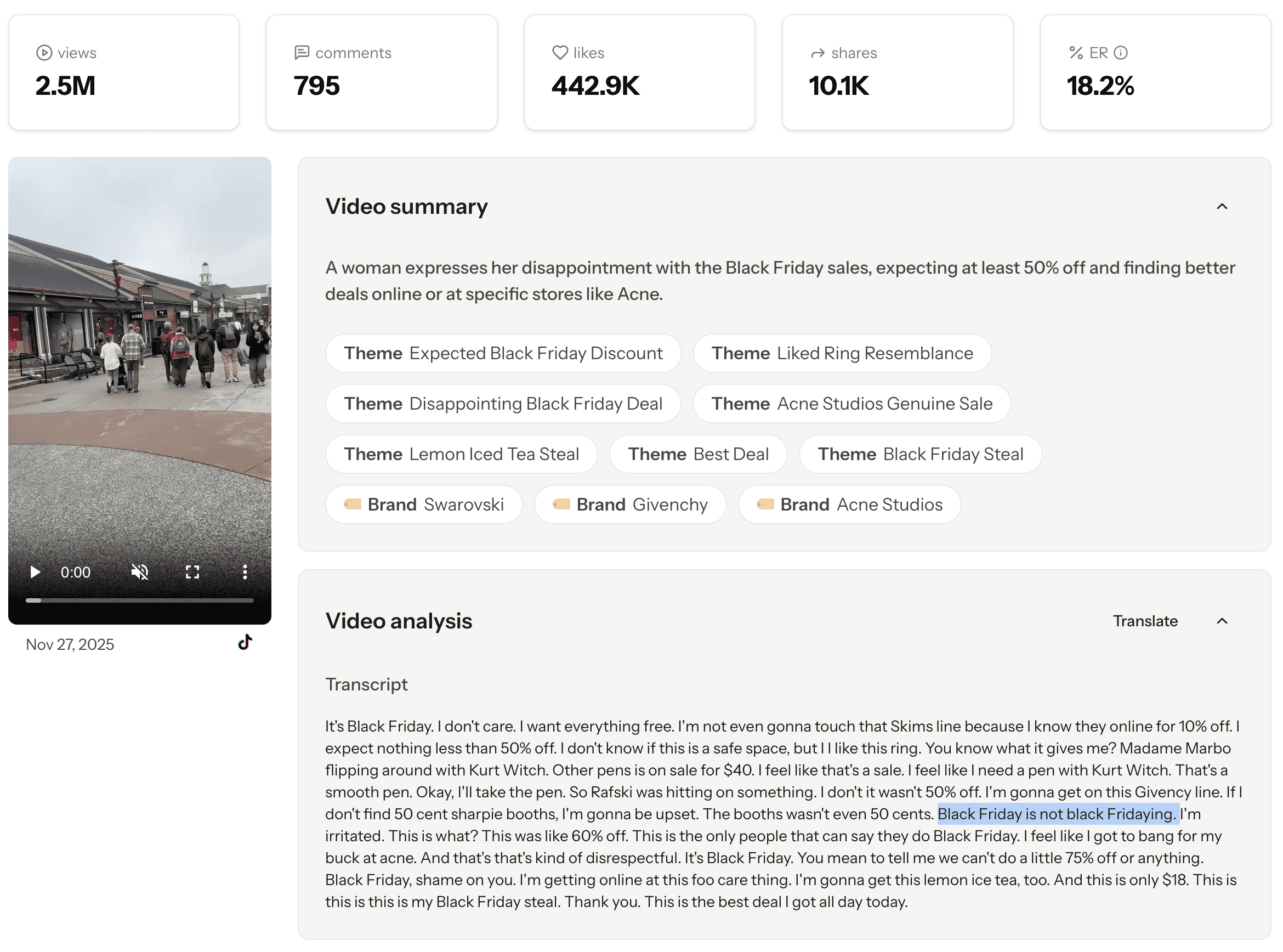
Evidence (underwhelmed, wants real discounts):


Marketing implication: If everything is a deal, nothing feels special. Fewer, clearer hero offers outperform a month of noise.


Fake Black Friday Deals: The Rise of the Deal Auditor

Social video amplified a belief that “deals are manipulated.” Creators described tactics like:

  • inflated “before” pricing

  • clearing old inventory with exaggerated anchors

  • pushing urgency without meaningful savings


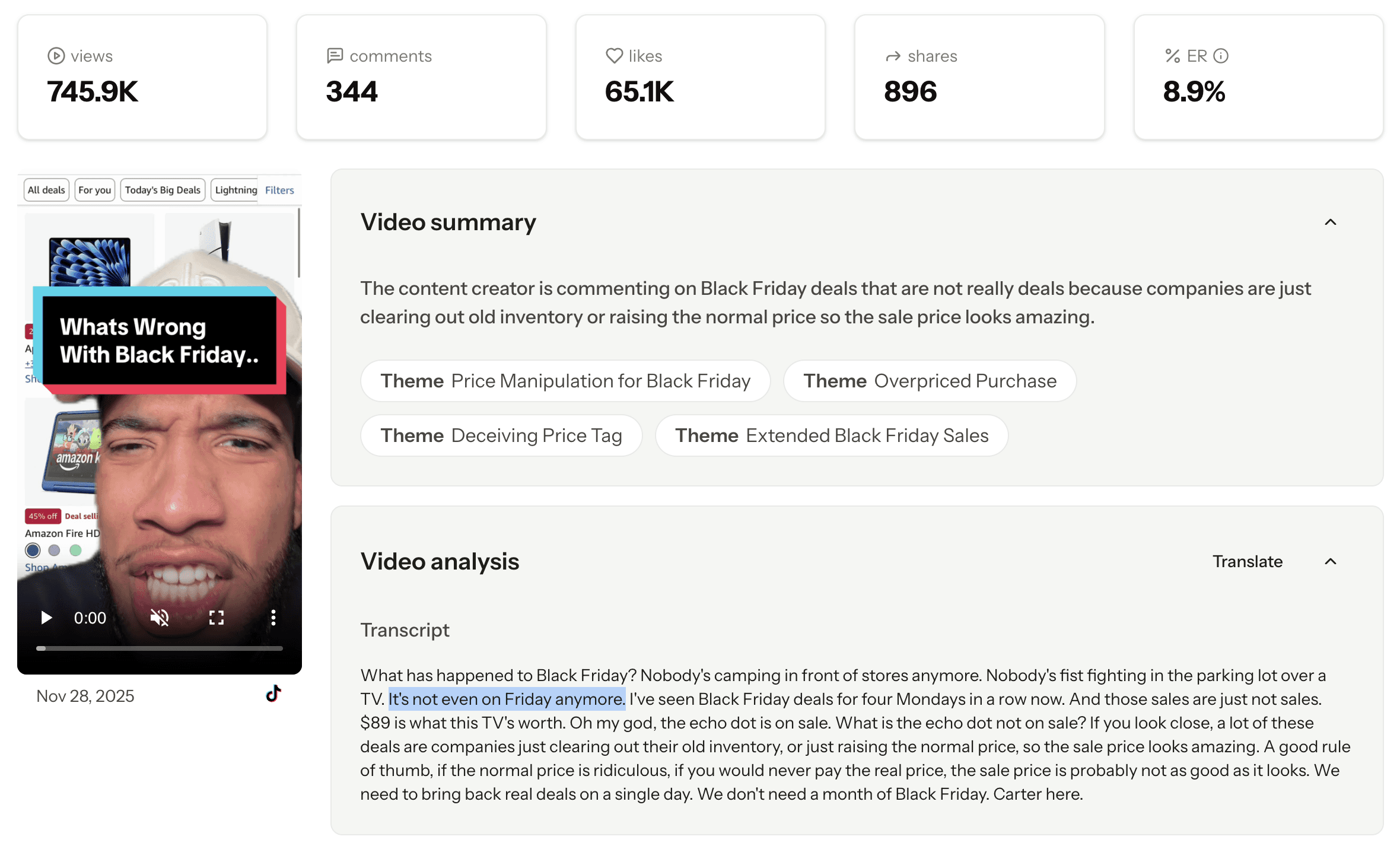
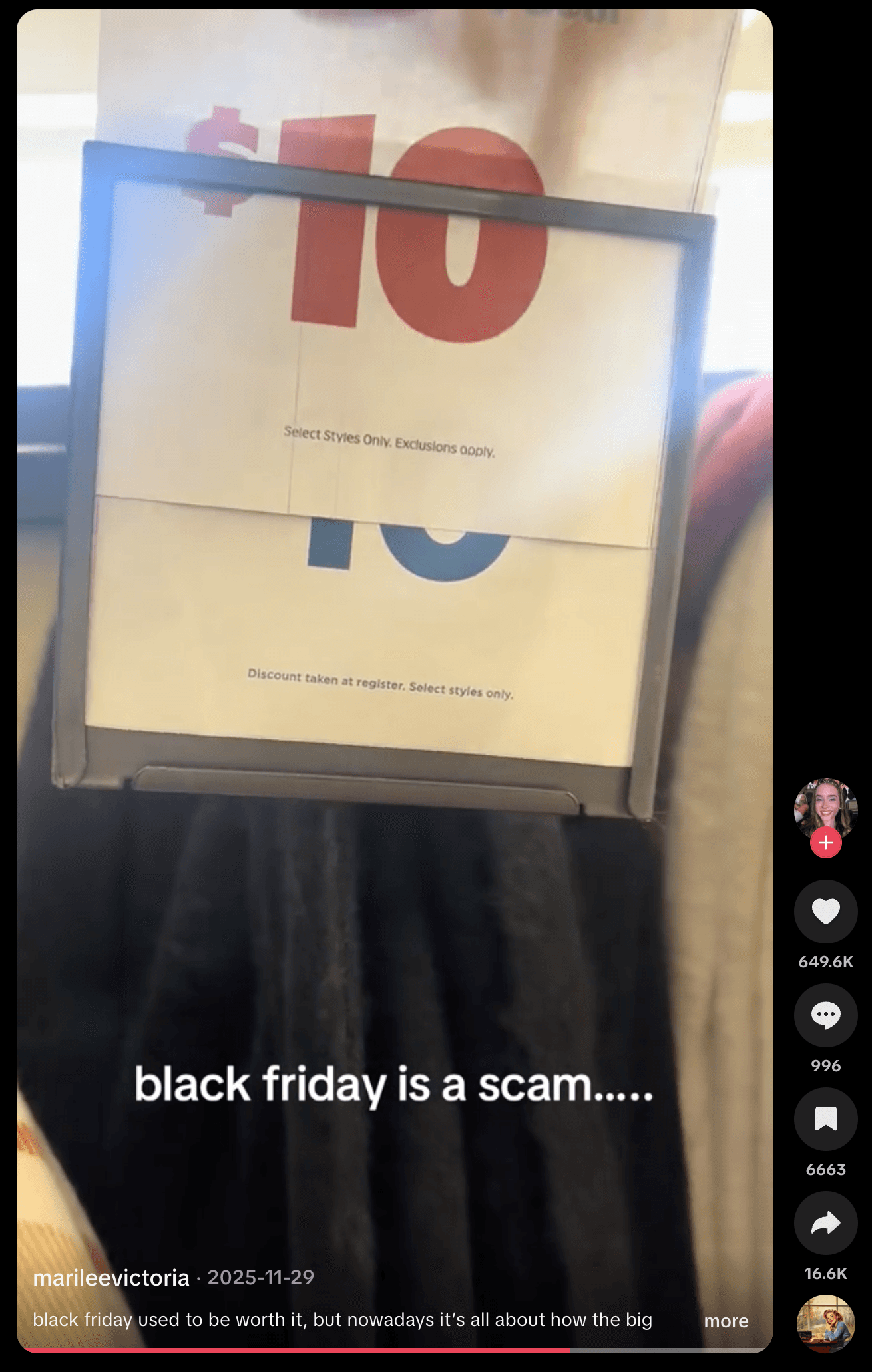
Evidence (“scam” framing):


Marketing implication: The buyer journey now includes an audit step. If you don’t provide transparency, creators will (and not always kindly).


Return Fees Backlash: A High-Impact Conversion Killer

Return fees became a viral “gotcha” narrative because they violate the expected safety net of BFCM shopping.


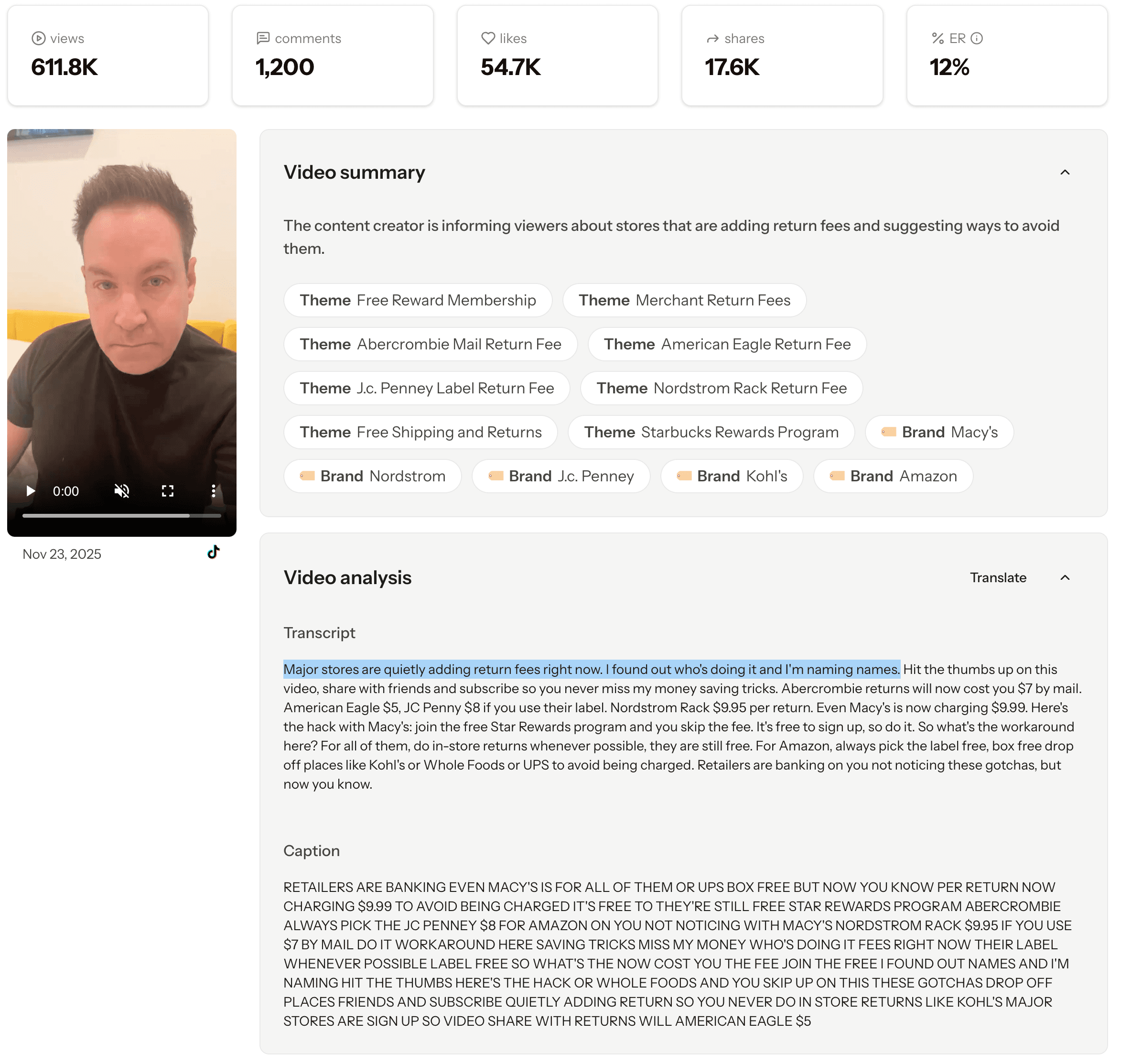
Evidence (return fee exposé + hacks):


Why it matters commercially:

  • Fear of return friction reduces conversion on “maybe” purchases

  • Fees harm repeat purchase and brand sentiment

  • Workarounds (loyalty hacks) signal an adversarial relationship


Marketing move: If you can’t remove fees, reduce surprise:

  • disclose early in the funnel

  • offer fee waivers via clear conditions

  • emphasize free in-store return options


Offer Strategy That Worked: Bundles, GWP, Subscription Hybrids

The best Black Friday offers weren’t just discounts. They were engineered to improve unit economics:

  • bundles to lift AOV

  • gift-with-purchase to boost CTR and curiosity

  • subscription hybrids to trade discounting for LTV

  • clear “before/after” framing that felt like “real Black Friday”


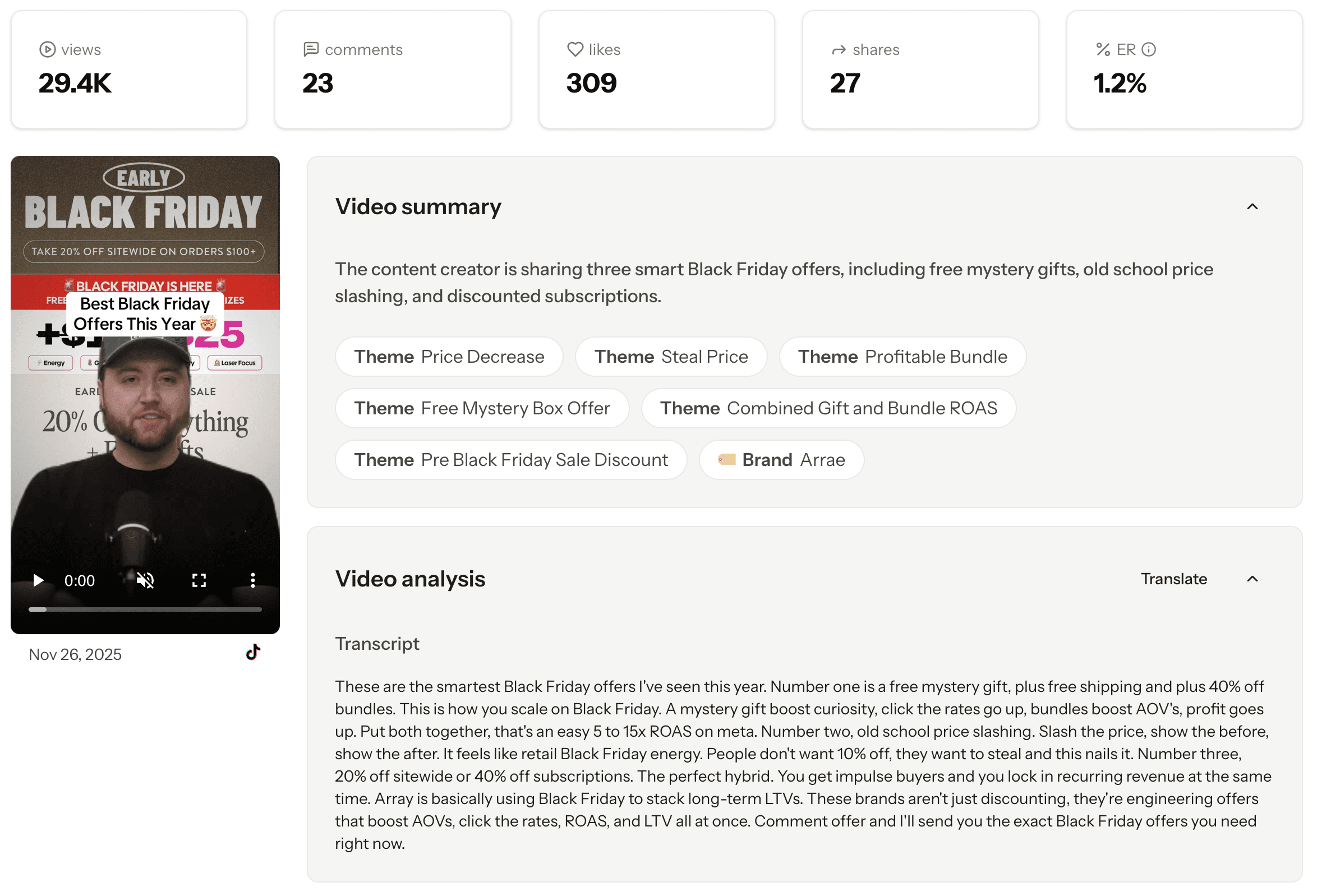
Evidence (offer engineering breakdown):


Marketing implication: Winning BFCM strategy is now offer design + UX, not just % off.


Case Study: Lowe’s Bucket Giveaway (Gamification Done Better)

Lowe’s used a high-stakes physical gamification model:

  • limited quantity

  • mystery bucket

  • grand prize voucher (high emotional upside)

  • explainer content drove pre-event awareness


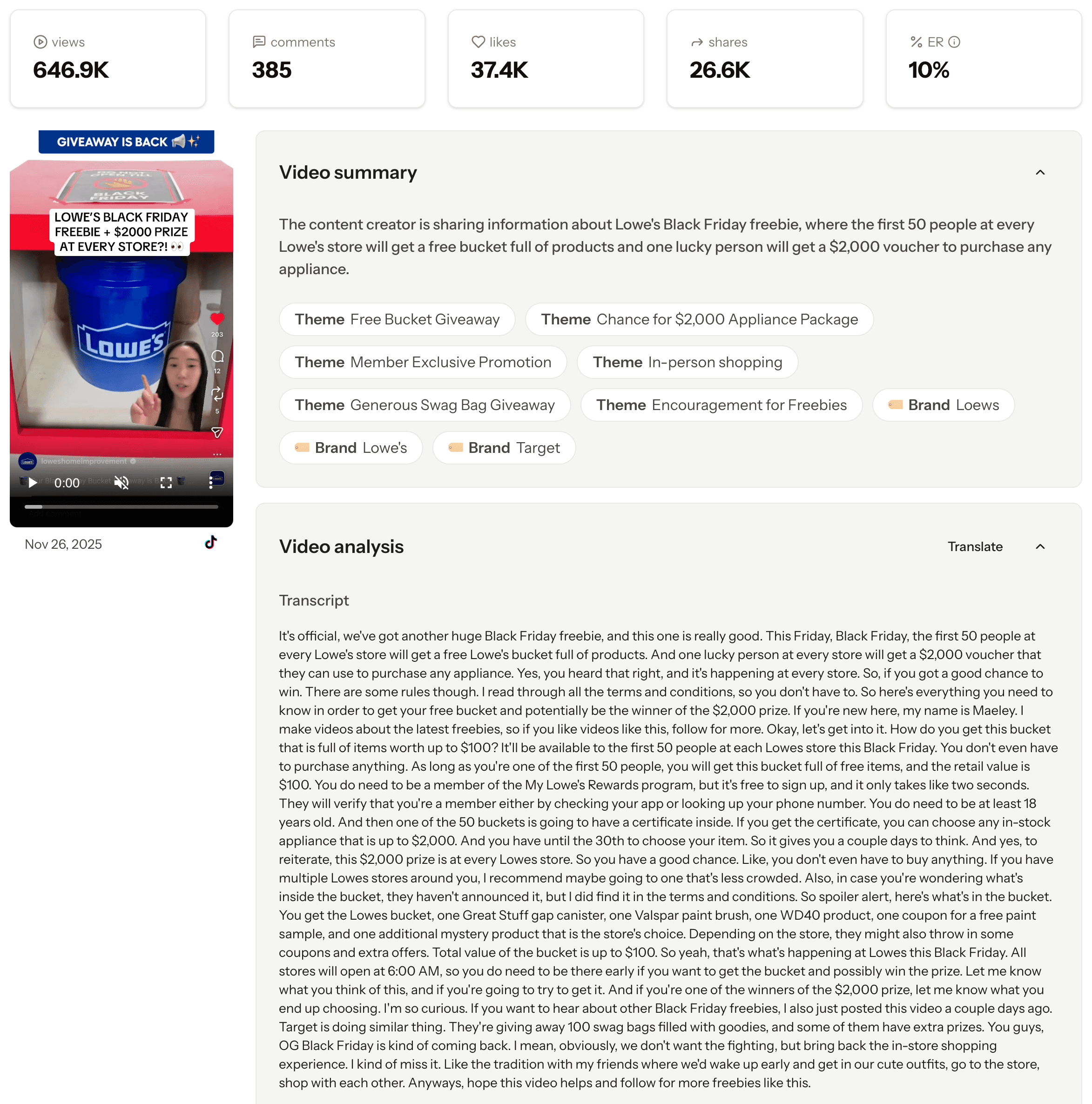
Evidence (explainer):


Why it worked better than most stunts:

  • “lottery effect” created turnout

  • rules fueled “how to” videos (free distribution)

  • utility items meant losers still got something tangible


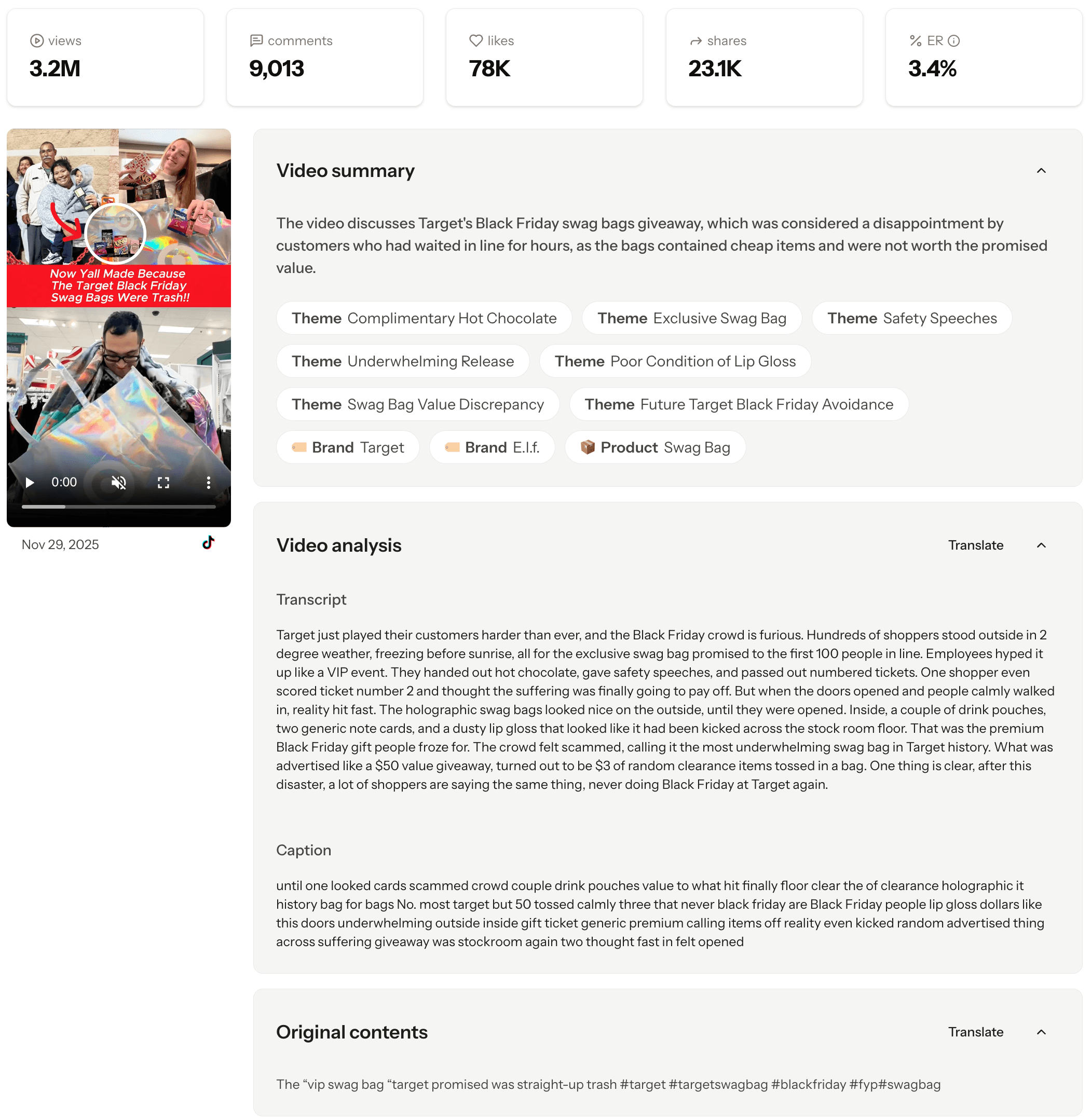
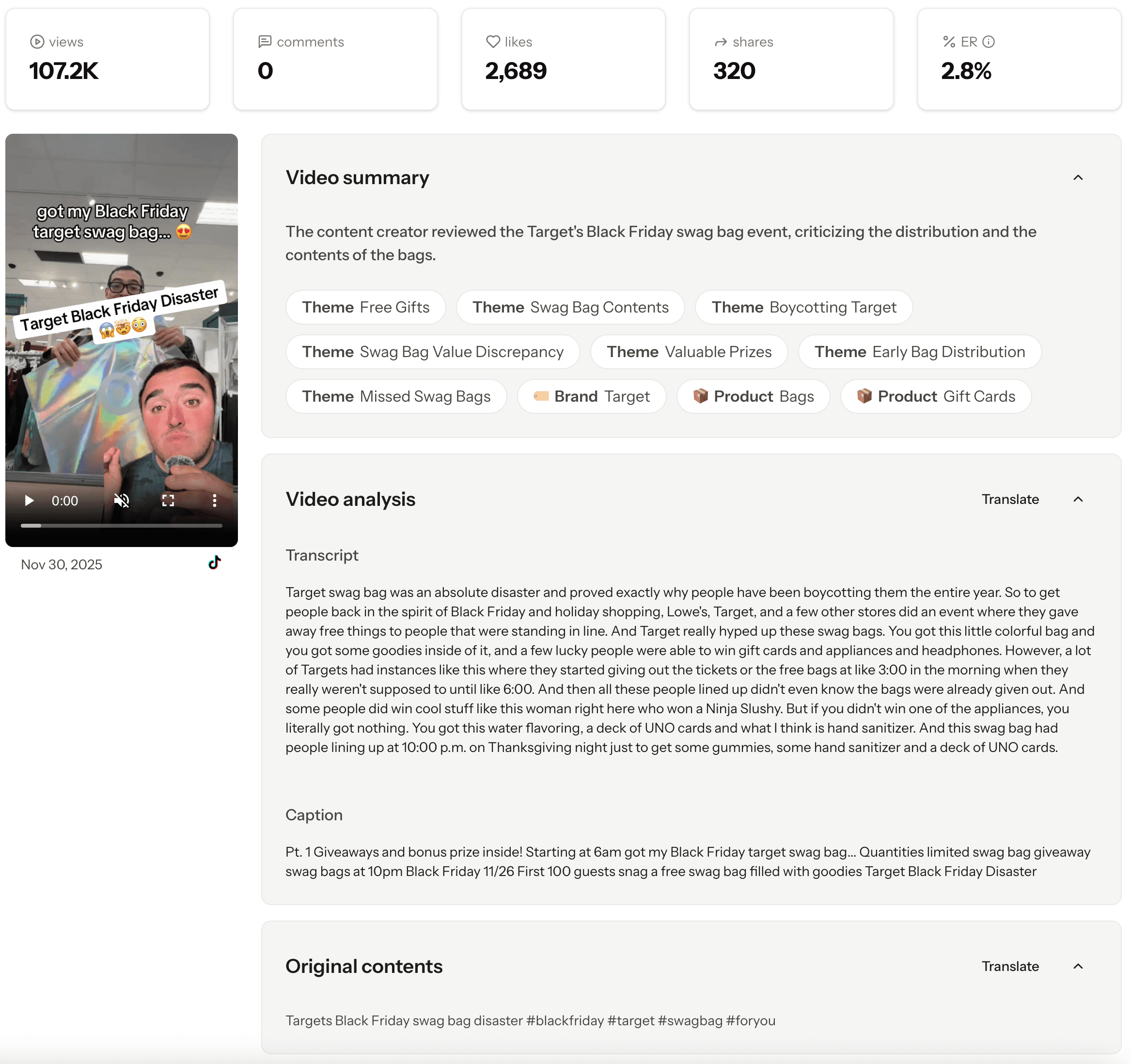
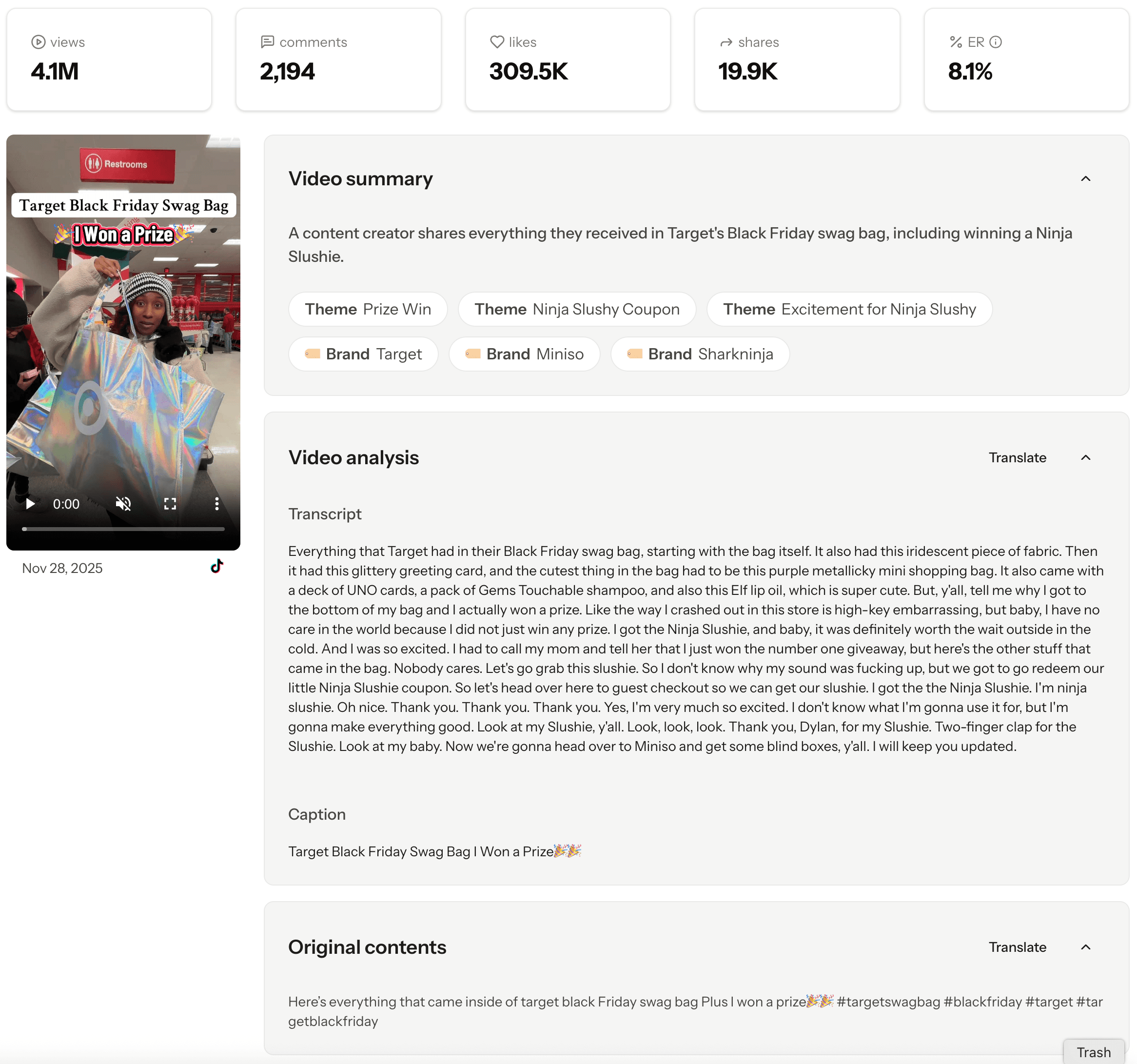
Case Study: Target Swag Bag (Expectation Gap + Reputation Debt)

Target’s swag bag generated buzz but also backlash. The core issue was effort-to-reward mismatch:

  • long waits

  • cold conditions

  • “VIP” framing

  • perceived low-value content and inconsistent distribution


Evidence (backlash):


Marketing implication: For gamified promos, the 99% experience determines net sentiment.
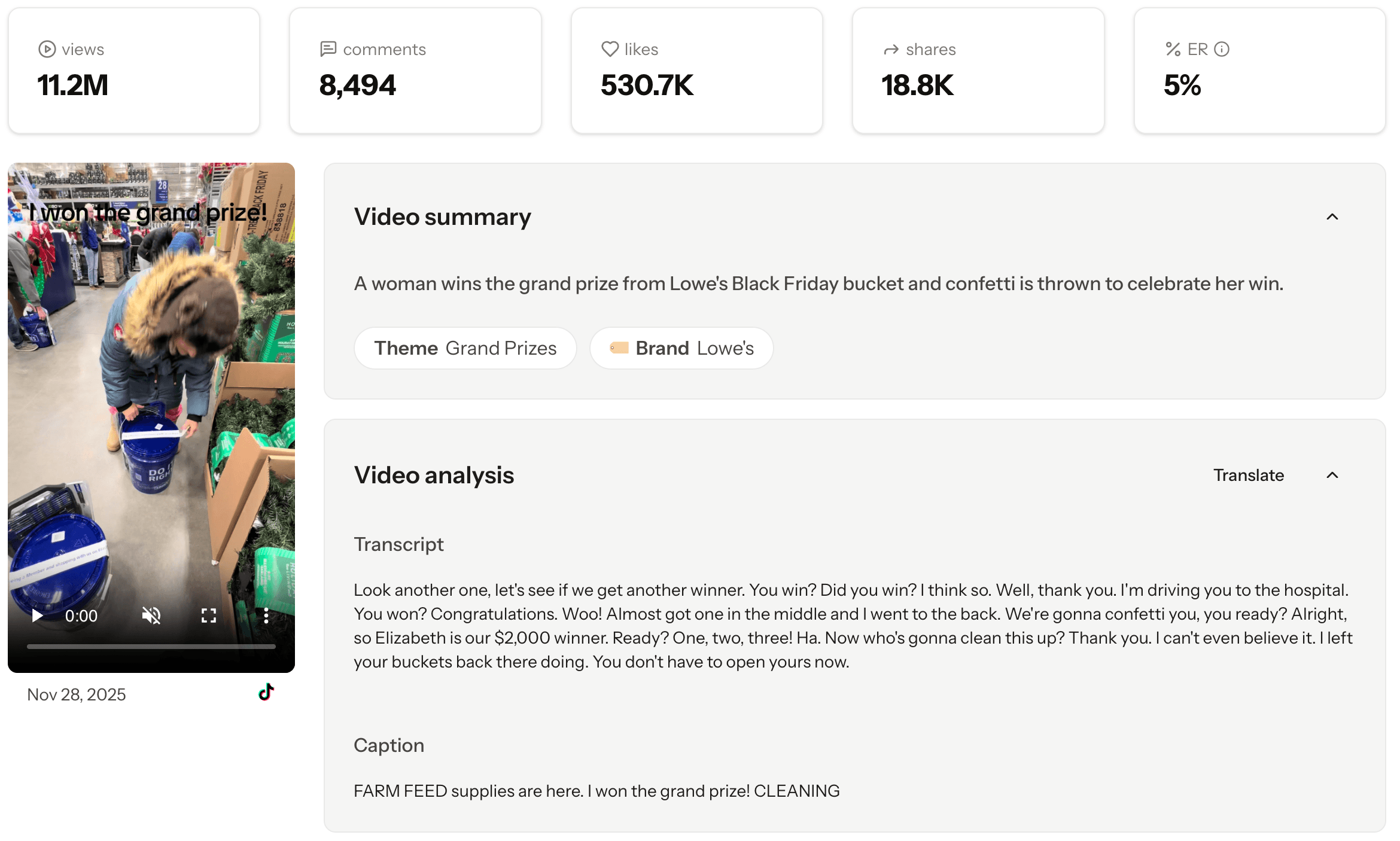
The winner clip is loud—but the loser experience is the majority.


What Marketers Should Do for BFCM 2026

If 2025 was the trust crisis year, 2026 should be the clarity year.

1) Design fewer, more credible hero offers

  • reduce “month-long Black Friday” fatigue

  • make the math obvious (before/after, bundle savings)

2) Build “trust UX” into the funnel

  • price transparency where possible

  • no surprise fees

  • simple terms and conditions

3) Treat returns as a conversion driver

  • remove friction or communicate it early

  • ensure the policy feels fair

4) If you gamify, protect your reputation

  • set a strong consolation floor (must exceed “cost of effort”)

  • communicate rules flawlessly

  • choose utility over random swag

5) Use social video listening year-round

  • track spoken claims, caption hooks, and recurring formats

  • detect trust erosion early (fake deals, fees, “scam” language)


FAQ: Black Friday Trends 2025

Q: Why did “fake deals” go viral in 2025?
A: Because shoppers were already skeptical, and social video makes “exposure” content easy and engaging.

Q: What mattered more than the discount size?
A: Credibility, transparency, and low-friction policies—especially returns.

Q: What’s the biggest takeaway for 2026?
A: Trust is a performance channel now. Treat it like one.

This 2025 Black Friday recap is based on short-form social video listening across TikTok and Instagram Reels, analyzing creator transcripts, captions, and repeatable content formats.

The dominant narrative wasn’t “best deals.” It was credibility. Shoppers increasingly behaved like deal auditors—verifying discounts, exposing misleading anchors, and treating policy friction (especially returns) as viral content.


Methodology: Short-form Video Social Listening for Black Friday (TikTok + Reels)

We analyzed the dataset by clustering:

  • Spoken claims in transcripts (“Black Friday is a scam,” “not even Friday anymore,” “I expect 50% off”)

  • Caption OCR (“scam day,” “exposing,” “best deals”)

  • Recurring content formats (GRWM Black Friday, in-store POV, “expose” videos, line-up footage, haul breakdowns)

  • Case-study threads where multiple creators referenced the same retail event (Lowe’s buckets, Target swag bags)


2025 Black Friday Recap: Trust Became the Product

In social video, Black Friday was framed less like a holiday and more like a test:

Is this discount real?

Is the “original price” honest?

Will I get penalized if I return it?

When trust is low, conversion requires proof, not just promotion.


Black Friday Trends 2025: Underwhelming Discounts + Event Fatigue

A repeated sentiment: Black Friday didn’t feel like Black Friday.

  • deals extended for weeks

  • “Always on sale” brands lost urgency

  • 10–20% discounts were perceived as weak relative to historical expectations


Evidence (underwhelmed, wants real discounts):


Marketing implication: If everything is a deal, nothing feels special. Fewer, clearer hero offers outperform a month of noise.


Fake Black Friday Deals: The Rise of the Deal Auditor

Social video amplified a belief that “deals are manipulated.” Creators described tactics like:

  • inflated “before” pricing

  • clearing old inventory with exaggerated anchors

  • pushing urgency without meaningful savings


Evidence (“scam” framing):


Marketing implication: The buyer journey now includes an audit step. If you don’t provide transparency, creators will (and not always kindly).


Return Fees Backlash: A High-Impact Conversion Killer

Return fees became a viral “gotcha” narrative because they violate the expected safety net of BFCM shopping.


Evidence (return fee exposé + hacks):


Why it matters commercially:

  • Fear of return friction reduces conversion on “maybe” purchases

  • Fees harm repeat purchase and brand sentiment

  • Workarounds (loyalty hacks) signal an adversarial relationship


Marketing move: If you can’t remove fees, reduce surprise:

  • disclose early in the funnel

  • offer fee waivers via clear conditions

  • emphasize free in-store return options


Offer Strategy That Worked: Bundles, GWP, Subscription Hybrids

The best Black Friday offers weren’t just discounts. They were engineered to improve unit economics:

  • bundles to lift AOV

  • gift-with-purchase to boost CTR and curiosity

  • subscription hybrids to trade discounting for LTV

  • clear “before/after” framing that felt like “real Black Friday”


Evidence (offer engineering breakdown):


Marketing implication: Winning BFCM strategy is now offer design + UX, not just % off.


Case Study: Lowe’s Bucket Giveaway (Gamification Done Better)

Lowe’s used a high-stakes physical gamification model:

  • limited quantity

  • mystery bucket

  • grand prize voucher (high emotional upside)

  • explainer content drove pre-event awareness


Evidence (explainer):


Why it worked better than most stunts:

  • “lottery effect” created turnout

  • rules fueled “how to” videos (free distribution)

  • utility items meant losers still got something tangible


Case Study: Target Swag Bag (Expectation Gap + Reputation Debt)

Target’s swag bag generated buzz but also backlash. The core issue was effort-to-reward mismatch:

  • long waits

  • cold conditions

  • “VIP” framing

  • perceived low-value content and inconsistent distribution


Evidence (backlash):


Marketing implication: For gamified promos, the 99% experience determines net sentiment.
The winner clip is loud—but the loser experience is the majority.


What Marketers Should Do for BFCM 2026

If 2025 was the trust crisis year, 2026 should be the clarity year.

1) Design fewer, more credible hero offers

  • reduce “month-long Black Friday” fatigue

  • make the math obvious (before/after, bundle savings)

2) Build “trust UX” into the funnel

  • price transparency where possible

  • no surprise fees

  • simple terms and conditions

3) Treat returns as a conversion driver

  • remove friction or communicate it early

  • ensure the policy feels fair

4) If you gamify, protect your reputation

  • set a strong consolation floor (must exceed “cost of effort”)

  • communicate rules flawlessly

  • choose utility over random swag

5) Use social video listening year-round

  • track spoken claims, caption hooks, and recurring formats

  • detect trust erosion early (fake deals, fees, “scam” language)


FAQ: Black Friday Trends 2025

Q: Why did “fake deals” go viral in 2025?
A: Because shoppers were already skeptical, and social video makes “exposure” content easy and engaging.

Q: What mattered more than the discount size?
A: Credibility, transparency, and low-friction policies—especially returns.

Q: What’s the biggest takeaway for 2026?
A: Trust is a performance channel now. Treat it like one.

This 2025 Black Friday recap is based on short-form social video listening across TikTok and Instagram Reels, analyzing creator transcripts, captions, and repeatable content formats.

The dominant narrative wasn’t “best deals.” It was credibility. Shoppers increasingly behaved like deal auditors—verifying discounts, exposing misleading anchors, and treating policy friction (especially returns) as viral content.


Methodology: Short-form Video Social Listening for Black Friday (TikTok + Reels)

We analyzed the dataset by clustering:

  • Spoken claims in transcripts (“Black Friday is a scam,” “not even Friday anymore,” “I expect 50% off”)

  • Caption OCR (“scam day,” “exposing,” “best deals”)

  • Recurring content formats (GRWM Black Friday, in-store POV, “expose” videos, line-up footage, haul breakdowns)

  • Case-study threads where multiple creators referenced the same retail event (Lowe’s buckets, Target swag bags)


2025 Black Friday Recap: Trust Became the Product

In social video, Black Friday was framed less like a holiday and more like a test:

Is this discount real?

Is the “original price” honest?

Will I get penalized if I return it?

When trust is low, conversion requires proof, not just promotion.


Black Friday Trends 2025: Underwhelming Discounts + Event Fatigue

A repeated sentiment: Black Friday didn’t feel like Black Friday.

  • deals extended for weeks

  • “Always on sale” brands lost urgency

  • 10–20% discounts were perceived as weak relative to historical expectations


Evidence (underwhelmed, wants real discounts):


Marketing implication: If everything is a deal, nothing feels special. Fewer, clearer hero offers outperform a month of noise.


Fake Black Friday Deals: The Rise of the Deal Auditor

Social video amplified a belief that “deals are manipulated.” Creators described tactics like:

  • inflated “before” pricing

  • clearing old inventory with exaggerated anchors

  • pushing urgency without meaningful savings


Evidence (“scam” framing):


Marketing implication: The buyer journey now includes an audit step. If you don’t provide transparency, creators will (and not always kindly).


Return Fees Backlash: A High-Impact Conversion Killer

Return fees became a viral “gotcha” narrative because they violate the expected safety net of BFCM shopping.


Evidence (return fee exposé + hacks):


Why it matters commercially:

  • Fear of return friction reduces conversion on “maybe” purchases

  • Fees harm repeat purchase and brand sentiment

  • Workarounds (loyalty hacks) signal an adversarial relationship


Marketing move: If you can’t remove fees, reduce surprise:

  • disclose early in the funnel

  • offer fee waivers via clear conditions

  • emphasize free in-store return options


Offer Strategy That Worked: Bundles, GWP, Subscription Hybrids

The best Black Friday offers weren’t just discounts. They were engineered to improve unit economics:

  • bundles to lift AOV

  • gift-with-purchase to boost CTR and curiosity

  • subscription hybrids to trade discounting for LTV

  • clear “before/after” framing that felt like “real Black Friday”


Evidence (offer engineering breakdown):


Marketing implication: Winning BFCM strategy is now offer design + UX, not just % off.


Case Study: Lowe’s Bucket Giveaway (Gamification Done Better)

Lowe’s used a high-stakes physical gamification model:

  • limited quantity

  • mystery bucket

  • grand prize voucher (high emotional upside)

  • explainer content drove pre-event awareness


Evidence (explainer):


Why it worked better than most stunts:

  • “lottery effect” created turnout

  • rules fueled “how to” videos (free distribution)

  • utility items meant losers still got something tangible


Case Study: Target Swag Bag (Expectation Gap + Reputation Debt)

Target’s swag bag generated buzz but also backlash. The core issue was effort-to-reward mismatch:

  • long waits

  • cold conditions

  • “VIP” framing

  • perceived low-value content and inconsistent distribution


Evidence (backlash):


Marketing implication: For gamified promos, the 99% experience determines net sentiment.
The winner clip is loud—but the loser experience is the majority.


What Marketers Should Do for BFCM 2026

If 2025 was the trust crisis year, 2026 should be the clarity year.

1) Design fewer, more credible hero offers

  • reduce “month-long Black Friday” fatigue

  • make the math obvious (before/after, bundle savings)

2) Build “trust UX” into the funnel

  • price transparency where possible

  • no surprise fees

  • simple terms and conditions

3) Treat returns as a conversion driver

  • remove friction or communicate it early

  • ensure the policy feels fair

4) If you gamify, protect your reputation

  • set a strong consolation floor (must exceed “cost of effort”)

  • communicate rules flawlessly

  • choose utility over random swag

5) Use social video listening year-round

  • track spoken claims, caption hooks, and recurring formats

  • detect trust erosion early (fake deals, fees, “scam” language)


FAQ: Black Friday Trends 2025

Q: Why did “fake deals” go viral in 2025?
A: Because shoppers were already skeptical, and social video makes “exposure” content easy and engaging.

Q: What mattered more than the discount size?
A: Credibility, transparency, and low-friction policies—especially returns.

Q: What’s the biggest takeaway for 2026?
A: Trust is a performance channel now. Treat it like one.

Section Image
Section Image
Section Image
Section Image

Build a brand customers love with Syncly

Section Image
Section Image
Section Image
Section Image

Build a brand customers love with Syncly

Section Image
Section Image
Section Image
Section Image

Build a brand customers love with Syncly